Showing posts with label Patterdale. Show all posts

Wednesday, August 4, 2010

A Question of Breed

This is a repost from October 2005


The quarry does not care what breed a dog is so long as it is doing the job.

Yet breeds do matter to humans for the simple reason that the more we know about breeds, and lines within breeds, the more likely we are to get a dog that is of real use to us in the field. There is always a chance we will get a dud, of course, but we can reduce that risk if we pick the right breed, select the right breeder, go slow, and use a modicum of common sense.

There are more than 28 types of terrier, but only six working breeds worth talking about, and even fewer worth considering if you are looking for a dog in America, as of this writing (2005).

There are two closely-related white breeds (the Jack Russell Terrier and the Plummer Terrier), two closely-related black breeds (the Patterdale Terrier and the Jagt Terrier), and two closely-related red breeds (the Border Terrier and the Fell Terrier).

Of these six breeds, only three are real options for U.S. earth work. Let us dispose of the generally unsuitable dogs first.

The Plummer Terrier is simply a color variant of the Jack Russell Terrier. I like the look of this dog, but in truth a good terrier does not come in a bad color, and breeding for coat markings has always been a dangerous thing.

The Plummer Terrier started off as a genetic mess — a point well documented by Brian Plummer himself. The good news is that thanks to culling and out-cross breeding, most of the serious genetic problems have been worked out of the gene pool.

The bad news is that a new problem has worked its way in: the dogs are generally too large, standing 13-15 inches tall, with 14- and 15-inch dogs very common.

Of course size is not a problem if you are ratting, which was Brian Plummer’s specialty and passion and mostly what the dogs are use for to this day. If you intend to dig to groundhog, raccoon, and fox in the U.S., however, a 14-inch dog is simply too big for our tight earths. The issue is moot, in any case; as of 2005, Plummer Terriers simply do not exist as a working terrier breed in this country.

The Jagt Terrier is another breed that fails the American working terrier size test. The Jagt Terrier was created in Germany in the 1930s with the idea of being an “all purpose” hunting terrier able to flush rabbits and wild boar from dense brush, retrieve shot birds, blood track gutshot deer, and go to ground on fox and badger.

Unfortunately, dogs are specialized for a reason, and the Jagt Terrier is, at best, a second choice in all of these tasks. When it comes to fox work, the standard for the Jagt Terriers (13" to 15" tall) calls for a dog that is simply too big for our tight American earths. There are some very small Jagts that do well, but the gene pool is dominated by larger dogs, and Jagts should only be considered, in my opinion, if it is a full-grown adult and significantly smaller than the standard.

The red Fell Terrier is a type of non-pedigree Lakeland Terrier found in the north of England. This dog would have much to recommend it if small versions of this breed could be found in the U.S. Unfortunately, as of 2005, there are only a handful of red fells in the U.S., and even fewer that are sized for our tight earths. If you can find a small dog, go for it, but the chances of locating such an animal are slim to none.

We now come to the three types of working terriers available in the U.S. which also have some hope of being the right size: the Border Terrier, the Patterdale Terrier, and the Jack Russell Terrier.

Border Terriers are wonderful dogs, but finding one that is the correct size and has a small chest is very difficult in the U.S. Few Kennel Club Border Terrier owners keep size records going back generations, and the chance of being able to select a small one out of a gene pool dominated by large dogs is about as likely a picking the trifecta at Belmont Raceway. The chance of finding one that has worked three types of quarry is close to zero.

Unfortunately, the other alternative — buying a small adult dog — is also virtually impossible as Border Terriers are not common in the U.S., and most dogs are placed as pups and never relinquished (hardly surprising after a sum of more than a $1000 has changed hands). As for finding a small adult working dog for sale -- forget it.

Border Terriers have wonderful winter coats, but these same coats tend to result in an overheated dog in summer when so much groundhog work is done. The dog that never gets cold in winter, simply flops over in summer heat.

Finally, it is worth mentioning that Border Terriers are, as a rule, slow to start. While a Jack Russell or Patterdale will usually start to work between 10 months and one year of age, Borders Terriers seem to start a full year later. There are exceptions to the rule, to be sure, but I have spent a fair amount of time around Border Terriers, and it’s best to plan on a late starter and be surprised than depend on an early starter, and be disappointed. Borders are not the “One Minute Rice” dogs so popular with young terrier enthusiasts today — one reason they may have experienced a decline in popularity in the field.

Patterdale Terriers are rapidly rising in popularity in the U.S. and they have much to commend them. Unfortunately, as Patterdales have grown in popularity, they have also grown in size. This is particularly true in America, I am afraid to say, where Patterdale Terriers have suffered a terrific genetic beating at the hands of young want-to-bes who have crossbred them with small pit bulls. Large numbers of these overlarge black dogs have been cranked out to be sold off on places like “Bay Dogs Online.” Here the ads read “will hunt anything.” “Has hunted nothing” is more likely the story. Pictures of chained out “yard dogs” may be offered at referring web sites, and dogs are sometimes swapped for auto parts or sold in groups by get-rich-quick failures who are now having “Kennel Reduction” sales.

Having raised a caution about size and breeders, it should be said that if you can find a nice small Patterdale, 12 inches tall or smaller, and with a nice tight chest of 14 inches or less, these dogs generally make exceptional workers. Caveat emptor, as with all terrier purchases, but if are flinty and properly focused on getting a small enough dog, you can do very well with a Patterdale.

Finally, we get to the Jack Russell Terrier. What a divergent mess of registries and types this breed has become! Some Jack Russellls have ears that are erect, some down, some are longer than they are tall, some are pure white, some are as parti-colored as a beagle. There are smooth coats, broken coats and dogs hairier that a Wookie straight out of Star Wars. A Jack Russell’s legs may be straight as sticks or as ornately curved as those of a Queen Anne bench. Its chest may be as small around as a lady’s bracelet, or as big around as a bowling ball.

How do you sort it out?

Simple: Get a dog registered with the Jack Russell Terrier Club of America, and accept no substitutes if you are looking for a working Jack Russell. Let is be said that I am not affiliated with the JRTCA in any way. I do not breed dogs, I do not show dogs, and I do not judge dogs. My reason for recommending the JRTCA is solely practical: The JRTCA records the size of dogs and also offers working certificates. The result is a documented track record of work and size that can be tracked across a five-generation pedigree. When you are looking for a working terrier, nothing is more valuable.

Buyer beware, of course. Most JRTCA dogs are show dogs or pets, and only about 5 percent hunt. The good news, is that with a JRTCA dog you can look through a pedigree and see whether there is a track record of work, and also ascertain the size of the dog’s dam, sire, grand-dam and grand-sire. With hundreds of well-documented working JRTCA dogs in America, the chance of finding an acceptable working terrier is higher in the JRTCA gene pool than anywhere else.
..

Saturday, April 10, 2010

Dubious Terrier Breeds


Only in America, the land of P.T. Barnum:
"Hairless Terrier" at left, "Tunnel Terrier" at right.


There is nothing new about the creation of terrier breeds, many of which have lasted just long enough to be named in a book before coming up "extinct" or renamed and then declared extinct.

The "Black and Tan" terrier, for example is nothing more than a Fell Terrier that the English tried to rename and claim as their own. The gambit failed and the breed "disappeared" in name, if not in fact. The Fell Terrier can be found in the Kennel Club ring as the Welsh Terrier, though the Kennel Club Welsh terrier has been "improved" to the point that few, if any, work in the field today.

The "English White" terrier was another attempt to create a breed, this time with a degenerated smooth Jack Russell that may have been cross-bred with a small lap dog. This breed also failed to catch on and disappeared shortly after it was created. Note this "English White" is not related, in any way, to the white molosser dog used for bull baiting two centuries earlier; same name, but an entirely different dog with different origins and histories.

The Glen of Imaal terrier is nothing more than a turn-spit dog given a fancy name and an invented history as a badger working dog. In fact the Kennel Club dog is totally unsuited to earth work due to its size and a propensity for muteness, though badger baiters tried to cobble together "trials" for this type of dog after badger baiting was banned. The dog all but disappeared before recently being given new life as a show dog -- admitted to the AKC on October 1, 2004.

The creation of new terrier breeds continues unabated. A few variations of existing terrier breeds occassionally catch on, but most do not.

The "Plummer Terrier" looks like it is here to stay and may, in fact, be getting a bit of a boost from the U.K. ban on fox hunting, as ratting moves a bit closer to center stage.

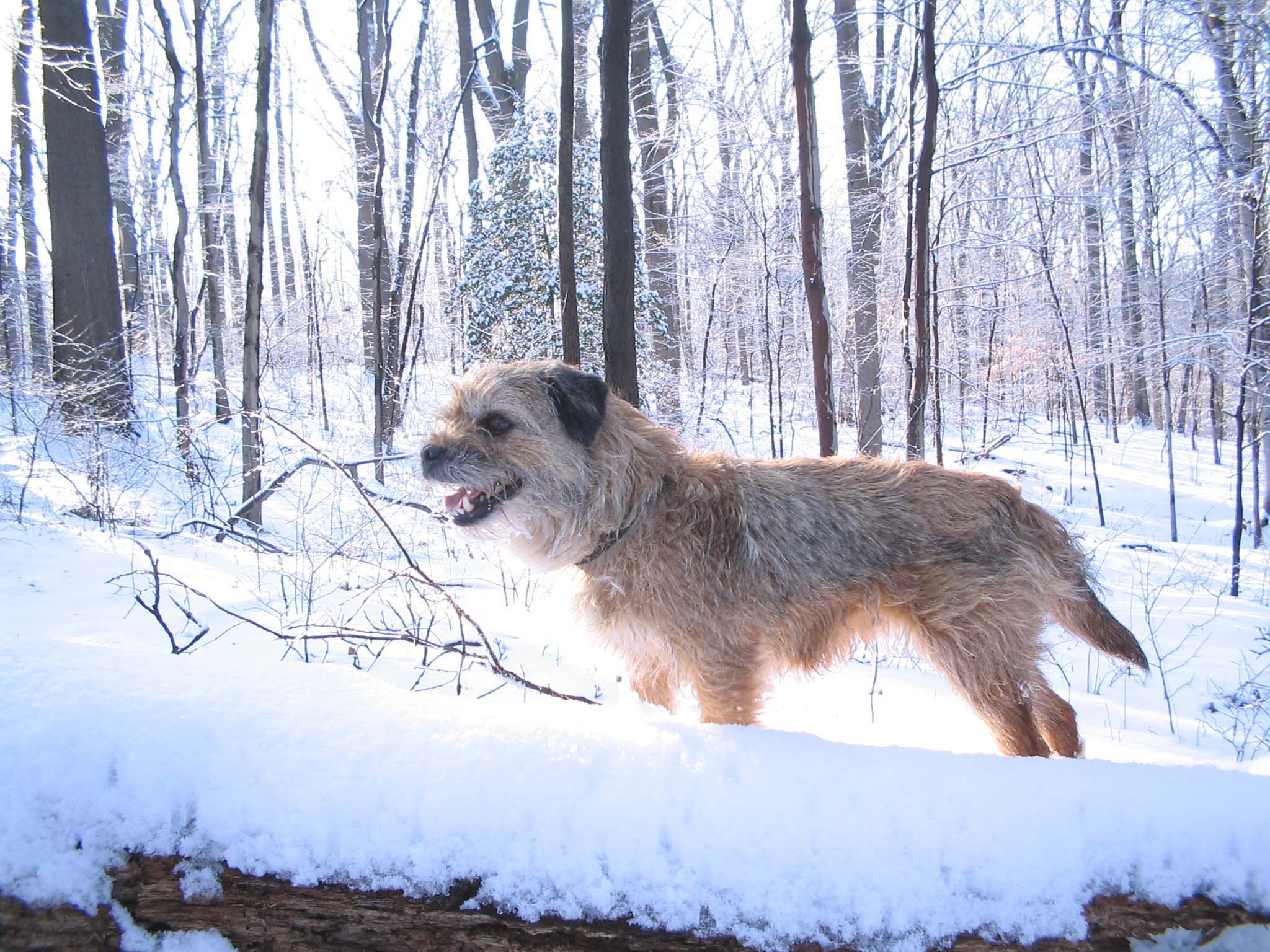
The Patterdale terrier is often described as being a black fell terrier, but in fact a Patterdale is visually quite distinct from a regular fell terrier. At this point, I think Patterdales Terriers stand as a breed apart.

Another terrier breed with a clear provenance in the 20th Century is the Norfolk Terrier which was popularized by a stable man and dog dealer by the name of Frank Jones right after World War I. Originally called a "Trumpington Terrier" and then a "Jones Terrier," the dog has since split into two breeds, the Norwich Terrier (ears up) and the Norfolk Terrier (ears down).

Most new terrier breeds do not catch on. Though a breed may flourish at the point of creation, most fade into obscurity rather quickly due to uglyness, uselessness, or failure to understand the politics, economics and genetics inherent to breed creation and maintenance.

  • American Hairless Terrier: This is simply a mutant rat terrier -- a genetic anomaly that was born hairless. Someone in Louisiana figured "yippe" I can sell this freak to people with allergies, and it was off to the races.

  • American Tunnel Terrier: This is nothing more than a cross between two non-working breeds, a Boston terrier and a Rat terrier. Despite the name, they are never found at artificial den trials, and despite the breeder hype of being a "verminator" they seem to have never done anything heavier than nailing a few rats and mice.

  • Capheaton Terrier: This is nothing more than a smooth red fell terrier renamed by a woman too silly or stupid to know the breed already existed -- and has for generations.

  • Atlas Terrier: This is nothing more than a Jack Russell terrier with a merle gene -- a gene most Jack Russell breeders breed away from since it is so often associated with deafness. The creator of this breed is waiting to go to trial on animal abuse charges in Philadelphia.

  • Lucas Terrier: First bred by Jocelyn Lucas, this is nothing more than a cross between a Sealyham female and a Norfolk male, and was produced because the show Sealyhams were getting too big to work. This dog proved to be unpopular with the show set and the working set, and has largely disappeared. The "Sporting Lucas" terrier has cropped up in recent years as an attempt to revive this breed, but it is doubtful that it will succeed considering the state of hunting with terriers in the UK.

  • Teddy Roosevelt Terrier: This is nothing more than a rat terrier with short legs, and is quite unlike the orginal rat terrier (Skip) owned by Teddy Roosevelt. The American Rat Terrier, of course, is nothing more than a degenerated version of the old working fox terrier, now known as the Jack Russell Terrier.

  • Tenterfield Terrier: This an Australian toy fox terrier of dubious linneage.

  • James Pocket Terrier: This is less than a breed and more like a chest measurement for a very small working Jack Russell terrier. There is no physical standard for this breed other than a dog with a very small chest (under 14 inches) and a desire to work.

  • Shelburne Terrier: This dog never really existed other than in someone's imagination and Jocelyn Lucas's book. Created by the Shelburne Hunt in Vermont, it was a cross between a Norfolk terrier and Sealyham-Jack Russell cross, and it does not seem to have existed beyond a few litters.
    .

Friday, July 3, 2009

Nuttal On Those Who Give a Bad Name to All


Brian Nuttal, a rather famous breeder and worker of Patterdale Terriers, was asked by the editors of the Fell and Moorland Working Terrier Club's Annual Yearbook (Volume XXX): "Have you any strong dislikes about Terrier sport or its participants?"

His answer:

"One strong dislike I have is the type of Terriermen who kills everything they dig or bolt, cubs or adults, and sell for fox pelts. They are usually the first to complain when quarry is scarce. I know these people are in the minority, but they give a bad name to all. Most of the foxes I dig or bolt are released unharmed, unless they have been doing damage to poultry, pheasants or the like."

Mr. Nuttal's thoughtful answer indicates someone who has a solid understanding not only of the dynamics of fox population densities and diet, but also someone who understands that terrierwork can easily be harmed by the ham-fisted, the ill-advised and the poorly taught.

For more thoughts on ethical terrierwork, see >> here
.

Friday, May 2, 2008

Rise Up Ye Black and Tans


This is The Wolf Tones singing "Rise Up Ye Black and Tans."

"Come out ye Black and Tans
come out and fight me like a man.
Show your wife how you won medals out in Flanders.
Tell her how the IRA
made you run like hell away
from the green and lovely lanes in Killeshandra."


For those who do not know, the "Black and Tans" refer to the Royal Irish Constabulary Reserve Force which were put together by the British to suppress the Irish Republican Army.

Peggy Noonan (Ronald Reagan's speech writer) made reference to them today in her excellent piece in today's edition of The Wall Street Journal about why Jeremiah Wright doesn't get her Irish up. Read the whole thing at the link, above

And, to swing it around to terriers, a "Black and Tan" terrier is the old name for what we now refer to as a red-and-black fell terrier, or non-pedigree Welsh or Lakeland terrier, or even (in some circles) a "rough-coated Patterdale."

Thursday, April 3, 2008

The Beam in the Eye of Kennel Club Breeders


I notice that some of the AKC Border Terriers folks are all atwitter over the fact that Oprah Winfrey is going to be doing a segment on puppy mills.

It seems that Mainline Animal Rescue sponsored a billboard four blocks from Oprah Winfrey's Harpo Studios in Chicago, which got Oprah and her producers interested in exposing the puppy mill industry in America.

Now some of the Border Terrier folks are suggesting "Oprah's new cause has the potential to negatively impact responsible breeders."

Which has me rolling on the floor laughing.

Responsible breeders in the American Kennel Club? It's an oxymoron.

The closed registry system of the American Kennel Club is one of the primary reasons the quality of Kennel Club dogs is going into the toilet.

I have written about this at some length in a post entitled Inbred Thinking, but I am hardly the first. Time magazine devoted a whole cover article to it.

So are the Border Terrier folks pushing for an open registry? They are not.

Are they pushing to pull their dog out of the AKC? They are not.

And yet, it was an open registry that created the Border Terrier, was it not?

And, for the record, it's an open registry that keeps the Patterdale Terrier a working terrier and keeps the Jack Russell Terrier working too. Just look at the "Parson Russell Terrier" if you want to see how fast the Kennel Club can wreck a breed. Astounding!

Most folks who hunt any breed of dog generally run away from Kennel Club stock. As I have noted in the past:


"The number of working dogs ruined by the AKC grows every year. Irish setters, once famed at finding birds, are now so brain-befogged they can no longer find the front door. Cocker spaniels, once terrific pocket-sized birds dogs, have been reduced to poodle-coated mops incapable of working their way through a field or fence row. Fox terriers are now so large they cannot go down a fox hole. Saint Bernards, once proud pulling dogs, are now so riddled with hip dysplasia that it's hard to find one that can walk without surgery in old age."


And don't kid yourself; it wasn't "puppy mills" or "unscrupulous backyard breeders" that did this. It was the same kind of people who are on every AKC breed list-serv; folks who do not work their dogs, and who judge a dog mostly by how many times the word "champion" shows up in its pedigree.

And so I have to laugh out loud. The Border Terrier folks are concerned that Oprah Winfrey's little show "might negatively impact responsible breeders"?!

Right. Let's be honest here for a minute, eh?

The Border Terrier community is part of the problem when it comes to the wreckage of dogs in America.

This is a Border Terrier community where almost no one actually hunts their dogs.

This is a Border Terrier community where "protect and preserve" the breed really means protect and preserve the price structure, not the true working abilities of the dogs.

And these folks now want to take inventory of Mainline Animal Rescue which seems to simply be looking to find good homes for dogs in serious distress?

Ha!

When will they take inventory of their very own AKC which subsidizes every dog show with revenue from puppy mill misery pups?

And so pardon me if I do not hyperventilate over what Mainline Animal Rescue is all about.

There is no way they could be doing any more harm to dogs than the American Kennel Club and its rosette chasers are already doing.

Of course, as is so often the case, the fish stinks from the head down. As I wrote in piece for Just Terriers magazine some years back, the "experts" you find judging AKC terrier trials are, for the most part, a laughable group of fantasists.


In the AKC, for example, most judges are experts in a half dozen breeds. In the terrier ring, it's almost a guarantee none has ever owned a Deben collar or cut a shoulder into a trench in order to get down another two feet. As a rule these authorities are experts by dint of having spent far too many nights in bad hotels attending show trials. In 20 years of owning dogs, they have logged a thousand miles bouncing around show rings in plaid skirts and blue blazers. They may have driven to the moon and back to pick up rosettes, but few have driven 10 miles out into the country to even see a fox den, much less put a dog down one or dig to it.

A few will claim expertise because they have bought an airplane ticket and attended a mounted hunt or two in the U.K.. They have seen "the real thing" they will tell you, and know what is required of a working dog thanks to their two-week vacation in Scotland! Just don't ask them how to extract quarry from the stop-end of a pipe or how to treat a bite wound.


And so you will pardon me if I am laughing because the Border Terrier community is all atwitter over the fact that Oprah would dare to talk about puppy mills.

My God, she she might talk about the long-standing nexus between puppy mills and the American Kennel Club.

She might talk about how many AKC misery pups it takes to subsidize an AKC rosette.

Damn, I hope so! Bring it on Oprah!!

I do not fear Oprah's expose of the dog breeding business in this country, any more than I fear the morons and lunatics at PETA. Oprah, at least, might do a little good.

No, I do not fear Oprah.

What I fear are rosette chasers at the American Kennel Club and the scores of thousands of nodding know-nothings and "hump and dump" breeders who say their goal is to "protect and preserve" a breed with a closed registry system.

God save us from them!

_ _ _ _ _ _ _ _ _ _ _


44Some related posts on this blog:


.

Sunday, February 24, 2008

The Geography of American Working Terriers

.
This is a repost. Originally from August 2004.

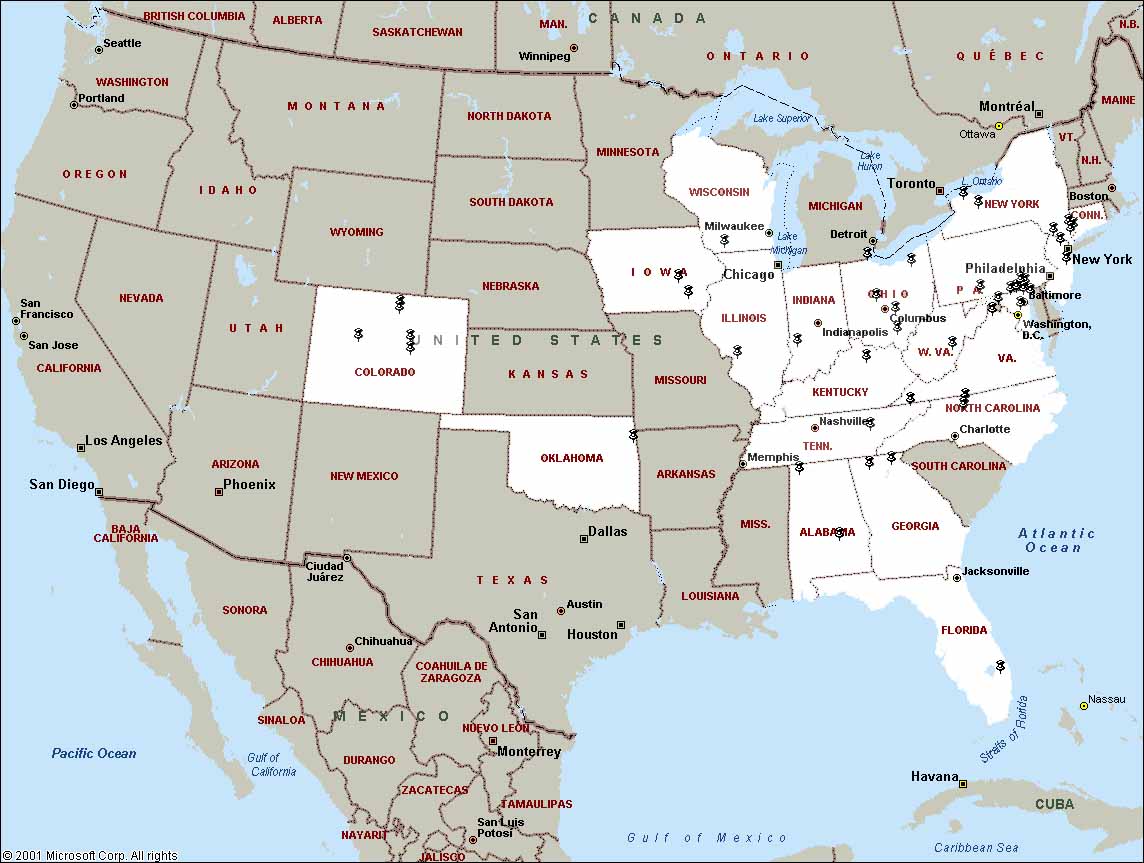
The map, above, is fairly illuminating, as it graphically represents where working judges sanctioned by the Jack Russell Terrier Club of America live.

The states in white are those that have any JRTCA working judges at all. The states that are muddy-grey colored have no JRTCA working judges. A pin (see a larger version of the map by clicking on it) represents the zip code of every JRTCA working judge in the U.S. in the current edition of True Grit magazine.

To get a "bronze medallion" for special merit in the field from the JRTCA, a dog has to work at least three types of quarry underground (fox, raccoon, groundhog, badger or an aggressive possum) operating as if it were out alone, and with the owner doing the digging, and a JRTCA judge has to be in attendance as witness the work. To get a certificate, a dog cannot work quarry in a barn, brush pile, artificial earth or man-made location (such as the crawlspace of an outbuilding).

Jack Russell Terriers are, far and away, the most commonly worked terrier in America. There are very few Fell Terriers in this country, and almost no working Border Terriers at all. Patterdale terriers in the U.S. are still relatively rare, and though some very good dogs are being bred by a handful of reputable breeders, too many over-large dogs are being produced -- many of them cross-bred in the not-too-distant past with small pit bulls in order to get a larger dog that can work game above-ground game -- barn raccoons and feral hogs in particular. There are some excellent Patterdales and a few good Fells in the US, but most of these seem to be owned by people that have had Jack Russell terriers at one time or another -- the dogs they started with before there were any Patterdales or Fells in the U.S.

In short, most working terriers in the U.S. are Jack Russell Terriers, and the map above tells a story.

Why does this JRTCA map look this way?

Some of it has to do with a population bias -- there are more people per square mile in the East and Midwest, and as a consequence associations are easier to maintain.

Another factor is that there are only about 50 pins on the map at all. This paucity of pins is partly a reflection of how few people actually work terriers in the U.S. beyond two-or-three time a year digs, and in part a reflection of the fact that being a working judge is truly a thankless task.

Of course there are more than 50 serious diggers in the U.S. Some of these diggers are ex-JRTCA working judges, some are people that dig a lot but have no desire to sign up for the thankless job of being a working judge, a very few diggers have Kennel Club registered dogs, some folks dig their dogs but have no club affiliation at all. And of course there are the patterdale-only owners, some of whom have joined the new UKC working terrier program or are members of the Patterdale Terrier Club of America.

That said, while this map is clearly not inclusive of everyone that digs their terriers, it is more-or-less geographically representative of the broad TREND of those that that do -- they tend to be in the East and in the Midwest, rather than in the Western United States. For example, of the 15 UKC working judges, as of August 2004, six are not in America, two are in California and come East to hunt, and the rest are in New Jersey, Kentucky, Virginia or Georgia -- states well-represented on the map above.

One of the reasons the map is skewed has to do with quarry availability. In the U.S., the bread-and-butter quarry of the working terrier is the groundhog. Raccoons cannot dig their own dens, and neither can possums. If dirt dens are not available, they will seek other alternatives -- hay lofts, brush piles, hollow trees, farm outbuildings, hay stacks, rock crevices, or old squirrel nests. With the exception of rock dens, these are not locations where a small dog follows quarry to ground and is then dug to. In short, it is not earthwork.

Red fox will dig dens on their own, of course, but in the American west they face real on-the-ground competition in the form of the coyote. A coyote will generally kill a red fox if given half a chance, and they directly compete with red fox for food.

In addition, the red fox is not native to most of the U.S., and its dispersal in the West is uneven as a consequence. While red fox are common in some areas (such as the prairie pothole region) they are quite rare in other areas (such as western Oklahoma).

Weather and time are another important reason fewer people hunt in the West. Fox will not den in warm weather unless they have kits, and in the U.S. we will not put a dog on a vixen with young. Without hounds to drive fox to ground, our fox-digging season is very short -- generally only 10 weeks long, and for most people with jobs this presents a very short period of time to get out into the field.

When people do get out into the field, of course, they have to find your fox! This is easier said than done, and is very hard job for a novice hunter with a novice dog. Red fox densities are variable, but settlement is generally much thinner in the West where there is less food than in the East, and where the fox faces direct competition with coyotes for food and den sites.

Raccoons are not native to the West, though they have spread with humans during the last 50 years, helped immeasurably by the creation of denning shelters in the form of barns, out buildings, road culverts, abandoned cars, and brush piles. A raccoon can expand a ground den a little bit, but it is not really made for digging. A skunk can and will dig its own hole, which is suitable for possum, but too small for anything but the smallest of adolescent raccoons.

Due to the absence of natural forage, raccoons are rarely found above 5,000 feet in the Rocky Mountain, unless they are living in close proximity to humans, though they have been reported at elevations as high as 10,000 feet if a steady food source is available.

Marmots and prairie dogs are found in some locations in the West, but the prairie dog is far too small for a dog to work, while the various species of rock marmots tend to gravitate towards areas with large boulders and talus slopes -- areas very hard to dig. Marmots are also absent from larger parts of the West outside of the Rockie Mountains. That said, if found in the right location, marmots are excellent quarry for working terriers in the Mountain States.

Some states -- notably California -- have very diverse geography and wildlife but also have very restrictive game laws which make working terriers difficult.

The American badger is common in some parts of the West, but more often than not its population is numerically thin on the ground. Badger are also hard to locate, as they will move every few days or so as they eat out, or chase out, a local rodent population (rats, mice, ground squirrels, and prairie dogs). Once the food is gone, so too is the badger. Unlike in Europe, the presence of a badger hole in the U.S. does not mean you have actually found a badger. More likely you have found a blank hole or, in some areas, worse -- a skunk, porcupine or snake.

Porcupines, rattlesnakes and skunks are fairly common in many parts of the West, and all three animals are a very serious threat to a dog. A dog sprayed underground by a skunk can be overpowered and die from anemia if not gotten out of the ground in pretty short order. A porcupine's defense system are barbed quills which can leave a dog wrecked in short order (and the owner's wallet drained after a visit to the vet). A dog bitten by a rattlesnake rarely lives, as the venom from even a small rattler is more than enough to kill a terrier.

In the South there are tens of millions of nutria, but they do not seem to be worked very often. In part this is due to the fact that in many Southern locations where nutria are numerous alligators also tend to be present. Another factor is that neither the American Working Terrier Association nor the JRTCA will give a working certificate to nutria as the holes are too big and shallow to qualify as real earth work. In addition the nutria, like the possum, is an animal whose primary defensive mechanism is bluffing. While AWTA will not give a certificate to possum, and the JRTCA will provided it is an "aggressive" possum, both seem to think the nutria is less than fomidable quarry for a working terrier.

A final obstacle to terrier work in the West is experienced people to show newcomers where to start. While the basics of terrier work are not overly complex, there are things to learn about locating quarry, digging, dispatch, and healthcare. To work any terrier in a safe manner requires several hundred dollars worth of equipment, as well as permissions from land owners. And then, of course, you have to have the desire to hunt, be in relatively sound physical shape, and be willing to devote the time to get out in the field in all kinds of wearther. It turns out all of this is a rare combination.

All of the factors above combine to create a "tipping effect" in much of the West where the chance of finding quarry is lower than in the East, and the chance of getting a dog injured is higher. When combined with a paucity of other working terrier owners, a very short working season, and the abundance of other kind of hunting opportunities, it is not surprising to find fewer working terriers in the Western United States than in the East and Midwest

Many of the western diggers that do exist actually come East to work their dogs, going to the trouble of loading themselves and their dogs into airplanes, trucks and cars for a week or two of hunting where quarry can be found on the ground.

This clearly takes a great deal of work and commitment, making these folks among the most dedicated working terrier enthusiasts in the U.S. A special hats off to them!
.

Sunday, February 3, 2008

Cracking Tired Chestnuts About Form and Function


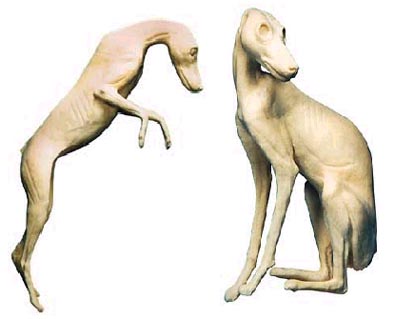
Red fox taxidermy mannequins. There is no red fox taxidermy mannequin anywhere in the world that has a chest span of greater than 14 inches.


At the side of every show ring, there is always some well-dressed individual talking about "the standard" and how "form follows function."

It all sounds good, of course -- wonderful rhetorical chestnuts -- but it's pretty much nonsense.

I mean think about it. A working dachshund is a great little animal in the field and does the same work as a terrier, but it does not look like a terrier, does it?

By the same token, a Patterdale Terrier does not look too much like a Jack Russell, which does not look too much like a Border Terrier. Smooth coats and rough do equally well in the field, as do coats of black or white, red or brown, or any combination in between. A folded ear is the same as a prick ear, a black nose the same as a liver-colored nose. Every working earth dog breed has a different head shape, and many have different tails as well. A perfect scissors bite is not necessary for work.

So when people say "form follows function," what the hell are they talking about?

Let us hope they are not talking about movement. Movement is one of those words show people toss around with a wink and a nod as if they have the secret knowledge of a wine connoisseur.

It is pure bunk. "Movement" may be important to a greyhound, a pulling dog, or even a border collie, but it is not much of a concern as it relates to a working terrier. So long as a dog can walk well, and has decent muscle mass, it can work fine. Hocks in or out hardly matters a whit.

Which is not to say that movement is irrelevant to terrier work. In fact, it is critical. But the important movement is .... wait for it .... an owner that will move off the couch, and move out of the car, and move into a hedgerow, and move a lot of dirt while digging down to a dog that is in full voice with rising adrenaline. That's the only important part of movement that matters. After you have done that a few dozen times, you will know a little more about movement, and terriers in particular.

We hear a great deal of nodding nonsense from folks who talk a good game about "protecting" their breed. But protect it from what? And by what right or qualification do these people think they are particularly well chosen to protect the bred? And what do they intend to protect it with?

In almost every case they are people who do not dig, and who seek to "protect" the terrier with nothing but a scrap of paper proclaiming a show dog "up to the standard."

And who do these people hope to protect the breed from? Why, show ring breeders, of course!

It is all laughable nonsense. And it becomes nonsense on stilts when people begin to talk about "the standard" as if it were a sacred text delivered to Moses on the Mount.

In fact, is there anything standard about "the standard?" I defy you to find a single canine standard that is more than 20 years old that has not been changed at least once.

And then there is the little matter that the standard is not the same from one country to another, or one registry to another. So what is so "standard" about the standard?

Ironically, what is NOT part of any standard in the UK or the US, is a requirement that the dog actually be a proven worker in the field. That, apparently is not "the standard." That function is not required for the rosette. A black nose, is a "Yes," but working a dozen fox, raccoon, badger, or groundhog in the field, is a "No."

The one issue of any importance in "the standard" as it relates to "form follows function," is chest size. Yet on this point, "the standard" is awfully vague, isn't it?

We are told a chest span is a man's hands. Yes, but whose hands? We do not measure a house in cubits, so why are we measuring dogs in "hand spans"? Who but the puppy peddler profits by keeping chest measurements this vague?

The Germans are not so coy and facile about chest size. A standard working dachshund (a "Teckel" in German) has a chest of just under 14 inches. The measurement is precise -- 35 cm -- and it reflects the chest size of the average red fox. The Germans are not ones to shave dice when it comes to working dogs.

It is interesing that the same 14" chest size is named not only by fox biologists, but also by such terriermen as Barry Jones, Ken James, and Eddie Chapman. In fact, if any one thing separates the digger from the rosette chaser, it's clarity on chest size.

The rosette chaser is always a bit vague about what a "span" actually means. A digger knows it means his fingers better well overlap, and if he is working fox in a natural fox-dug earth, it is best if his fingers overlap by more than one joint!

And so we come back to the real meaning of "form follows function" as used by academics in the dog world.

For these folks the "form" being refered to seems to be a paper form showing the pedigree of the animal being displayed. And "the function" is either the rosette from a show judge, or the cash to be gotten from a prospective dog-buyer.

Form follows function, indeed!

.

Wednesday, August 22, 2007

Will Not Work for Food

Back in 1946, Field and Stream's Horace Lytle wrote an article noting that Irish Setters were almost completely absent from the hunting field.

In fact, between 1874 and 1948, Irish Setters produced 760 conformation champions, but only five field champions -- a rather dismal state of affairs.

Lytle proposed that Irish Setters be rescued and returned to their working roots by implementing an outcross program.

Lytle noted that the Irish Setter once had quite a lot of white in its coat, and he thought it would not be too bad a thing for the few remaining working Irish Setters to be outcrossed to working English Setters. Yes, some white might show up in the coats, but So What? The dogs had always had that when they had actually been working dogs.

Sports Afield endorsed the call to rescue the Irish Setter from the show ring, and Ned LaGrange of Pennsylvania took up the challenge of creating a systematic outcrossing program based on breeding the few remaining working Irish Setters that were left, with the best field champion English setters.

The result was the "Red Setter" which was blessed and maintained as a working setter by the Field Dog Stud Book (FDSB), with reciprocal registration with the American Kennel Club (AKC).

The problem, of course, was that nonworking AKC Irish setters found it nearly impossible to compete in AKC field trials against Red Setters.

What to do? Well, eliminate the competition, of course!

In 1975 the Irish Setter Club of America petitioned the AKC to deny reciprocal registration to Field Dog Stud Book-registered dogs, and the AKC obliged.

As a result, the AKC Irish Setter remains, to this day
, the "least likely to succeed" bird-hunting dog to be found in America, while the Red Setter is a dog that is at least sometimes found under a shotgun.

Now rumor has it that the Irish Setter Club of America has indicated it may reverse itself and grant reciprocal registrations to any Field Dog Stud Book or North American Versatile Hunting Dog Association-registered Irish red setter that has a three-generation pedigree and DNA verification for the same. Final approval awaits a vote of the Irish Setter Club of America Field Trial Committee (the same folks who voted to toss them out 27 years ago).

Of course, what the Irish Setter Club of America has to say on the matter may not matter a whit. You see, no breed club in the AKC actually controls its own registry. The American Kennel Club issues the papers and holds the trials. AKC breed clubs are not allowed to exclude pet shop or puppy mill dogs, and they cannot greenlight registerable outcrosses without the AKC’s expressed permission, nor can they agree to have an open registry or allow dual registration, nor can they require field work as a condition of winning a championship, or require OFA or CERF-testing for registration, etc.

In short, the AKC is not a democracy; it is a business and the larger business model always overrides any breed club carping about genetics, work, or canine health.

As to the business side of the Irish Setter vs. Red Setter controversy, there is a new Joker in the card deck, and that is the fact that the AKC has added the "Irish Red and White Setter" to its Foundation Stock Service roles in expectation of bringing this "new" breed into the fold.

Of course, the "Irish Red and White Setter" is not a new breed; it is simply the old generic working Setter that used to exist before the Kennel Club split the Setters into red "Irish" setters and white "English" setters, and black and tan "Gordon" setters.

Never mind: the Kennel Club split the setters into three breeds of dogs, and now they are hell-bent on splitting them into four. Extending a reciprocal registration to the working "Red Setter" (which frequently presents with white markings adding confusion and diluting the "brand" of the Irish Red and White Setter) may upset the apple cart a little too much.

Or maybe not.

After all, the AKC has not only added the "Parson Russell Terrier" to the AKC roles, but also the the "Russell Terrier" to its Foundation Stock Service. Can the "Irish Jack" be far behind? No doubt it is being penciled in for next year, or the year after that. The 10-year plan for terriers no doubt includes adding the Patterdale Terrrier, the Plummer Terrier, and the Fell Terrier to the mix. Business demands a diversified product, after all, and the business is not canine health or work (things the AKC affirmatively hurts through a closed registry system) but registration money to underwrite the money-loser called dog shows. (For more on that see >> HERE).

One does not need to be a weatherman to guess which way the wind will eventually blow with some breeds. I think it's only a matter of time before the AKC splits the Labrador Retriever into the Black Lab, the Yellow Lab, and the Chocolate Lab, and the various dachshunds into coat types, as well as size. The Parson Russell and Russell Terriers may get split based on coat type as well. Look at what has already been done with bull terriers, collies, and fox terriers, to name just three examples.

Ah well, there's nothing to be done about it. Sleep with dogs, expect fleas. And the Kennel Club is the kind of flea-bitten dog that just keeps giving, and giving and giving in that regard. I expect more breeds to be carved out of old breeds, and working breeds to be continually gobbed up and ruined by the Kennel Club. Some things never change, even if the dogs do.

.

- Working Terriers -

.

Friday, December 8, 2006

A Bit More on the Border-Patterdale Connection


In the last post, I talked of how Joe Bowman, Huntsman for the Ullswater, was the person to coin the term "Patterdale Terrier," and that he had also been an early breeder of Border Terriers.

In previous posts, I have noted that the Border Terrier is itself a relatively young breed, created from Fell Terriers at about the time the Kennel Club was first created.

To add a point to the pencil, it's worth putting a few pictures side-by-side and fleshing out the relationships and history a little bit more. The picture at top is an early "Patterdale Breed" terrier. This picture comes from Foxes, Foxhounds & Foxhunting by Richard Clapham, published in 1923.

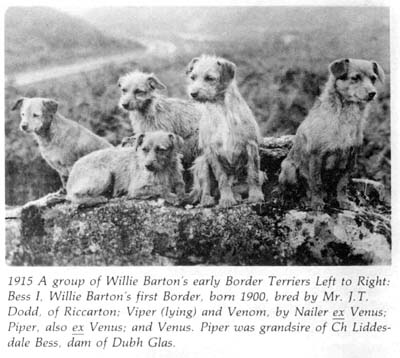
The picture below is of a group of early Border Terriers, taken in 1915. This picture is from Walter Gardner's book, About the Border Terrier.


The first Border Terrier entered on to Kennel Club roles to win a working certificate was a dog by the name of Ivo Roisterer, born on August 12, 1915, and receiving his working certificate in 1920. His pedigree is appended below, and clearly shows his great grand sire and great grand dam were from the Ullswater Hunt at a time when Joe Bowman was Huntsman.


The picture, appended below, shows Joe Weir, the Ullswater Huntsman that replaced Jow Bowman. Like Bowman, he held his position for an incredibly long period of time, from the 1924-1971 -- a period of 47 years. The dog in Joe Weir's arms is "Butcher" -- a picture apparently taken after a rescue. This photo, taken sometime in the late 1940s or 1950s, shows a dog very much like Joe Bowman's "Patterale Breed" and also very much like the early Border Terriers. It says quite a lot that this dog could be called a Border Terrier, a Patterdale Terrier, a "Fell Terrier," or a "Working Lakeland" -- evidence enough that all of these breeds are so closely related, and so recently differentiated, as to be interchangeable just a generation ago.

Of course, now we have generally decided that a "Patterdale" is a smooth or slape-coated black dog, while a "black Fell" is a rough-coated black dog.

Perhaps some day we will do away with names all together and simply divide the world of terriers as they should be cleaved: Dogs that work (regardless of color, coat or name) and those that don't. If we look at what we see in the field today, we can broadly state that Border Terriers tend to line up in the latter camp, while Patterdale Terriers tend to still reside in the former.


Thursday, December 7, 2006

Joe Bowman's Patterdale


Joe Bowman, the Ullswater Huntsman, from Foxes, Foxhounds & Foxhunting
by Richard Clapham, published in 1923.


Most of the folks that write books on dogs would like their breeds to be ancient and have romantic and mysterious origins. Pick up any book on Jack Russell Terriers, for example, and Trump will be presented as the first white foxing terrier on earth -- never mind that the young John Russell selected it for looks alone and had no problem finding another white foxing terrier to mate with it.

The Border Terrier folks have wrapped the story of their dog completely around the axle in an attempt to give it an ancient origin. In fact this breed was created at about the same time as the Kennel Club was created, and it was pulled on to the Kennel Club roles as quickly as could be.

As for the Patterdale Terrier, quite a few people claim one person or another created the dog, and yet all seem quite confused as to the shape of the head. Where did that come from?

In fact it is no mystery, and the true story of the Patterdale is not too deeply buried or very old.

In 1873, the Patterdale and Matterdale hunts were combined to form the Ullswater Foxhounds. In 1879 Joe Bowman (just 22 years old) was made master of the Ullswater, a position he held (with a few short interruptions) until 1924, when he was replaced by Joe Wear who held the position for then next 47 years. Joe Bowman died in 1940 -- one of the most famous huntsmen of all time (there is even a song about him)

Joe Bowman was an early Border Terrier breeder, and he was also the first person to cross up a blue-black Border Terrier with a black and tan Fell Terrier (also called a working Lakeland) to create what he called a Patterdale Terrier.

In Jocelyn Lucas' book, Hunt and Working Terriers, a table at the back notes that the United Hunt preferred a "Lakeland, Patterdale, from J. Boroman's strain (Ullswater kennels)."

In fact, "J. Boroman" is a typo, and the real man was Joe Bowman.


From Appendix II of Jocelyn Lucas' Hunt and Working Terriers (1931).


Lucas published his book in 1931, and the information in it was collected between 1925 and 1930. The Patterdale Terrier was clearly a type (if not a widely used type) by the 1920s, and it centered on the Ullswater Hunt and Joe Bowman.

With that knowledge, it was not too difficult a thing (but not too easy either!) to lay a hand on Foxes, Foxhounds & Foxhuning by Richard Clapham, published in 1923. Here we find not only a good picture of Joe Bowman (see top), but the picture reproduced below with caption. Click on the picture for a larger image.


"One of the 'Patterdale' breed."
Click on the picture for a larger version.

Now we can see that the Patterdale name goes back to at least the Nineteen-teens, a period just before the Border Terrier (which, like the Patterdale, started out as little more than what we would call today a Fell terrier today) was pulled into the show ring. To see what Border Terriers looked like in 1915, click here.

At about the time that Joe Bowman was fading out of the dog breeding business, in the 1930s, a young Cyril Breay was stepping up. Breay, like Bowman, had been a Border Terrier breeder.

In the early 1930s Breay met Frank Buck, when Buck rescued one of Breay's dogs that had gotten stuck in a deep rock cleft and Buck -- an expert at dynamite -- had blasted it free.

Bucks own line of dogs at the time were descended from Ullswater terriers kept by Joe Bowman, and Breay and Buck soon became fast friends with Breay breeding black dogs from Frank Buck into his line, and Buck crossing tight Border Terrier coats into his. Over time, the dogs of the two men devolved to a type as lines were crossed and condensed.

Cyril Breay was always adamant that the Patterdale Terrier was not made by crossing in Bull Terrier, and he was not lying. The Patterdale head is no mystery to a border terrier owner - the same broad cranial outlines are evident in both breeds.

Brian Nuttal began breeding Patterdales in the late 1950s, and says that his dogs are very much like those his father kept in the 1930s. It would not surprise me a bit to find that Nuttal's father got his dogs from Bowman, or from intervening hands that had gotten their dogs from Bowman. What is clear is that the Patterdale Terrier was already a recognized type by the time Nuttal's father owned his dogs.

The fact that Joe Bowman started the Patterdale strain and named it takes nothing away from folks like Cyril Breay, Frank Buck and Brian Nuttal, all of whom did quite a lot to popularize the breed, maintain it as a working dog, and perhaps improve and stabilize its looks. It is an easy thing to name a new breed (it's done every day by puppy peddlers), but quite another to find a market and a following for the dogs based on their performance in the field.

I mention all of this (I have told the story before and it is in the book), because I found a rather interesting old obituary on the internet the other day. Note the byline. With some amusement I note that "Greystoke Castle" was (supposedly) the ancestral home of Tarzan:


September 1956
PATTERDALE - One of Ullswaterside’s oldest residents, Mrs. Esther Pattinson, Broadhow, Patterdale, died at the age of 85. Formerly Miss Bowman, Matterdale, she hailed from a noted hunting family — her uncle was the celebrated Joe Bowman, huntsman of the Ullswater foxhounds for 42 years, while her great-grandfather, Joe Dawson, was for many years huntsman of the one-time Matterdale foxhounds. Mrs. Pattinson was only 13 years of age when she was hired as a farm girl, later working at Lyulph’s Tower for Mr. James Wood, who was agent for Lady Mabel Howard, Greystoke Castle.


In the end, it turns out that Joe Bowman was born in Patterdale -- a perfectly good reason for him to give a nod to the spot. It was, no doubt, an added bonus that Patterdale was also the old name of the Hunt that was both his employer and his passion. Finally, it should be noted that Patterdale was also the town where Joseph Dawson Bowman died, at the age of 88.
.

Wednesday, June 28, 2006

Acts of God


Young Moxie rests in a dry creek bed. A very nice looking little dog.


In theory, June 21st is the longest day of the year.
But, as Einstein so famously said, some things are relative and not everything unwinds according to theory.

June 24th had hours that seemed to last for weeks.

The day started out like any other, except that I had gone out for dinner with my wife and daughter the night before, and we had blown a tire on the Ford Expedition. Due to lack of a working jack, this proved to be a bigger problem than it should have been.

All of this is to say, I was a bit discombobulated that evening when I loaded the tools; one possible reason I showed up at the Flint Hill General Store the next morning with everything I needed except the locator collars.

A small problem, but not insurmountable. I have dug on the dogs without a collar before, and with the heat we were unlikely to find a skunk to ground. We would do it "old school" as best we could.

I was anxious to see Chris J., as he had picked up his first working terrier the week before from Tim J. who, in turn, had acquired the dog from an Amish fellow who had a small kennel of patterdales. The young Amish lad had subsequently come down with cancer and had to disperse his dogs.

Out of this tragedy came Moxie, an eight-month old female patterdale of wonderful proportions, a roughish coat, and a very calm disposition. I liked her straight out of the box, admiring her size and general diposition. A wonderful little dog.

I had brought Chris a short go-to-ground tunnel and a new six-foot digging bar, and we transfered both of these to his truck -- my gift to the new pup to get her started off right.

We set off with the dogs, headed down the edge of a rapidly growing cornfield on a narrow path just inside the wood line.

It was amazing what a few months had done to this section of land. Winter sticks and barren trees had fallen away to walls of thick vegetation. It was as if we were traveling down a green hallway, with Mountain ranging ahead (a greedy little dog that likes to find the hole first) with Sailor and Moxie padding along behind us.

We did not hunt the trail, as I had an idea of where we would locate quickly, and for once I was right. Sailor entered a nice one-eyed sette in a waste area with high vegetation, and began to bay. Bingo!

From the sound, I could tell Sailor was pretty deep. We stuck a stick into the sette to gauge direction and depth, and began to dig, but the ground was criss-crossed with shattered quartz mixed with hard pan, and it was very tough digging.

We dropped a four foot hole and barred, but could not locate the pipe.

Sailor came out and Mountain went in. This was a one-eyed sette, and with ground this hard the groundhog was not going to be able to dig away.

But there was some question as to whether we could dig in. We had no collar on the dogs, the ground was as case-hardened as a strong box, and I was not anxious to dig another four- or five-foot exploratory hole.

I suggested we pack it in, give this groundhog law, and see if we could find a shallower sette.

Which we did.

In the next hedgerow the blackberries were just beginning to turn, and there were quite a few holes. Sailor opened up in a large eight-eyed sette and either lost the groundhog or bolted it. Considering the thickness of the vegetation and the intensity of her barking very close to the surface, it was most likely a bolt.

We moved on.

At the base of a cluster of shattered trees on the edge of a scrub field Sailor slid in and opened up. A quick check confirmed that this too was a one-eyed sette. Chris and I moved some of the broken and barkless tree trunks, and cut away the brush.

A pileated woodpecker shattered the quiet, and Chris chuckled a little because he knows I like these big red-headed birds.

Sailor was still in the hole and baying full bore. We eye-balled the pipe, probed the hole, and then cut a few feet of rocky soil off the top.

A little barring, and we soon found the pipe and opened it up to the tube. Bingo.


Sailor slides into a den pipe among the shattered trees.


Sailor had moved back when we were digging, and now she tried to press forward past us. We pulled her for a minute and cleared away the rubble, and then she was hard on it again, baying up a storm and clearly making contact.

We were a bit behind the dog now, and about three feet behind the groundhog, so we started another hole. The dirt was mostly rock, but the pipe was shallow.

As we cut into the pipe again, Chris pointed out a large spider dragging an egg case behind her. It was that time of year. A quick scoop and spider, egg case, and dirt went sailing on to the spoil pile. Happy trails, Mrs. Spider.

At this second hole, we broke through at a little past three feet. We were just behind the groundhog now, and Sailor was grabbing one end through the old hole, and Mountain was grabbing the other end through the new hole.

Enough of that.

We pulled Mountain
out of the second hole and allowed Sailor to press the groundhog, which soon bolted to a pole snare and a quick dispatch. This was a young groundhog and I intended to skin it and grill it that evening.

While I was dispatching the first groundhog and placing it in the fork of a tree prior to tying up the dogs, Chris called over to say there was another one in the pipe.

Sure enough,
there was. Excellent.

I staked Sailor a few feet away from the hole to allow Mountain her chance to bolt or pull this second groundhog. Mountain grabbed it and pulled it out, and we dispatched it without ceremony. While I was doing that, Chris poured some water for Moxie and Sailor, but Sailor was not interested. She knew I had a groundhog in hand.


Mountain pulls the second groundhog.


The second groundhog was a little dog-worried, so we decided to use it to give Moxie a little training. I slipped the pole snare over the groundhog's body and swung it around for the dog to chase through the grass -- a little action and smell training without danger or darkness.

Moxie had a ball and used her voice a few times too -- a nice deep-timbered bark. I was growing covetous of this little dog.

I handed the snare over to Chris and he swung the groundhog a little more for Moxie while I packed up the small tools, and then we both stopped playing with the pup to repair the sette. Man it was hot!

After we had filled in the holes
and moved some sticks and brush around to disguise the dig, I began to pack up the larger tools and Chris went to check on Moxie and Sailor who were off in the tall grass under the shade of a large bush. Moxie was loose, but Sailor was staked.

"Pat. I think Sailor is dead." It was Chris' voice, but it seemed to come from a long way off. I thought it was a joke, but immediately I saw it was not. Chris was unhooking Sailor from the tie-out, and she was limp in his hands.

I ran over, and her eyes were open. I lightly touched her cornea, and she did not blink. Oh Shit. This was unbelievable.

I immediatly gave Sailor mouth-to-mouth resuscitation, putting my mouth over her entire snout and puffing into her chest and squeezing her rib cage as I let away for another breath.

One breath every five seconds, and I then could see she was breathing, but very, very shallowly.

"It's heat stroke," said Chris, and I knew he was right. I grabbed the dog and busted through the thick undergrowth to a creek bed I knew was located two fields over. "What should I do?" Chris yelled. "Take the dogs and leave the tools," I hollered back, and then I was gone, running through the brambles, trying to keep the dog's eyes from being poked out by a branch, but also trying to get her into shade and water as quickly as possible.

Sailor was totally lifeless. I stopped twice in the middle of the first field in order to give her more mouth-to-mouth resuscitation, but the third time I stopped, she did not seem to be breathing at all.

My mind reeled. How could this happen? She had been fine just 20 minutes earlier. How could this .... Oh Jesus, there was another field to go after this one. Please God, keep this dog alive.

But with a shuddering sickness I knew she was dead.

I blew through the second field
and came to the last hedge before the creek, and I crashed through it. Now we were in the creek bed, but there was no water. The damn thing was dry.

I placed Sailor on the cool bank, and was amazed to see she was still breathing -- very shallowly, but still breathing.

I touched her pupils again, but she did not blink. Her tongue hung out of her mouth like a slaugherhouse calf. A dry leaf was on it. I plucked it off, and gave her more mouth-to-mouth, but nothing changed.

I broke off two short sticks to prop up under her legs so air could circulate around her body and cool her off, and I ran up the creek bed looking for water, but there was nothing. I needed to cool her off fast, and so I did all that was left: I fanned her.

I was still fanning a half hour later when Chris crashed through to the stream bed. He had carried everything -- all the tools and both packs -- half way, and then left the bar and posthole digger at the midpoint. He had both packs, his shovel, and both dogs with him.

Sailor was clearly not better, but she was still alive. Her breathing was very shallow and her jaw was getting very rigid and locked up.

We went over the possibilities. Could it be a regular stroke? A copperhead snake? A black widow spider?

A copperhead or a regular stroke sounded possible. The edge of a field in the tall grass would be about perfect for a copperhead. A black widow seemed unlikely, as we were in the full sun and it was dry. Black widows liked moist outhouses and porch crawl spaces.

Whatever it was, it had hit Sailor very fast -- she had been fine just 15 minutes earlier. It had to be heat stroke.

We needed to get this dog to water in order to cool her off.

Chris volunteered to run to the truck and get a gallon of distilled water I had there. I gave him my keys and he was gone down the path.

Moxie and Mountain were in the dry creek bed, tied to a pack. I moved Mountain farther away so she would be in the middle of the path. If Chris came down the path fast, he could easily overshoot my location. The dog would be a stop to prevent that.

I remembered I had two small eye wash bottles in my pack, and I got one out and emptied it onto Sailor's flank, head and genitals, hoping it would help cool her off.

I did the same with the next bottle, but saved a shot glass of water for her eyes. It had been at least two hours since she had blinked.

I fanned her, first with my hat and then with a clump of branches I cut for that purpose. I saw her blink once when the branch came very close to her head. Her breathing might have been a little better. I gave her more mouth-to-mouth, and fanned her almost continuouly.

In about half an hour Chris was back with a gallon of water. I slowly poured it over Sailor's body, but it did not seem to matter.

I told Chris to go back and get the remaining tools, and I would stay and fan Sailor. In truth I was afraid to move her. She had stopped breathing entirely the last time I carried her across a field. I worried now about whether she was already brain-damaged.


A soaked Sailor remains unresponsive and paralyzed.


Chris returned with the posthole digger and the bar,
and we decided to bust back to the truck. I would carry my pack, my shovel, the six-foot digging bar, and Sailor. Chris would follow with the two dogs, his pack, his shovel and the posthole digger.

I went down the trail fast, determined to be very smooth and very rapid. I slid up the hill and down the path with the walls of green towering up on either side. Please God, please God . . . .

Suddenly there was an explosion just in front of me, and for a second I though it was a horse, but instead it was a wild turkey, as large as sofa cushion, flying up and into the trees. I immediately thought of the Emily Dickinson poem, "Hope is the thing with feathers."

Hope. Was a wild turkey a good sign? I decided it was. "Hope is the thing with feathers, that perches in the soul." Was that how it went?

I said a prayer -- the fourth or fifth full-blown prayer of the day. It is said there are no aetheists in fox holes. I do not know about that. I do know that there are no practiced diggers who have not said a prayer. It is not an accident that John Russell was a minister. A dog will put you in tocuh with God.

As I turned the corner at the bridge abutment, I realized I did not have my truck keys. Chris still had them.

Keep it together. I plotted the next 200 yards. I would wade into the Monocacy River with Sailor -- Chris had suggested it earlier, and now it seemd like a very good idea to bring down her temperature.

I ditched shovel, pack and bar, and remembered to take off my camera pouch, and remove my phone, wallet, and hunting license.

And then Sailor and I were in the river. I was holding up Sailor's head but trying to keep her body under the cool water.

Chris was about 10 minutes behind me. He went directly to the truck and put away the dogs and started the air conditioner (smart man!).

I came out of the water and saw Sailor was now worse off than before I had entered. Now I was not sure she was breathing at all.

At the truck I gave her more mouth-to-mouth again, squeezing her ribs at the exhale.

She was breathing now, but just barely. I touched her eyeballs, but she did not blink. Her jaw was locked in rictus.

I picked her up, along with a towel, and bundled her onto the floor of the front passenger side.

And then I was off.

Chris had suggested a vet, but I had hesitated.
What could they do now that I had not? If it was a copperhead bite, the dog would live or die; there was no antivenin at most vets, and besides it was pretty late in the day for that; three and a half hours after the event.

But Chris was right, of course. I wheeled on to the freeway, the air conditioner blasting, my pants dripping with water and mud from the river. Sailor was all but dead on the floor boards next to me.

I realized I had to keep my head on the road for this next part to pay off. A wreck and we were both done.

I drove fast and without mistakes, trying not to look at the dog except for the one time I reached over to put two baseball caps over her body so cold air would not blow straight on her. The air conditioner was cranking full bore.

I braked hard once, and Sailor seemed to lift her head. I called Chris on my cell phone. He had been talking to a vet tech somewhere. "Get her to a vet," he admonished, and I assured him that was exactly where I was going.

I went over the possibilities again.

It was now three and a half hours since the event
-- whatever it was -- and she was still not any better. If she was still alive when I got to the vet, four hours would have passed. She had gotten worse after the run to the car, and then she had gotten worse after the river immersion. This was not feeling like heat stroke.

A dog will generally bounce back if cooled after a heat collapse. Could it be a plain stroke? That seemed increasingly possible. I thought about the location where she had been -- in the tall grass, under a bush, near dead trees and logs. It seemed like a good location for a copperhead. It could not be rat poison -- of that I was certain.

What about a black widow? It seemed unlikely. Black widows liked moist holes, outhouses, crawl spaces and the corners of old sheds. It was hot and dry and sunny where we had been. Besides, I had only seen one black widow spider in my life, while I seen at least a dozen copperheads.

Heat stroke was still the most likely problem. It had been hot, and Sailor had worked hard. But really, it had not been that long. A half hour? Forty-five minutes? No more. At least not if all you were counting was the last hole.

It occured to me that it might be an electrolye imbalance. Perhaps some essential salt or sugar was wildly out of skew in Sailor's system.

I pulled into a grocery store parking lot at the end of the freeway and left the car running with the keys in the ignition, the airconditioner on full blast, hazard lights blinking. I quickly found the baby aisle and two bottles of pedialite. By a miracle of timing, I was the only person in the express line.

Back at the car, I pulled a huge irrigation syringe from my vet kit
and loaded it up with pedialite. Sailor's jaws were locked shut, but I pried them apart and dripped pedialite down her throat. It simply ran out the side of her mouth. Her tongue was not working and her throat muscles seemed paralyzed.

I loaded up another syringe and jetted it down her throat. I little of it might have rolled down her throat by force of gravity alone, but most fell out of the side of her mouth.

She was paralyzed.

I gave up and raced off to the veterinary clinic closest to my house. This was a small hole-in-the-wall place, and I had not been there for many years.

I went in and explained the situation very quickly.
I said I thought it was heat stroke, but it could be a snake bite. I brought in the dog, and a balding middle-aged vet quickly examined her and said it was not heat stroke -- the dog was cold. It was hypothermia.

Hypothermia? You're kidding?! It was 92 degrees in the shade!

He nodded grimly, and rushed into a little room and came back with a space blanket. He wrapped Sailor in it and simultaneously turned a little valve on the wall to start something up. He pushed a rectal thermometer into Sailor and a few seconds later he had her temerature: 91.8 degrees.

She should be at least 101. She was freezing to death.

Without further ado, the vet wrapped Sailor in a full-body hot water heating pad (he had been turning it on with the valve), and then he checked under her gums. There was some slight hemorrhaging there. Something toxic was in her system.

A very nice lady came into the room and held the hot water pad around Sailor.

No one told me to wait outside. I was grateful for that.

The young lady holding the hot water pad ordered up a warm-water IV.
While we waited for it to appear I found out she too was a veterinarian. This was her second week on the job, and this was her first job out of vet school at Michigan State. She was very nice.

As much as I liked the lady, I loved the bald guy, who now came in and drew some blood. He was going to run a quick test, he said, to look at sugars and some other functions. How long would that take? Fifteen minutes. Maybe less.

Sailor did not noticeably improve,
but in 15 minutes the blood tests came back, and they were good. Sailor was OK for fluids, her sugar was OK and her kidney and liver functions were OK.

This was big deal, and I knew it.

An hour went by. Sailor was still not blinking and her jaws were still locked in rictus. Under the tinfoil of the space blanket and the heavy hot water heating pad, I could not tell if Sailor was breathing easier or if she was breathing at all.

But she was.

Very slowly her temperauture came up
, first to 92.5 degrees, and then to 93.5 and then 94.

At 94.5 degrees, the bald doctor let out a smile, and at 95.1 he audibly cheered.

I asked the bald vet where he was originally from, and he said Algeria. I told him I gew up in Hydra, a suburb of Algiers, as well as in Morocco and Tunisia. He said he thought he remembered me now -- from 15 years earlier. I was the only American he had ever met who had lived in Algeria. We talked about Algeria a little, and food, and the Kabylie Mountains. I think he could tell now that I loved more than the dog. But he knew I loved the dog.

It turned out that 10 or 15 years earlier he was the kennel man at this vet. Now he was the doctor. This was a success story that spoke volumes. What a life! To escape the troubles in Algeria, come to America and become a veterinarian. I loved this guy. It turned out that the new lady vet had been the receptionist at this clinic and had then gone off to vet school herself. My new Algerian friend had hired her fresh out of school. Wonderful! What a great country.

At 97 degrees, Sailor closed her eyes for the first time in six hours. At 97.5 degrees, Sailor would open them again if we shook her muzzle. It was a miracle.

At 98 degrees, Sailor licked paste dog food off her lips, and her eyes seemed to focus a little. She was coming back into this world.

It was now 6:30 and at least an hour and a half past when the veterinary should have been closed. Sailor was clearly rallying, but both vets strongly suggested I transfer her to another emergency vet in Vienna. Couldn't I just keep warming her up at home with a heat pad? I was worried about what this vet visit was going to cost me, never mind the next.

It was then that I realized I had never filled out a single piece of paper.
They did not even know my name, and we had never discussed expenses.

The bill, for two vets working hard on my dog for over two hours, including blood work and two IV's , was just $275. It was an incredible bargain.

I hugged the vet in the parking lot as I left. They had saved Sailor!

I headed off to the emergency veterinary, with the heat in the car blasting, and found it 20 minutes later. At this vet, I again explained the situation, and they took the dog to the back. I began to follow, but was rather rudely told to stay in the reception area. I was directed to fill out paper work in the front.

The receptionist asked me if I had ever been there before. No, I had not.

I gave her my name and phone number. My phone number came up in her computer system. Did I own Barney?

Barney? Barney. Jesus, yes, but that was a long time ago.

A sad dim light came on in my brain. "Was this on Christmas Day?" I asked.

"Yes," she said.

So this is where I had come. Barney was 15 and had prostate cancer. There was nothing to be done. On Christmas day he could no longer stand, and so while everyone else was opening their presents, or watching their kids do the same, I was putting down my dog. I told the kids that Barney was sick and was in the hospital. It was a week before they found out he was not coming back. That afternoon, while the wife and kids went to Grandma and Grandpa's, I buried Barney under the cherry tree in the back yard.

So this was that place. Was this an omen? If so, it was not a good one.

A veterinarian came out.
She was very grim and asked me what had happened to the dog. I recounted the day. She said the dog was still in very serious condition, and that they could not get a pulse.

I watched her listen to me, and then I watched her as she watched me listening to her. What was going on here was not medicine. I got the sense that she was sizing me up for a bill.

And she was.

Fifteen mintes later the receptionist presented me with a "prospective bill" for $1,575 for 36 hours worth of work that included two x-rays (called radiographs here to confuse the client) along with antibiotics, lot and lots of blood tests, and God know what else.

"No, I can't afford this, " I said. "I'll pay your minimal intake fee, just give me my dog back. I know how to heat up a dog, and she doesn't need any of this. X-rays? No. Just give me my dog back."

The receptionist made a phone call to the back, and 30 seconds later the bill dropped from $1,575 to $250 for 12 hours of heat, IVs, antibiotics and monitoring.

I had come this far -- I had expected to pay this cost. Done. This veterinarian was a scammer, but for $250 I would buy 12 hours of security. I was not even mad at this vet. If you cannot say "no" to a veterinarian, don't expect them to say "no" for you. Like anything, there are good honest ones and then there are the others. Caveat emptor.

I went home in a driving rain, pretty sure Sailor was going to be all right. Her eyes were open, and she would get steady heat and IV liquids all night.

There was nothing more I could do right now. But I still knew nothing. What was it? What had done this to Sailor? I was so deep in thought, it was 20 minutes before I remembered to turn off the heat in the truck.

It was not heat stroke or rat poison. The slight hemorhaging at the gum said it was not a regular stroke -- it was some sort of toxin.

It was not a copperhead -- six hours after the event there was no localized swelling or necrotic tissue.

It had to be a black widow spider.

Then, and only then, did I remember
the spider dragging the egg case. That spider had been on top of the ground. It did not seem black and shiney like a black widow, but it was a sign. A sure sign. Like the turkey. Like the smart and kind Algerian vet who cheered for my dog.

When I got home, I booted up the internet and learned a little more about black widow spiders. There are a couple of species, but they are all toxic. They are not found in the UK, or in the colder parts of Europe, but they are found across the U.S., in Latin America, Africa and Asia. Our local variant was called the Northern Black Widow.

Black widow spider toxin is 15 times more powerful than that of a prairie rattlesnake, but because a spider is small, it cannot deliver too much of it. That said, back in the 1940s and 50's -- before modern respirators and sedatives improved things -- black widow spiders killed between 4 and 5 percent of their human victims; generally the very old and the very young.

Sailor, at 10 pounds, had been dosed as if she were a human bitten by 15 black widow spiders. She was clearly very, very lucky to be alive.

Black widow spider venom is a powerful neurotoxin. It works by firing off all the nerve cells at once, locking up the muscles of the animal, and making it difficult or impossible for it to move, breath or (apparently) even blink its eyes.

Respiratory failure is what does the killing.

Sailor's breathing and heart had been barely working
because her muscles were stretched as tight as a fence wire. The neurotoxins would not let her relax enough to work her diaphragm. A failing diaphragm meant blood and air were not circulating, and so her tempertaure had fallen, crashing her into hypothermia.

Apparenly before there were outhouses, crawl spaces and old sheds (the locations where most humans are now bitten), black widow spiders denned in hollow trees, rock ledges, and animal burrows. But they are not common, that was clear. I have dug on hundreds of animals and my friends have dug on thousands, and none of us had ever had a dog bitten by a black widow spider.

Lucky me. Lucky Sailor.

Most bites occur when blackwidows are defending their egg cases, i.e. at about this time of year.

Apparently blackwidow spider venom takes 2-3 days to completely clear a victim's system, and when humans are bitten, they often report weird nightmares for weeks afterwards.

Spider flashbacks.

That night I checked my cell phone obsessively
, but there were no calls from the veterinarian.

I was at the vet's at 7:00 am -- less than 12 hours after I dropped Sailor off. They were slow to bring her out, but her overnight notes said she had eaten a little and gone to the bathroom, and that now she could stand up.

Wonderful! I paid my tab and bundled her off to the truck in a driving rain.

The rain had started to come down at about the time Sailor was discharged from the first vet.
Over the course of the next four days, more than a foot of water was dropped across our area.

Creeks and rivers jumped their banks and basements flooded. In Washington, D.C., the Department of Justice, the Internal Revenue Service, the Commerce Department, and the Smithsonian Institution were closed due to flooding.

Up at Great Falls, boulders the size of houses were ripped from the riverside and washed down stream. The Washington Post ran a picture of a groundhog that crawled on top of a car hood to escape its flooded burrow. Aerial pictures of farm country up along the Monocacy River showed fields under standing water.

This was a 200-year record for rain in a 24-hour period, a 48-hour period, and for a week.

It was as of God was trying to drown every spider across a three-state area.

It was an act of God.


Sailor warms up at the house, an hour after coming home from the vet. She is fine now, without brain damage or any other evidence of injury.

.