Showing posts with label puppy mills. Show all posts

Thursday, August 5, 2010

Time to Move Beyond What the Kennal Club Offers


Kennel Club judge Steven Seymour writes in Dog World:

"It is my absolute belief that if put to the vote today, there would be a huge majority vote in favour of major structural change in the way we breed and register puppies in this country."

"Dogs’ health and welfare are being left waiting on the shelf at present, while the power brokers decide what will produce the best outcome; maybe the best outcome for themselves. This is simply not good enough.

"The calls from the mainstream of dedicated breeders could not be any louder. They want the KC to take a proper stance against those who breed without regard to health, and equally they want action to ensure those who volume breed are strictly monitored and inspected on a regular and profession basis.

"Imagine any corporation or business today being able to receive millions a year in income and not be called to account for the product its brand endorses. Each and every day the KC registers puppies which are bred from unchecked parents. Its system of registration allows this to continue unregulated. Everyday someone will buy a faulty product which the KC has endorsed as being purebred and KC registered."


Read the whole thing!
.

Friday, June 18, 2010

The Humane Society did WHAT?

Has Hell frozen over?

You might think so.

You see, the Humane Society of the U.S. (HSUS) is quoting this blog in the cover story of All Animals magazine, which is HSUS's full-color bimonthly membership magazine which goes out to their 10 million members.

In a long, well-written, and fair piece, author Carrie Allan lays out The Purebred Paradox whose strap line is "Is the quest for the 'perfect dog' driving a genetic health crisis?"

Once upon a time, people believed that purebred dogs were naturally healthier than mixed breeds. How have we arrived at a point where it may be safer to presume the opposite? ....

.... The more limited the number of mates, the greater the chance a dog will be bred with a relative who shares similar genes. Genetic diseases are caused by recessive genes, so a good gene from one parent will trump a bad gene from the other. But if both parents have a bad gene—such as one that predisposes them to hip dysplasia or blindness—the likelihood of a sick puppy increases.

“What happens when you have a small and inbreeding population is that the probability of two negative recessive genes finding each other increases as the gene pool chokes down to a smaller and smaller pool,” says Patrick Burns, a Dogs Today columnist who frequently writes about genetic health issues on his blog, Terrierman’s Daily Dose.

A closed registry that allows no “new blood” into the mix exacerbates the problem, he argues: “In many AKC dogs, the founding gene pool was less than 50 dogs. For some breeds, it was less than 20 dogs.”

This year’s Westminster champion, a Scottish terrier named Sadie, hails from one of these tiny gene pools and is “very heavily inbred,” says Burns. The limited ancestry for AKC-registered Scotties, he adds, helps explain why 45 percent die of cancer.

“We do not need to have a closed registry to keep a breed,” Burns says, pointing out that breeds existed long before there was an organization to track them. “We did not create the dogs we love in a closed registry system—we have only ruined them there.”


Read the whole thing. The HTML version (multiple jump pages) is here, and the PDF version (8 pages) is here.

This is one of the longest and best articles done so far on the American "dog mess" that is a confluence between disease, deformity and defect caused by inbreeding and contrived and twisted breed standards, and the sick internacine economic relationships that exist between puppy mills and the AKC.

This article also details what has been going on in the United Kingdom since the advent of Pedigree Dogs Exposed. As Carrie Allan writes:

[I]in the United Kingdom, at least, there seems to be momentum for change. Whether that momentum will gather steam in the U.S. remains to be seen


Spread this article around!

Remember that if you want the Humane Society of the U.S. to move in the right direction, you need to click and treat.

I assure you this is the right direction. They have not taken any gratuitous swipes at pedigree dogs or dog breeders. Quite the opposite, in fact.

Take this line for example. Anyone think this is not fair and well-said?

At The HSUS, we’re big fans of adoption. By going to a local shelter or rescue group, you stand a good chance of both saving a life and finding a purebred — after all, they make up an estimated 25 percent of dogs in shelters.

When you can’t find the dog you’re looking for, however, responsible breeders are another option; they are devoted to their animals’ well-being and committed to placing them in loving homes. And if every shelter dog were adopted and every puppy mill were shuttered, there would still be a need for good breeders to supply dogs to American households.


Full applause to HSUS for this article, and to author Carrie Allan in particular. This is a big subject, and she has done an extraordinarily good job of wrapping herself around it and presenting it in a cogent and fair manner.

Tuesday, June 15, 2010

Puppy Mills, Veterinary Bills and the AVMA


This aisle of dog feces did not result in a direct violation from the USDA.

If I told you the current head of the American Veterinary Medical Association had been in charge of puppy mill inspections at the U.S. Department of Agriculture at a time when inspectors rarely issued a citation for even the most horrific situation, would you believe me?

Would you believe me if I told you this same gentleman -- Ron DeHaven -- is now a cheerleader for veterinary bill padding?

The good news is that you do not have to believe me.

I have video tape and records from the U.S. Department of Agriculture itself to prove it.

Let's start with the USDA's "Animal Care" division.

The U.S. Department of Agriculture's own Inspector General released a report last month admitting the Agency has done a very poor job of enforcing the Animal Welfare Act, the law designed to make sure that "commercial breeding facilities" for dogs and cats are something less than centers for horror, pain and misery.

You can read the entire report yourself right here [PDF], complete with graphic pictures.

The report starts off noting that:


In our last audit [2005] on animals in research facilities, we found that the agency was not aggressively pursuing enforcement actions against violators of AWA [Animal Welfare Act] and that it assessed minimal monetary penalties against them....


And guess what? Things did not improve!

As The Los Angeles Times summarized in its story on the USDA's Inspector General report:


An internal government report says dogs are dying and living in horrific conditions due to lax government enforcement of large kennels known as puppy mills.

Investigators say the Department of Agriculture agency in charge of enforcing the Animal Welfare Act often ignores repeat violations, waives penalties and doesn't adequately document inhumane treatment of dogs. In one case cited by the department's inspector general, 27 dogs died at an Oklahoma breeding facility after inspectors had visited the facility several times and cited it for violations.

The review, conducted between 2006 and 2008, found that more than half of those who had already been cited for violations flouted the law again. It details grisly conditions at several facilities and includes photos of dogs with gaping wounds, covered in ticks and living among pools of feces.


So who was running Animal Control during those years?

None other than Ron DeHaven, the current head of the American Veterinary Medical Association (AVMA).

DeHaven was deputy administrator for Animal Care (AC) from 1996-2001, deputy administrator of APHIS for Veterinary Services from 2002-2004 and head administrator of the Animal and Plant Health Inspection Service from April 2004-July 2007.

In short, if commerial dog breeding facilities in the U.S. are a mess, that mess is parked right at his door.


Ticks on this dog were deemed to not be a direct violation, and so no follow up.


So what's DeHaven's message now?
Watch the video below to find out.


Isn't that wonderful? Ron DeHaven is the new face of veterinary bill padding; a pusher for contrived crisis and the "dependency model" of veterinary care.

The current head of the AVMA is the same fellow who gave a "big wink" to the kind of puppy mill abuse the USDA's Inspector General found so shocking only last month.

This is who represents your veterinarian on Capitol Hill.

Nice!

You know what you won't find the AVMA talking about?

You won't hear them talking about contrived standards in Kennel Club dogs.

You won't hear them talking inbreeding and disease in Kennel Club dogs.

And why would they? For veterinarians, silence has been golden.


Friday, May 14, 2010

The Always New and Continuing Evolution of Dogs


A repost from this blog, circa February 2007.

A lot of people want the undifferentiating affection of a dog, but are not entirely willing to pay the price: forced awakenings at 7 am, expensive fencing, veterinary care, shedding coats, barking, and strange smells in the living room.

Dogs are small tyrants that crap on your rug, chew up your glasses and steal your sandwiches.

If you own a dog, you can still ride off into the sunset, but you better be back by 8:30 to feed it, and by midnight to put it to bed for the evening.

In the era of schooners and candles, when people lived on large farms with slow traffic, things were probably a little bit easier. Back then a large dog could sleep in the barn and roam more-or-less at will.

Now a lot of folks live in condominiums and multi-story apartment buildings surrounded by six-lanes of traffic. Others are retirees looking for less work. The result is a growing market for small dogs that are as easy to take care of as a cat.

In fact, what is wanted today is a dog that acts like a cat, and a cat that acts like a dog.

Towards that end breeders on both ends of the spectrum are working towards a middle ground, with cats that have affectionate personalities and legs too short to jump up on the furniture, and dogs that do not shed, rarely bark, and are so small they can be tucked inside a handbag.

I suppose all of this is simply a logical extension of Robert Bakewell's earlier efforts to control sires in order to produce animals for a particular function.

Cats, of course, were slow to domesticate as prior to the rise of the "indoor" cat, felines were free to roam and cross-breed at will.

Dogs, on the other hand, have been the product of controlled breeding for so long that most Kennel Club breeds now seem to specialize in two or three genetic defects. As a consequence, more and more prospective pet owners are are now looking at cross breeds in some hope of avoiding expensive veterinary work to "fix" defective canine hips, eyes, knees and teeth.

Another factor, of course, is that a lot of the small "toy" breeds are so fru-fru that no self-respecting heterosexual man is eager to be seen walking one. A Toy Poodle? A Papillon? Please.

A cross-bred small dog at least offers the potential dignity of being something a little "outside the box."A small dog described as a "little mutt" or "attack rat" by the husband, can be described by the wife as a Shitpoo (a Shih Tzu crossed with a Toy Poodle), a Cockapoo (a Cocker Spaniel crossed with a Toy Poodle), a Schnoodle (a Schnauzer crossed with a poodle), a Bagel (a Beagle crossed with a Bassett Hound) or a Puggle (a Pug crossed with a Beagle).

Pardon me if I do not join the Kennel Club crowd which clucks and moans about "little mongrels" being cranked out by puppy millers and "back yard breeders".

How, I would ask, does that differentiate these new dogs from most Kennel Club breeds? After all, most of the dog breeds on earth today are less than 140 years old, and most were invented by puppy peddlers doing their business between 1860 and 1900.

The harsh truth is that most canine breeds were not forged by honest field work, but by professional breeders seeking to sell dogs for the pet trade.

In short, the true history of most dog breeds is one of "backyard breeders" creating contrived names and fake histories for their dogs and producing enough of the dogs in a short enough period (a puppy mill by any name) to create a "class" of dogs to fill a Kennel Club ring.

And it's not like the Kennel Club breeds cannot be improved by a little outcrossing!

The Yorkie has such serious teeth problems that they invariably require attention from expensive veterinary dentists.

The Pug's bulging eyes make it prone to eye injury, and nearly every one of them is born caesarian.

The Toy Poodle is a barker and often mentally unbalanced.

Dachshunds are prone to serious back and joint problems.

Papillons and Chihuahuas have all kinds of health problems, not the least of which are that their bones may be so light they can break jumping off the couch.

The Lhasa Apso is a walking mop requiring more grooming than a Hollywood starlet, and is often a mental case as well.

Of course, most cross-breeds are not all that successful, and only a very few show a marked advantage over a common pound dog.

That said, enough crosses are working out that a few crosses are developing into regular replicable breeds. The most obvious candidate for "new breed" distinction is the "Labradoodle" -- a cross between a Labrador Retriever and a Standard Poodle. In Australia, this very tractable dog has been standardized and now breeds true after more than 15-years of focused work. In the U.S., however, most "Labradoodles" remain hybrids which, when crossed with each other, throw a wide array of very different-looking pups.

Contrary to what many hybrid dog advocates will tell you, a hybrid dog is not always healthier that its purebred cousin. Genetic loads are never revealed in one breeding, and "hybrid vigor" is not a perfect curative for all canine ills.

A final note is that when dogs are combined, the positive characteristics of a breed are not necessarily those that are transfered.

The tale is told of the time when Marilyn Monroe met Albert Einstein and coyly mewed, "Professor Einstein, we should get together. With my looks and your brains think of the wonderful babies we could produce." To which Einstein is supposed to have replied: "Yes, but what if they have my looks and your brains? That too is an equal possibility."
.

Saturday, March 28, 2009

Battery Cage Dogs are the AKC's Cash Machine

ABC TV's Nightline program will be featuring a "state of the art" puppy mill tonight.

Some promotional video is up right now, however. Check it out.

The owner of this establishment is correct, in that he is running a state-of-the-art commercial dog breeding facility with a high-tech waste management system.

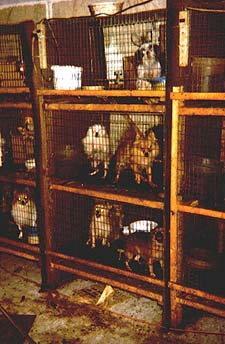
This is what a pretty good commercial dog breeding facility looks like: Small dogs (toy breeds and terriers) raised like chickens in battery cages.

And, for the record, this is what the AKC wants more of ... provided they are all AKC registered puppies, of course.

And why does the AKC want more commercial facilities breeding AKC dogs?

Simple: it needs more commercial kennel registrations in order to subsidize dog shows, which are not paying their way.

In the minutes of the September, 2006 AKC Board meeting (link to PDF file), Ron Menaker notes that the AKC has been registering puppy mill dogs "for the past 122 years" and "we have collected millions of dollars" as a result.

In short: Get over it!

And why does the AKC snuggle up to the puppy mill industry?

The Board of the AKC is rather blunt about the problem: though the AKC made a profit of several million dollars last year, it is not enough, as registration numbers are trending sharply downward and "events" are costing millions more than they are bringing in.

"Events," of course, is a euphemism for dog shows.

In short, because rosette-chasing is a money-losing proposition for the American Kennel Club, they need more puppy mill registrations in order to subsidize dog shows.

As recently as September of 2008, AKC President Ron Menaker wrote:

Today, there are at least 30 All-Breed registries in addition to the AKC, whose combined registration numbers exceed that of the AKC. If this trend is allowed to continue, if we do not stop the hemorrhaging of declining registrations, we will no longer be the premier registry in the world, let alone in our country.

Management has been directed by the Board to aggressively pursue all dogs eligible for AKC registration....

.... AKC used to dominate the marketplace. Even places like Macy’s and Gimbels sold AKC puppies. Many pet owners who bought these puppies, and I was one of them, tried their hand at showing and breeding. These owners who purchased their first purebred from a retail outlet, not only added to AKC’s registrations, but those who wanted to advance in the sport, then sought out fanciers to continue their
journey....

....Last year less than one half of our revenues came from registrations. Dog registrations peaked at 1.5 million in 1992. By the end of 2008 it is projected we will register only 725,000 dogs. This is a staggering 53% decline....

.... If the current trend continues and dog registrations decline to 250,000 over the next several years, AKC will face an annual revenue shortfall of $40 million. To put this in perspective, if this scenario occurred, and we relied solely on raising the event service fees to make up for this revenue shortfall, the fee would be a staggering $20 per entry.


.

Tuesday, March 17, 2009

AKC's Best Puppy Mill Friends are Sued by HSUS


AKC Loves Puppy Mills ... and the Naïve

The American Kennel Club's two closest friends, Petland pet stores and the Hunte corporation, have been sued by the Humane Society of the U.S. for "conspiring to sell unhealthy puppy mill puppies to unsuspecting consumers in numerous states."

Hmmmm.... It seems the AKC's little business of registering misery puppies may yet come crashing down around it.

And what will the American Kennel Club say about this?

Remember, Petland is the company the AKC tried to go into the puppy-selling business with, while the head of the Hunte Corporation (Andrew Hunte) has been in the AKC's box at the Westminster dog show.

The AKC depends on puppy mills dogs to subsidize dog shows, and has said that they want to see an increase in puppy mill registrations.

Can they really stand to be silent in the wake of this lawsuit?

And will the Humane Society actually suit up and take on the AKC as being an informed accomplice to this misery and consumer fraud?


PHOENIX (March 17, 2009) — Members of The Humane Society of the United States and other consumers filed a class action lawsuit alleging that Petland, Inc. and the Hunte Corporation are conspiring to sell unhealthy puppy mill puppies to unsuspecting consumers in numerous states. Petland is the nation’s largest chain of pet stores that sells puppy mill dogs and Hunte is one of the country’s largest distributors of factory-produced puppies.

The lawsuit, filed in federal district court in Phoenix late Monday, alleges that Petland and Hunte violated federal law and numerous state consumer protection laws by misleading thousands of consumers across the country into believing that the puppies sold in Petland stores are healthy and come from high-quality breeders. Many of the puppies sold by Petland come either directly from puppy mills or puppy brokers such as Hunte, which operates as a middleman between the mills and Petland’s retail stores.

“Unscrupulous dog dealers like Petland and Hunte reap massive profits by pushing unhealthy puppies on well-intentioned dog-lovers who would never knowingly buy a puppy mill dog,” said Jonathan Lovvorn, vice president & chief counsel for Animal Protection Litigation at The HSUS. “Families often bear the great expense of veterinary treatment for sick and unhealthy dogs, or the terrible anguish of losing a beloved family pet. This industry has been systematically lying to consumers for years about the source of the dogs they sell, and it’s long past time for a reckoning.”

The class action lawsuit is the result of many months of investigative and legal research, and comes after an eight-month investigation into Petland stores by The HSUS that demonstrated a direct link between multiple Petland stores and unscrupulous puppy mills. Numerous other reports have also surfaced of Petland’s allegedly deceptive sales practices, including the marketing and sale of puppies with life-threatening genetic defects and highly contagious parasitic and viral infections.

The 34-page complaint includes numerous examples of sick or dying puppies that Petland sold, including:

· Mainerd, a Boston terrier, was diagnosed with a congenital spinal condition. Some of her vertebrae have not formed completely while others have fused together causing tissue to grow underneath along with possible nerve damage. Mainerd is now receiving steroid treatments for her ailments and may require expensive surgery.

· Minchy, a miniature pinscher, was sold by Petland at 10 weeks old. He was immediately diagnosed with coccidian, an intestinal parasite that causes diarrhea and weight loss. Minchy was also diagnosed with an inherited disorder, Progressive Retinal Atrophy, which will ultimately lead to permanent blindness.

· Tucker was sold at four months old. The bloodhound puppy experienced severe separation anxiety and various health problems before developing orbital cancer at only 7 months of age.

· Patrick, a Pomeranian puppy, was sold at three months old. He suffered from diarrhea and vomiting shortly after arriving at his new home. At 11 months old, Patrick was diagnosed with a genetic disorder, dual luxating patellas, which will require expensive surgery on both of his knees to correct.

Puppy mills are mass breeding operations where the health of dogs is disregarded in order to maintain a low overhead and maximize profits. The dogs are often kept in wire cages, stacked on top of each other, with no exercise, socialization, veterinary care, or loving human interaction. They are treated not like family pets, but like a cash crop. Petland denies it supports these substandard breeding facilities, and claims to follow “Humane Care Guidelines” developed in conjunction with the USDA. However, USDA recently informed HSUS in writing that it has no record of any such guidelines.

The class plaintiffs are being represented in the case by Saltz Mongeluzzi Barrett & Bendesky, PC; Hagens Berman Sobol Shapiro, LLC; Garen Meguerian, Esq. and lawyers in The HSUS’s Animal Protection Litigation section. The suit requests a jury trial on behalf of the consumer class plaintiffs, and seeks reimbursement of the puppies’ purchase price along with compensation for all related monetary damages for the class members.

Hump and Dump Dog Breeders


For the pure destruction of the dog, puppy mills cannot begin to compete with "hump and dump" hobby breeders who crank out two, three or four litters a year, perhaps keeping one dog out of every 10 or 12 produced, and never working any of them.

Of course the "hump and dump" crowd never recognize themselves in the description. According to them, it's the "puppy mill" and "backyard breeders" that are wrecking working dogs.

In fact, in most cases, dog breeds have been wrecked by show ring aficionados who pay for their show ring hobby by engaging in "hump and dump" dog breeding to defray the expense of traveling around the country to show their dogs and collect rosettes.

Are you a "hump and dump" dog breeder? Maybe. Or as Jeff Foxworthy so memorably puts it, You might be a redneck if ....

  1. If you think breeding is a "sport," you might be a "hump and dump" dog breeder;

  2. If you bred more puppies last year than the number of days you actually worked your dogs in the field, you might be a "hump and dump dog breeder";

  3. If you have an "available" dog on your web site or posted to a list, and you are breeding another litter, you might be a "hump and dump" dog breeder;

  4. If you have been in your breed of dogs for less than five years and are breeding a litter, you might be a "hump and dump" dog breeder;

  5. If you seem to have a permanent "puppy for sale" posting on any of the boards, you might be a "hump and dump" dog breeder;

  6. If your web site gives instructions on how to air-freight a dog across the country, you might be a "hump and dump" dog breeder;

  7. If you have regularly advertised puppies for sale in a magazine, in the newspaper, or on a "pets for sale" web site, you might be a "hump and dump" dog breeder.

  8. If you have a PayPal link on your web site so people can buy puppies quickly, you might be a "hump and dump" dog breeder;

  9. If you have a web sit that sells dogs, but do not have a prominent link to a rescue organization you might be a hump and dump dog breeder.

  10. If you have "kennel reduction" sales in which your goal is to dump all the older dogs that are no longer in the running for ribbons or are no longer of use to you as studs dogs and breeding bitches, you might be a hump and dump breeder.

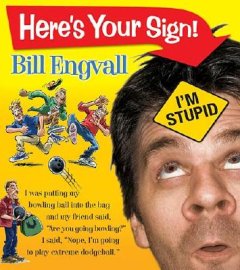
Scored more than one on the above test? To quote comedian Bill Engvall, Here's your sign.

.

Saturday, March 7, 2009

The AKC's Long Love Affair With Puppy Mills

One of the great fictions of the press corps is that a little light is all it takes to eradicate evil.

It's not true.

Consider The Kennel Club in the U.K. which, more than 24 years ago went on television telling folks that YES they had come to realize that some dogs were in pain and misery due to exaggerations, and YES they were going to take steps to do something about it.

And what did they do? Nothing! Not a thing.

Much the same is true here in the U.S., where the American Kennel Club has spent the last 50 years pocketing scores of million of dollars from commercial "puppy mill" vendors, and never mind the misery they have inflicted on dogs and dog owners alike.

Will the rise of the Internet change anything?

I have argued that it can, and that it will, but so far this thesis is unproven.

Meanwhile, while we await the verdict of history, here's what The Philadelphia Inquirer was saying more than 13 years ago.


The Philadelphia Inquirer, December 31, 1995

DIGGING INTO THE AKC:


Taking Cash for Tainted Dogs
By: Karl Stark

David Bartscher and Robert O. Baker can't forget the dead dogs they pulled out of Shirley Myers' kennel.

The humane officers had traveled to the prairie town of Mitchell, S.D., to raid the kennel with Davison County Sheriff Lyle Swenson. They found three dead rottweiler puppies stuffed in trash bags of excrement. Three other puppies were sick, apparently with the deadly parvovirus. Nursing mothers were living in cages without water.

Many of the 150 dogs lived in virtual darkness, while others splashed around in mud tainted with their own excrement. Two small dogs had lost their paws to a male rottweiler who bit them off, Myers acknowledged. The officers captured the entire raid, including Myers' comments, on videotape.

That they found deplorable conditions at a "puppy mill" was not a surprise. That the Myers kennel dogs had the sanction of the highly respected American Kennel Club (AKC) is another matter.

Myers was a breeder whose dogs had long been accepted for purebred registration by the AKC. AKC officials had known for several years that Myers was failing to keep proper records to prove that her dogs were purebred, AKC reports show. AKC delayed taking strong action even after its own staff uncovered evidence of unidentified dogs and sloppy book work, former AKC inspectors said.

In an Inquirer investigation, six former AKC inspectors said in lengthy interviews that the dog registry of the American Kennel Club, a nonprofit organization widely regarded as the guarantor of the pedigrees of purebred dogs, is largely a sham. They say, and records show, that the club does little or nothing to ensure that many of the dogs the club certifies as purebred are legitimately bred.

In the last five years, the AKC has taken in more than $100 million in exchange for papers certifying more than six million dogs as purebreds. Much of that money came from large kennels that sell dogs to brokers or to pet stores. The former AKC inspectors say those certifications are often worthless or untrue.

The inspectors say the AKC does not verify bloodlines. What it does is accept applications and fees and send out registration papers, relying mostly on the word of the breeder that the information submitted is true.

They say the club's primary enterprise - the registry of purebred dogs - has been corrupted. So many dogs without proper papers and proven lineage have been accepted into the AKC "stud book," or registry, in recent years that it's no longer reliable, they say.

In many cases, they say, the AKC knows the registrations are suspect but approves them anyway for a fee. The AKC has never undertaken a thorough study of its stud book.

AKC officials say the club's main duty is to serve as a registry, not as a police organization. The AKC has 15 inspectors for the entire nation.

Here are comments from six former AKC inspectors:
  • Robert Nejd widely considered the dean of AKC investigations, became the club's first investigator in 1973 and retired in 1994. Said Nejdl: "When people buy an AKC dog, they expect it to be of high quality and they expect the papers to truly match the dog. But that's not often true. It's just so much window dressing. The American Kennel Club is in the registration business and not the deregistration business. It's the cash cow."

  • Robert E. Hufford, a former AKC manager of field agents who worked for the club from 1986 to 1994, said: "It's a shame. In my opinion, the only thing it (the AKC) is, is a moneymaking operation. A friend of mine hit it on the head: 'The only difference between the AKC and counterfeiters is the color of money.' They sell something that they're never going to run out of, and it doesn't cost them anything. The AKC is shipping out registration papers daily they knew should have been canceled out. The bottom line is the AKC, they don't give a damn (about conditions) as long as the checks don't bounce."

  • Rona Farley, a former AKC inspector based in Pennsylvania from 1991 to 1995, estimated in a court affidavit that in her four years on the job, 90 percent of the breeders she inspected failed to meet AKC record-keeping requirements. "An infinitesimal percentage of those noncomplying subjects were, to my knowledge, ever disciplined, sanctioned or suspended." When breeders failed to comply with AKC rules, Farley said, she was instructed to "assist the subject of inspection in re-creating records."

  • Sharon D. Reed, an AKC investigator who covered Pennsylvania and New Jersey from 1986 to 1991, said: "AKC management fought me tooth and nail about what cases should be prosecuted and mostly on what dogs (papers) should be canceled. They never wanted dogs canceled, even when I had shown fraud. They said they didn't want to harm the poor consumer. My answer was 'The harm has been done. You are augmenting the harm.' Boy, did that get me screamed at. AKC registration is worthless."

  • Mike Reilly, an AKC inspector in California from 1985 to 1994, said: "They didn't want to know anything that would upset the applecart. They wanted everything to run smoothly, get the registration money, don't make waves. The bottom line is get the money."

  • Martie W. King, a former AKC investigator from 1986 to 1990 who covered Pennsylvania, said: "The name of the game is don't cancel (purebred certificates). If they take too many dogs out, they might have to refund money. . . . That's going to affect their revenue."

None of the current AKC inspectors who were contacted wished to comment. The AKC has a policy barring employees from speaking to reporters without permission.

AKC President Judith V. Daniels said in an interview that the club's investigations unit was "pretty good" and improving all the time. She said that puppy mills represent "a difficult situation" for the AKC and that she lacks the authority to toughen enforcement. "It's up to the entire (club membership) to determine how we want to deal with this issue."

Daniels said part of the problem was that the organization, which has 12 board members, is split on what its mission should be. Some, like board chairman Robert Berndt, want to focus on traditional AKC activities, such as dog shows. They say the former inspectors were disgruntled employees. They argue that the AKC is not in the business of policing conditions at dog kennels and, therefore, should not be held accountable for puppy mills.

"It's not that we're not interested in puppy mills," Berndt said in an interview. "We don't encourage them. We're interested in the sport breeder, the person who breeds for the betterment of purebred dogs."

Others on the board say the former AKC inspectors are not disgruntled but genuinely want to help dogs. These board members say the AKC should be more active in detecting improper registrations of dogs because more than 80 percent of the AKC's income comes from registration fees, much of that from puppy mills.

"Yes, we are a registry, but the AKC is more than that," said board member Kenneth A. Marden of Titusville, N.J., a former AKC president. "When you're as big as the AKC, you do have a responsibility to purebred dogs."

The AKC was formed by wealthy dog owners in Philadelphia in 1884. They were men interested in creating standards for purebred dogs and sponsoring dog shows.

The AKC says it is the nation's second-oldest sports organization. Only the U.S. Tennis Association is older. Women weren't allowed to become AKC delegates and vote for the board of directors until 1974.

Today the club has headquarters on Madison Avenue costing $971,000 a year to rent, a sprawling registration-processing center in Raleigh, N.C., and a lobbyist in Washington. The AKC plans to develop part of its North Carolina property into a hotel. The club's president was paid $177,000 in 1993, according to the most recently available federal tax documents.

According to AKC rules, all dog breeders must keep strict records detailing their animals' lineage. If the chain of proof is broken at any point, the dogs can be canceled from the registry.

Those rules serve to give AKC dogs cache. An AKC-certified dog can be sold for $100 to $300 more than a dog without papers. Purebreds are more valuable,
because their parents are all the same breed and their features conform to a recognized standard.

A puppy mill that loses AKC privileges is in trouble. "They can't sell dogs without registration papers," AKC Chairman Berndt said. "Nobody will buy them."

Even many within the AKC say the old rules need to be updated.

"We're overwhelmed by counterfeit AKC dogs," said Nina Schaefer of Huntingdon Valley, one of 484 AKC delegates who elect the AKC board. "Registration procedures were established over a hundred years ago by people who thought they were creating a purebred dog registry. . . . This system is not working in the market-driven world of today, and it is time to change."

Records show that the AKC rarely uses its authority to strike dogs from the registry. The club registered 1.3 million dogs in 1994 and declined to register 1,331 dogs - about a 10th of 1 percent.

"The AKC really holds the power, much more than federal and state agencies, to shut down puppy mills," said Melanie Volk, former president of the Badger Kennel Club, an AKC member club in Wisconsin. "Those puppy mills wouldn't make a dime on the puppy if they couldn't put the 'AKC' on their dogs."

AKC board member James G. Phinizy said he had experienced firsthand the ineffectiveness of the AKC investigations unit. In a 1989 letter to the AKC board chairman, Phinizy wrote that he and fellow enthusiasts of the Scottish deerhound breed had been "put off, stonewalled and lied to" over a complaint they had made to the AKC.

"The investigations department, as it exists, is ineffective and is unable to resolve a complaint, even when given the basic materials with which to work," Phinizy wrote in 1989.

After he joined the board in 1992, Phinizy wrote another letter to the board chairman in which he reiterated: "The inspections/investigations unit is not being managed at all effectively."

In a recent interview, Phinizy said some improvements had been made, although he acknowledged that problems still plague the registry. He said the former inspectors critical of the stud book were not disgruntled employees. "There are an awful lot of good people who are trying to improve the AKC," he said.


* * * * * * * * * * *

On July 4, 1993, Melanie Volk went digging for dead dogs.

Volk, the president of a dog club affiliated with the AKC, stood in a pair of flip-flops on the muddy property of a well-known dog breeder in Wisconsin and poked her pitchfork into a moist mound of earth behind the barn. Up came skulls and bones of rottweilers and poodles, the rotting fur of Samoyeds and Akitas.

A few hours of spade work yielded Volk and her associates 15 skulls and 19 dog tags. The group videotaped their dig and sent a tape to AKC headquarters in New York.

The AKC had been receiving complaints about the Wisconsin kennel since 1988 and took no action while continuing to accept fees to certify the kennel's dogs as purebred.

The 83-acre farm Volk was investigating was then owned by dog breeder Claudia Haugh in Hillsboro, Wisc. As president of the Badger Kennel Club in Madison, Volk had collected dozens of complaints about Haugh selling sick dogs.

Volk also talked to four former employees who told her about the Haugh kennel's lack of veterinary care and casual filing of AKC records. And she and others had sent letters and packages to the AKC to get the club to investigate how such a kennel could be selling purebred dogs. Volk said she knew of at least a dozen other people who complained about Haugh to the AKC.

Among those who complained was Rose Bednarski of Milwaukee, who helped Haugh start breeding Ibizan hounds in the mid-1980s. Bednarski said she saw what she considered to be Haugh's poor methods and record-keeping and reported them to the AKC, starting in 1988.

Paul R. Firling, the AKC director of investigations at the time, promised Bednarski in a March 11, 1991, letter that the matter would be referred to a field agent.

Nothing came of Firling's promise, according to Bednarski and former inspector Robert Nejdl.

Jon and Mary Kuemmerlein of Madison paid Haugh $200 for what they thought was a purebred Irish setter in 1991. The dog, which was returned three weeks later because of numerous illnesses, was sold with AKC papers as a purebred. Mary Kuemmerlein realized that the puppy was the wrong color - it was blond instead of mahogany - and didn't look like a purebred.

AKC officials "just simply couldn't care less," she said. "They got so they wouldn't even return my calls. We sent letters. We called. We just inundated them. They simply didn't want to hear about it.

"They were getting money out of registration from the dogs (Haugh) sold."

Registration fees are $8 a dog, and $32 for a certified pedigree, which documents four generations of a dog's lineage and its parents' colors.

AKC inspector Nejdl also wrote reports about the Haugh kennel.

In July 1992, Nejdl reported to AKC headquarters that Haugh had recruited people to sell her dogs near Milwaukee, Madison and La Crosse. Nejdl said he believed that this multilevel marketing network violated AKC rules.

"In the best of circumstances, it would have been a record-keeping nightmare for Haugh to stay in compliance" with AKC rules, Nejdl said.

The AKC took no action, Nejdl said.

More information was reaching Nejdl from former Haugh employees who claimed that Haugh wasn't keeping records properly. Joan Nygaard, who sold dogs for Haugh, said she recalled that dogs' papers sometimes wouldn't match the dogs she sold. "She was just sending out any papers she wanted," Nygaard said.

In April 1993, Nejdl made another report to his AKC superiors and noted that Wisconsin agriculture officials had raided Haugh's kennel in November 1992. Haugh pleaded no contest in April 1993 to charges of poor ventilation at her kennel.

"It is only a matter of time before the humane societies/press see a story," Nejdl told his bosses.

The AKC still took no action, Nejdl said.

"They didn't have the will to fully investigate Claudia Haugh," Nejdl said. "They didn't have the will to fully investigate anyone."

Nejdl wasn't the only AKC official who heard about problems at the Wisconsin kennel.

Volk was regularly sending letters to high AKC officials, including board member Judith V. Daniels, now AKC's president.

Nothing seemed to make the AKC move, Volk said, so she befriended Roger Haugh, Claudia's former husband, and got him to let Volk and some friends onto the Haughs' property while she was away.

Using tips from former kennel employees, Volk went straight to an eight- foot mound and began digging. The video they made was leaked to a local TV station. Claudia Haugh said in an interview that the bad publicity was one reason she left the dog business.

After receiving the video, the AKC board voted on Sept. 14, 1993, to suspend Haugh's privileges.

But the AKC's action against Haugh had no practical effect, Nejdl said,
because she had already gone out of business. No dogs were canceled from the
stud book, he said. "They don't even know which dogs are dead in that pile," Nejdl said. "Anything that passed through her hands is blighted."

In an interview, Haugh said she had no problem with the AKC until after her divorce began. "They do cut you off," she said of the AKC. "They're very severe about that."

Haugh said that she had never seen the videotape but believed that it might have been altered.

Haugh also denied that she sold poor dogs. "They weren't hamburger," she said. "They all had champion bloodlines."

* * * * * * * * * *


On Sept. 16, 1990, inspectors Nejdl and Peter Haerle inspected the kennel of Donna and Dale Huffman in Willow Springs, Mo.

Over the next week, the AKC investigators obtained written statements from former employees saying that the Huffmans regularly flouted AKC rules at their 500-dog kennel.

The Huffmans kept no accurate breeding records, said former employee Sharon Lyons in a signed statement.

Former worker Vicki Treece agreed. "If I just happened to see two dogs breeding, I was to write it down," she wrote in a statement. "Otherwise, I was told not to worry about it."

Some of the most damaging statements came from Donna Huffman. During the inspection, she admitted in signed statements that she commingled litters and registered them as a single litter, contrary to AKC rules. She said she exposed bitches in heat to more than one stud dog, so it wasn't possible to reconstruct which dog was the sire.

She admitted that she exaggerated the size of litters registered with the AKC to get extra registration papers, which she could then unilaterally place on unregistered dogs.

Altogether, Nejdl found about 3,000 surplus dog registrations that the Huffmans could place on unregistered dogs and use to circumvent AKC rules, according to his report.

After Nejdl's inspection, the AKC sent the Huffmans a letter saying that it would permanently cut off their kennel. The AKC sent the Huffmans a list of accusations on Jan. 29, 1991. The letter said a trial board would consider indefinitely suspending the Huffmans' registration privileges and canceling all litters going back five years. That amounted to 907 litters, Nejdl wrote, or roughly 4,500 dogs registered.

The AKC's proposed cancellation of dogs never happened. The AKC changed course and certified all but five litters, an AKC lawyer said.

The Huffmans supplied dogs to 18 Docktor Pet Center stores, mostly in the South. When the dogs were sold, the AKC hadn't yet certified them as purebred.

Scores of customers who bought Huffman-bred dogs in early 1991 couldn't get AKC papers because of the hold on the Huffmans.

Many complained to the AKC. Robert L. Gryder, who ran a Docktor Pet Center in Biloxi, Miss., wrote to the AKC in May 1991, asking that the club quickly issue purebred papers or cause "irreparable harm to our business."

About a year after the suspension of the Huffmans, the AKC agreed to register the dogs she had sold in return for her promise to stay out of dog breeding for the rest of her life, Donna Huffman said.

Nejdl said the compromise hurt the AKC registry: There are now nearly 4,500 dogs that the registry knows to be improperly bred. "The AKC holds themselves out to be a pristine registry that basically is the very best," he said. "The only way you can have the very best is to enforce your own rules."

* * * * * * * * * *

Dotsie Keith and Nina Schaefer don't consider themselves animal-rights activists. Keith is legislative chairwoman of the Pennsylvania Federation of Dog Clubs. Schaefer recently concluded eight years as federation president. She and her husband, Charles, are both AKC delegates.

In December 1993, Keith and Schaefer traveled to New York City to ask the AKC to do more about puppy mills in Pennsylvania. Specifically, they wanted the AKC to investigate Joyce Stoltzfus, a suspended Lancaster County breeder, who they said was still using AKC privileges by having her husband use his name on the papers.
Keith and Schaefer said they admired a copy of a painting by Queen Victoria's painter, Edwin Landseer, who painted dogs and other animals, in the AKC lobby. They were treated to corned-beef lunches in the AKC's boardroom with Robert G. Maxwell, the AKC president at the time.

Nothing changed after their visit, the two women say. The Lancaster breeder is still bypassing AKC rules, according to a review of recent sales complaints against the kennel.

"I don't think they recognize how AKC registration papers are making dogs an attractive product for puppy mills in Pennsylvania," Schaefer said.

Said Keith: "It's not a secret that they haven't done anything about puppy
mills. . . . We all know there needs to be vast improvement in the administration of the AKC."

Both women say the majority of dog enthusiasts support some kind of AKC action on puppy mills. Several surveys of AKC delegates and show people have identified the registry and puppy mills as the most important issues facing the club.

Keith and Schaefer had hoped to interest the organization in using DNA testing to make a detailed study of dogs of any large commercial breeder in Lancaster County. They had hoped the study would show whether the breeder was truly meeting AKC requirements.

The AKC didn't do it, they said.

The two women also brought up Joyce Stoltzfus' Puppy Love Kennels in Lancaster County. The AKC had suspended her after investigator Sharon D. Reed inspected the kennel on June 13, 1990. Among Reed's findings: Stoltzfus' personal records listed 12 breedings by a Labrador retriever named Sander Bleu, while Stoltzfus told the AKC the same dog had sired 50 litters.

Despite her suspension, Stoltzfus continued to sell AKC-registered dogs, Keith and Schaefer say.

Stoltzfus declined to comment. Her husband, Ray, could not be reached.

Recent sales complaints reviewed by The Inquirer show that Joyce Stoltzfus has continued to sell AKC-registered dogs. The complaints were obtained from the Pennsylvania SPCA, which lists Puppy Love as one of the state's three largest sources of consumer complaints.

When asked about Puppy Love, AKC spokesman Wayne R. Cavanaugh said the AKC couldn't blame Ray Stoltzfus for his wife's errors. He said the AKC was "very interested" in claims that the Stoltzfuses were circumventing her suspension. "If you know of a buyer that could substantiate this claim, please let us know so that we can take the appropriate action," Cavanaugh said.

* * * * * * * * * * *

Former inspector Mike Reilly said AKC officials in New York made it difficult for him to do his job.

For months, Reilly had asked his superiors to send records of all dogs filed with the AKC by breeders Fred and Marge Bauer of Miami, Okla. The AKC had suspended Marge Bauer in 1988, and Reilly suspected that many of her 100- plus dogs wouldn't match their AKC records.

On Feb. 2, 1993, Reilly conducted an inspection. "Everything they brought me had errors on it," he said.

The couple admitted in signed statements that they had failed to keep proper records, Reilly said. Reilly also found that Marge, despite her suspension, had continued to sell AKC dogs by registering them in her husband's name.

Fred Bauer was suspended by the AKC on May 11, 1993.

The business proved difficult without AKC backing, Marge Bauer said. She said she appealed to the club for reinstatement because she wanted to start raising rottweilers.

The club reinstated her on Sept. 14, 1994. AKC inspectors haven't visited her since, she said.

"I just wrote them a letter and asked them if I could have privileges back," Marge Bauer said. "I was surprised I got it really."

* * * * * * * * * *

David Bartscher, an officer with the Sioux Falls Humane Society, first inspected Shirley Myers' kennel in South Dakota on April 16, 1990, and said he found deplorable conditions. Dogs had matted coats that he believed never had been shaved down. Filth and stench were everywhere.

Bartscher repeatedly tried to get Myers to clean up her kennel. Myers made little progress, he said. "It was like she's from a different time where she just felt she was doing everything she needed to do," he said.

Bartscher called in Robert O. Baker, then chief investigator of the Humane Society of the United States. The two men and Sheriff Swenson conducted a videotaped search of Myers' kennel on May 12, 1992.

The tape showed that up to three inches of feces had accumulated under some cages. Only the nursing puppies and their mothers had food, the officers found. Myers had run out of food for the others, according to the officers' reports.

AKC dogs are often viewed as exemplars of their breeds. Myers' purebreds had large sores on their bodies, the officers found. Many had potbellies from parasites and malnutrition. Others had genetic defects, such as entropion eyes, a condition in which the eyelid grows toward the eye and causes irritation and blindness.

By chance, two AKC employees, manager Robert E. Hufford and inspector Eugene G. Brennan, were in South Dakota that day to brief breeders on AKC rules. They heard about the raid from humane officers staying at the same hotel, and they stopped by Myers' kennel two days after the raid. They found Myers in violation of AKC rules.

Hufford said that Myers' dogs weren't identified and that her records were in such disarray that they made no sense.

Hufford said he soon placed Myers on hold, meaning that new dog registrations from the kennel wouldn't be approved until Myers could clearly identify her dogs and document their lineage.

When Myers refused to allow a reinspection, Hufford said, he recommended that the AKC permanently suspend her.

The AKC didn't. Another AKC manager was sent from New York to reinspect Myers' kennel on Feb. 29, 1993. He reapproved the kennel, an AKC spokesman said.

Myers' kennel was once again able to sell dogs, with the AKC's backing.

The action infuriated Darla Brobjorg, the president of the Sioux Empire Kennel Club, an AKC member group in South Dakota. She said she concluded from the Myers case and others that AKC enforcement is virtually meaningless.

The AKC typically suspends only small breeders, not big kennels, to protect their registration income, she said. "They're in this to make money," Brobjorg said.

On June 6, 1993, an inspector for the U.S. Department of Agriculture wrote a report on Myers' kennel, noting that her dogs weren't identified. The department's identification requirements are considered less strict than the AKC's.

Myers was arrested on animal cruelty charges on Aug. 18, 1993. She was convicted of one count of cruelty on April 19, 1994, and ordered out of the dog business. The AKC continued to accept her registrations after she appealed.

Once Myers was convicted, many thought the AKC would act, because the club has a policy of banning breeders convicted of cruelty. The club didn't act quickly.

AKC inspector Nejdl was asked to perform another inspection, which he did on July 17, 1994. He got Myers to sign a statement admitting that her records were "not in any kind of order."

Still, the AKC delayed taking action. Nejdl said he believes another AKC inspector was sent out to confirm his report.

When the AKC finally suspended Myers on Dec. 12, 1994, for poor record- keeping, the five-year suspension had little practical value. The AKC ruled that people who bought dogs from Myers could get their dogs registered, in some cases, under the AKC's "unofficial hardship" clause. Dog buyers had only to say that they didn't know of the breeder's suspension when they bought the dog. AKC board member Phinizy said he helped institute a new policy last summer to make it more difficult to register a dog under the hardship clause.

The AKC also declined to conduct a full investigation and to remove dogs
from its stud book that Myers had previously registered, former inspectors say.

Myers declined to talk about the AKC's handling of her case.

An AKC spokesman said Myers was given an additional 10 years of suspension in February for her conviction of cruelty.

Baker, the humane officer, said he wasn't surprised by the AKC's delays. After officers seized 11 of Myers' dogs in May 1992, many people made contributions to help the dogs, including prisoners at the nearby South Dakota State Penitentiary in Sioux Falls.

"It's a shame when the inmates in a state penitentiary have more compassion and care for animals than the American Kennel Club," Baker said.

.
Amish Puppymill, 2005
.

Saturday, April 5, 2008

AKC Loves Puppy Mills ... and the Naïve


The Missouri Puppy mill featured in the video clip, above, is considered a "Blue Ribbon Kennel," and is part of the Missouri Department of Agriculture's "Elite Puppy Program" which it runs in conjunction with the Missouri Pet Breeder's Association.

The American Kennel Club is a proud platinum member of the Missouri Pet Breeders Association.

This is the part of the AKC that the American Kennel Club does not want you to know about -- that they work hand in hand with the puppy mill industry.

And the AKC's relationship with the pupy mill industry is not a small thing either -- it is a vital part of the Americal Kennel Club's financial operation. It is where the money comes from.

Over at The Canine Chronicle, Gretchen Bernardi has written about her five years of working with the "High Volume Breeders Committee" of the American Kennel Club.

The High Volume Breeders Committee is the AKC's new name for what used to be called a puppy mill.

For those who have not followed the AKC's long involvement in the puppy mill business, here's a quick summary:


  • While the American Kennel Club has always put itself out there as an "elite" organization of elite people and elite dogs, the facts are quite the opposite. A huge chunk of the money that finances the American Kennel Club, and an astounding number of dogs, come from commercial puppy mill breeders.

  • The AKC puppy mill connection first came out in the press in the late 1980s thanks to a handful of defecting staff. Prior to that time the AKC simply ignored questions about puppy mill registrations, lied about it, or gave deflecting answers.

  • With the rapid rise of genetic defects within some Kennel Club breeds, the issue of negative genetic loads and genetic bottle necks came to the forefront of discussion on internet list-servs and bulletin boards. Vocal breed club members began to demand that the AKC keep better track of paperwork, and that they stop winking at puppy mills that cranked out a hundreds dogs a year from a single sire.

  • The AKC's implementation of a Frequently Used Sire program, along with some increased inspections of commercial breeding facilities, resulted in the Missouri Pet Breeders Association boycotting the AKC and switching most of their registries over to the no-questions-asked, American Pet Registry which originates in Arkansas.


  • Over the space of six years – from 1999 through 2006 – AKC registrations dropped by 250,000 dogs as increasing numbers of puppy millers ditching the AKC.

  • The loss of puppy mill income precipitated a cash crisis for the AKC. You see, the American Kennel Club depends on puppy mill money to finance their expensive building on Madison Avenue and their money-losing dog shows, as well as their staff travel, pre-and post-Westminster dog show parties and the like.

  • What to do? The answer, of course, was to woo the puppy mill trade back, and so the "High Volume Breeders Committee" was created. This was the old puppy mill business with a new (and not too transparent) name.

  • The first meeting of the High Volume Breeders Committee was held in September 2001.


In her article, Gretchen Bernardi notes that since 2001, the AKC has not increased the inspection and investigation staff of high volume breeders, and has simply ignored eight of the nine committee members who sought to get the puppy millers to "raise the bar" and change their way of doing business.

Instead of trying to get the puppy mill world to change, the AKC has joined them. The American Kennel Club is now a platinum member of the Missouri Pet Breeders, the very organization which launched the boycott against it back in 2000.

In addition, notes Ms. Bernardi, the AKC has removed the “do not buy puppies from a pet shop” advice from its website.

Andrew Hunte, founder of the Hunte Corporation, the largest commercial puppy mill broker in the U.S. was invited to sit in the AKC box at Westminster.

Then, in 2005, the AKC entered into a contractual arrangement with Petland, the largest outlet for Hunte puppy mill dogs in the U.S.

This deal was only abandoned after a massive protest by dog owners, but the AKC continues to register puppy mill puppies, continues to register pet shop dogs, and continues to give discounts to high volume breeders.

And, of course, now there is a direct web link from the Hunte Corporation (supplier of pet store dogs) to the AKC's web site.

In August of 2007, the AKC unanimously passed a resolution “to direct management to aggressively pursue the registration of every AKC registerable dog and to actively welcome any breeder or owner who is willing to abide by all AKC rules, regulations, and policies.”

In short, do whatever it takes to make nice with the puppy millers. The AKC needs the money!


Related Posts on this blog:

4
The AKC Embraces the "Big Wink" of Misery Pups
4 Breed Clubs Do Not Run the AKC: Money Does

4 The AKC Signs Contract With Puppy Mill Distributor
4
Inbred Thinking

.


Ervin Raber, the fellow named in the ad above,
runs the Buckeye Dog Auction at the Holmes County Amish Flea Market in Walnut Creek, Ohio.

The fact that he is a bundler for Hunte tells you everything you need to know about Hunte, and the fact that Hunte is in bed with the AKC tells you everything you need to know about the AKC.

To see where the Buckeye Dog Auction dogs come from, see these pictures of Holmes County dog breeders.


To find out when the next Buckeye Dog Auction is going to be, click here,


.

Virginia Puppy Mills


In Virginia you have to have to go to school and have a license to cut hair or run a manicure studio, but not to own and operate a puppy mill. For all the bashing I do of the Humane Society, this is one place where I give them a tip of the hat.

As for the AKC, what has been their response to puppy mills? Believe it or not, it's to give them discounts! As the AKCs 2006 letter to puppy mill operator's notes: "We value your business and the work you do as a breeder. In appreciation of the dogs and litters you have registered with us, we want you to be the recipient of a new special breeder service. If you have any older dogs or litters that were not registered within the required time frame, AKC would like to waive the late fees for registering these individual dogs or litters."

The article below, is from Fox Channel 8 here in Virginia earlier this year.

Puppy Mill Owner Charged With Animal Cruelty Jan 31, 2008,
By ANGELA RODRIGUEZ FOX-8 News

HILLSVILLE, Va. (WGHP) – Local authorities believe they have busted one of the largest puppy mills in U.S. history. More than one thousand dogs were found when animal control raided a kennel in Hillsville, Va.

At the time, kennel owner, Lanzie Horton, Jr. surrendered most of his animals, but was allowed to stay in business.

Thursday, Carroll County, Va. investigators charged Horton with 14 counts of animal cruelty and 25 counts of neglect. Horton turned himself over to authorities and has been released on a $5,000 bond.

Horton's business had been under a five-month undercover investigation conducted by the Humane Society and the Virginia Partnership for Animal Welfare and support conducted an undercover investigation.

Authorities raided Horton's business on November 1.

"To see over a hundred mother dogs and litters of puppies lying in feces, it was just awful," said veterinarian Kathy Davieds, who was part of the raid.
"There were, I don't know how many hundreds of outside wire cages containing (a) various number of dogs all barking and screaming frantically," said Davieds.

Many of the more than 700 dogs Horton surrendered were taken to shelters across the U.S.

Horton did not return our calls. If convicted, he could face up to 14 years in jail and/or a $35,000 fine.

.

Friday, March 21, 2008

Overbreeding: Beware of Simple Answers


You could look a pretty long time and not find anyone as sympathetic to over-population problems --both canine and human -- as I am. I have spayed or neutered all my own dogs, and I have never had a litter of pups despite over 40 years with dogs.

I raise money for canine rescue and have rescued dogs directly from the street.

I suspect not many people in the world can say they have written a book that mentions the importance of Thomas Malthus in the development of the dog, and even fewer that have also written a piece entitled "Thank You for Not Breeding."

I take a back seat to almost no one when it come to population control. I have a Masters Degree in Demography, and at the age of 25 I walked into a urologist to get a vasectomy. The next week I began the process of adopting two children (now lovely young adults) from overseas. I imagine I am one of the very few working terrier enthusiasts in the world that can give a talk about all 23 methods of human fertility control.

Nor am I a big supporter of dog breeders. I do not value ribbons and paper pedigrees. My general recommendation to people looking for a pet dog is to go to rescue and/or or the local shelter. I do not believe that a "pure bred" Kennel Club dog is a better pet than a mongrel, any more than I think the Royal Family is a good place to find an athlete or a brain surgeon.

With such such deep concerns about over-population and the welfare of dogs, and a rather pronounced skepticism about the merits of paper pedigrees and selective breeding, you would think I would be the kind of person that supports mandatory spay-neuter programs as a way of reducing the number of dogs that end up in kill shelters.

But, as a general rule, I do not.

I am against broad mandatory spay-neuter proposals not only for practical reasons (they generally do not work as intended), but also for philosophical reasons.

First the philosophical reasons. I am pro-choice. Or, to put it another way, I am generally against authoritarianism, and I am for rational discourse and the power of persuasion and example. I would no more force all dog owners to spay-neuter their own dogs than I would outlaw contraception or require mandatory surgical contraception for all humans.

Now let's look at the practical. First, is there a problem? The short answer is "yes," but it's a much smaller problem than it used to be. Persuasion, education and teaching-through-example have been working to curb canine pet over-population in the United States for more than 30 years. As I noted a few years back, since 1975, canine shelter intakes and euthanasias have decreased by 60-80 percent in many cities, particularly those located on the East and West coasts of the U.S. This is a good thing.

If we agree that there is still a problem (albeit a smaller one than there used to be), the next question is WHAT is the problem? You would be surprised at how little thought has gone into that question.

You see, the problem is NOT puppies. Healthy puppies are readily sold or adopted from pounds. There is always a line of people eager for a puppy.

The problem is DOGS. While puppies are small and cute, a dog is a loud, expensive, demanding, barking, defecating, and life-restricting ball-and-chain.

It turns out that a lot of people that want a cute puppy are not so enamored with the realities of adult dog ownership. In a world of throw-away marriages, jobs, cars, communities and houses, dogs have been tossed on to the pile.

According to the the Journal of the American Veterinary Medical Association, dogs that are left in shelters are those that are most likely to have been obtained at little or no cost, are deemed by their first owners as needing more care and attention than expected, and are most likely to come from a family that is divorcing, moving, or has changed financial circumstances.

The National Council on Pet Population Study and Policy has identified the top ten reasons people abandon dogs and cats in shelters: (1) euthanasia due to illness; (2) moving; (3) found animal (of unknown origin); (4) landlords will not allow pets; (5) owner has too many animals; (6) euthanasia due to age; (7) cost of maintenance of pet; (8) animal is ill; (9) allergies within the family; and (10) house soiling

If you look over this list, it becomes quite clear that the problem is not that there are "too many puppies," but that a lot of people who get puppies are not well-prepared for the realities and responsibilities of full-sized dog ownership.

How will mandatory spay-neuter laws change that equation? Not to the positive. You see, the unintended consequence of a mandatory spay-neuter policy is that it will increase the percentage of dogs coming from full-time commercial breeding facilities (sometimes called puppy mills or puppy farms) where paying the additional licensing cost for an unspayed bitch ($100 a year or more per bitch) will still make sense.

Commercial canine breeding facilities treat dogs as a cash-and-carry business. Little or no screening or education of prospective owners is done, and if the dog does not work out, the breeder is not going to take that dog back -- good luck with it.

Mandatory spay-neuter laws also have other unintended consequences, not the least of which is that they dramatically reduce the number of people willing to show up to get a dog license, since enforcement of spay-neuter laws often occurs at this contact-point with authorities. Since receipts from dog licensing are often used to support local shelters and animal control facilities, this loss of revenue is no small thing. Add to the mix the new work of inspecting and evaluating breeding facilities, and tracking all puppy sales, and you have an unworkable compliance and enforcement situation.

Ironically, it is the responsible person who takes his dogs to the vet, and who gets his dogs licensed, that will feel the full weight of mandatory spay-neuter laws. Ignorant and irresponsible dog owners who do not take their dogs to the vet, and who do not get their dogs licensed, will continue to remain "under the radar" and will continue to breed all those "free to good home" dogs that so often end up in kill shelters just nine months later.

There is an obvious alternative to the heavy hand of mandatory spay-neuter laws -- programs that enable and encourage responsibility by subsidizing spay-neuter procedures, or which change the way such services are paid for. In my area, spaying a dog can cost anywhere from $250 to $500, and absolutely nothing is done to cushion that cost even for the poor or the elderly on fixed incomes. How hard would it be for the State to simply add a dedicated tax to dog food, with the proceeds from that tax going to subsidize voluntary low-cost spay-neuter programs within the state?

If we are really interested in reducing the number of dogs put up for adoption, of course, we need to spend some time on the "unselling" of dogs in general, and purebred dogs in particular.

When we talk about dogs to people that do not have dogs, we need to talk about the fact that dogs are expensive, time-consuming, and smelly.

We need to acknowledge that they will occasionally pee on a carpet or wake us up at 5 in the morning. Dogs not only bark, they howl, they scratch at doors, they eat cell phones, and they will quickly reduce the resale value of your car. Not to mention that landlords hate them.

If people want to get a dog, fine, but there should be no surprises about the numerous liabilities involved, and that those liabilities can easily last for 15 years.

I consider it a great credit to the Jack Russell Terrier Club of America that this particular organization publishes warning ads about their breed in almost every canine publication, and that they also feature a prominent section on their web site warning prospective Jack Russell Terrier owners that these dogs "are not Wishbone," are "first and foremost hunting dogs," are "often aggressive with other dogs" and are "NOT a non-shedding breed." The JRTCA goes on to note that Jack Russells may kill other small pets in the house (especially rodents and cats), require a fenced yard, and "can be very destructive if left unattended and unemployed."

The AKC and the various breed clubs associated with the AKC should follow the JRTCA lead and similarly "unsell" their breeds while working to fully describe the general liabilities of dog ownership.

Perhaps fewer people would be so enamored with puppies if the Eukenuba and Westminster show announcers told the TRUE liabilities of dogs in general, and each breed in particular. Would that make these dogs show less interesting? I think not.

Haven't most of us heard the same lies and "bon mots" told about these breeds again and again? Wouldn't it be nice to hear a little about why dogs eat their own excrement, and why dogs will repeatedly urinate on the exact same spot on the rug?

How about a run-down on the cost of fixing the bad hips of a St. Bernard and the bad back of a Dachshund?

How about a little description of the liabilities of a Corgi or a Sheltie around small children, and the financial cost and labor of fencing in a yard? Perhaps a few statistics could be given on what percentage of landlords allow dogs, and what percentage of dogs are truly "nonshedding" (that would be zero).

If you want to reduce the number of shelter dogs, the place to start is not with spay-neuter laws, but with an honest reporting on what dog ownership is really about -- fleas, fur, turds, stains and all.

To admit to all the liabilities of dog ownership is not to value them less. I love my dogs and spend a lot of time and money on them, but dogs have never been a surprise to me or anything less than a responsibility and a burden that I have cheerfully accepted on myself.

Dogs are not for everyone, and they are not a relationship anyone should enter into lightly. The more we dog owners tell that story often -- and loudly -- to new and prospective dog owners, the fewer dogs we will see in shelters. If pound pups are a disease, the remedy is a talking cure.

So why do I hedge a bit? Why do I not come out and say I am opposed to mandatory spay-neuter under any circumstances?

The short answer is Pit Bulls.

This is a breed that is SO over-prescribed, and which is SO prone to tragedy (especially among unaltered males), that I think there is a very legitimate reason for cities and counties to require mandatory sterilization as a condition of ownership.

With nearly a million Pit Bulls a year being euthanized, and with education campaigns having no impact on voluntary reductions in breeding, there is a place for a rational and compassionate society to step in. Enough is enough.
.