Showing posts with label UKC. Show all posts

Sunday, March 2, 2008

Canine Achondroplastic Dwarves


A "puddin'" Jack Russell is a dog that is an achondroplastic dwarf. The clear visual signs of this genetic condition are a large chest on short, benched or "Queen Anne" legs. These dogs are also referred to as "shorties" by some people, and as "Irish Jacks" by others.

An achondroplastic dwarf is an animal that cannot run as fast as a well built dog, and it's chest will often be too large for it to go to ground, no matter how much they have "the fire called desire."

Achondroplastic dwarfs are not smaller dogs -- they are almost always larger in the only way that really counts when hunting, which is chest size.

Though an achondroplastic dwarf terrier may be only 10 inches tall, it may be anywhere from 15 to 20 pounds in weight due to the huge chest, big bones, and large head.

Breeds commonly associated with achondroplastic dwarfism are basset hounds, dachshunds, shih-tzus, pekingese, sharpeis and English and French bulldogs. These dog always have limbs that are shorter than their body and often have over-large heads as well.

Achondroplastic dwarfism is a genetic defect and should not be perpetuated. This is not "just another type of small dog" -- this is a dog with non-proportional limbs and very clear symptoms caused by a genetic defect.. "Achondroplasia" literally means "an absence of good shape" and refers to a distortion of the legs (as in the Dachshund and Jack Russell) or head (as in the English Bulldog). Achonodroplasia is associated with back problems, weight problems, and patella problems, as the short legs make it more difficult for the dogs to run, while any added weight further compromises an already unsound skeletal system.

Some ill-informed breeders are intentionally breeding achondroplastic dwarf dogs because they think they are "cute." This is a very bad turn of events, as it simply increases the genetic load on all dogs. The UKC dogs being bred as "Russell Terriers" are often (though not always) achondroplastic dwarves.

A "puddin" Jack Russell terrier does NOT have a different nature or temperament than a regular Jack Russell terrier; they are just as likely to be a cat chaser, hamster killer, and back-yard garden digger, and will do just as poorly in a home where training, exercises, and physical activity is not provided. The defective gene that causes achondroplastic dwarfism is not tied to temperament or personality in any way, shape or form.

Puddin Jack Russell terriers are generally happy and active dogs that seem to enjoy life and they, in turn, should be enjoyed and loved. Please do not breed more achondroplastic dwarfs, however. There are more than enough Jack Russell Terriers in the world looking for pet homes right now. The world does not need more "cute" dogs and it does not need more dogs with genetic problems. Every day perfectly wonderful and cute dogs are being put down in shelters across the U.S., and their only crime is that they are not a puppies.

If you are looking for a pet Jack Russell terrier, the place to start is with Russell Rescue.
.

Sunday, February 24, 2008

The Geography of American Working Terriers

.
This is a repost. Originally from August 2004.

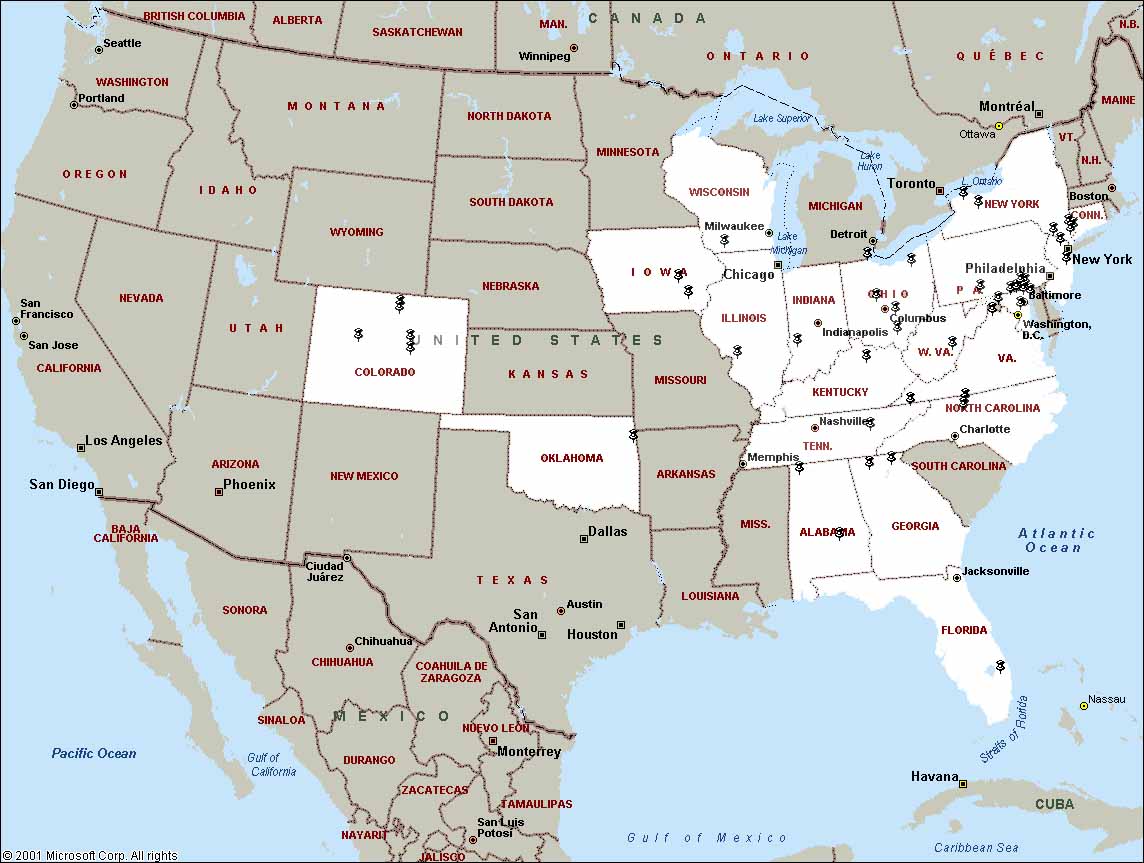
The map, above, is fairly illuminating, as it graphically represents where working judges sanctioned by the Jack Russell Terrier Club of America live.

The states in white are those that have any JRTCA working judges at all. The states that are muddy-grey colored have no JRTCA working judges. A pin (see a larger version of the map by clicking on it) represents the zip code of every JRTCA working judge in the U.S. in the current edition of True Grit magazine.

To get a "bronze medallion" for special merit in the field from the JRTCA, a dog has to work at least three types of quarry underground (fox, raccoon, groundhog, badger or an aggressive possum) operating as if it were out alone, and with the owner doing the digging, and a JRTCA judge has to be in attendance as witness the work. To get a certificate, a dog cannot work quarry in a barn, brush pile, artificial earth or man-made location (such as the crawlspace of an outbuilding).

Jack Russell Terriers are, far and away, the most commonly worked terrier in America. There are very few Fell Terriers in this country, and almost no working Border Terriers at all. Patterdale terriers in the U.S. are still relatively rare, and though some very good dogs are being bred by a handful of reputable breeders, too many over-large dogs are being produced -- many of them cross-bred in the not-too-distant past with small pit bulls in order to get a larger dog that can work game above-ground game -- barn raccoons and feral hogs in particular. There are some excellent Patterdales and a few good Fells in the US, but most of these seem to be owned by people that have had Jack Russell terriers at one time or another -- the dogs they started with before there were any Patterdales or Fells in the U.S.

In short, most working terriers in the U.S. are Jack Russell Terriers, and the map above tells a story.

Why does this JRTCA map look this way?

Some of it has to do with a population bias -- there are more people per square mile in the East and Midwest, and as a consequence associations are easier to maintain.

Another factor is that there are only about 50 pins on the map at all. This paucity of pins is partly a reflection of how few people actually work terriers in the U.S. beyond two-or-three time a year digs, and in part a reflection of the fact that being a working judge is truly a thankless task.

Of course there are more than 50 serious diggers in the U.S. Some of these diggers are ex-JRTCA working judges, some are people that dig a lot but have no desire to sign up for the thankless job of being a working judge, a very few diggers have Kennel Club registered dogs, some folks dig their dogs but have no club affiliation at all. And of course there are the patterdale-only owners, some of whom have joined the new UKC working terrier program or are members of the Patterdale Terrier Club of America.

That said, while this map is clearly not inclusive of everyone that digs their terriers, it is more-or-less geographically representative of the broad TREND of those that that do -- they tend to be in the East and in the Midwest, rather than in the Western United States. For example, of the 15 UKC working judges, as of August 2004, six are not in America, two are in California and come East to hunt, and the rest are in New Jersey, Kentucky, Virginia or Georgia -- states well-represented on the map above.

One of the reasons the map is skewed has to do with quarry availability. In the U.S., the bread-and-butter quarry of the working terrier is the groundhog. Raccoons cannot dig their own dens, and neither can possums. If dirt dens are not available, they will seek other alternatives -- hay lofts, brush piles, hollow trees, farm outbuildings, hay stacks, rock crevices, or old squirrel nests. With the exception of rock dens, these are not locations where a small dog follows quarry to ground and is then dug to. In short, it is not earthwork.

Red fox will dig dens on their own, of course, but in the American west they face real on-the-ground competition in the form of the coyote. A coyote will generally kill a red fox if given half a chance, and they directly compete with red fox for food.

In addition, the red fox is not native to most of the U.S., and its dispersal in the West is uneven as a consequence. While red fox are common in some areas (such as the prairie pothole region) they are quite rare in other areas (such as western Oklahoma).

Weather and time are another important reason fewer people hunt in the West. Fox will not den in warm weather unless they have kits, and in the U.S. we will not put a dog on a vixen with young. Without hounds to drive fox to ground, our fox-digging season is very short -- generally only 10 weeks long, and for most people with jobs this presents a very short period of time to get out into the field.

When people do get out into the field, of course, they have to find your fox! This is easier said than done, and is very hard job for a novice hunter with a novice dog. Red fox densities are variable, but settlement is generally much thinner in the West where there is less food than in the East, and where the fox faces direct competition with coyotes for food and den sites.

Raccoons are not native to the West, though they have spread with humans during the last 50 years, helped immeasurably by the creation of denning shelters in the form of barns, out buildings, road culverts, abandoned cars, and brush piles. A raccoon can expand a ground den a little bit, but it is not really made for digging. A skunk can and will dig its own hole, which is suitable for possum, but too small for anything but the smallest of adolescent raccoons.

Due to the absence of natural forage, raccoons are rarely found above 5,000 feet in the Rocky Mountain, unless they are living in close proximity to humans, though they have been reported at elevations as high as 10,000 feet if a steady food source is available.

Marmots and prairie dogs are found in some locations in the West, but the prairie dog is far too small for a dog to work, while the various species of rock marmots tend to gravitate towards areas with large boulders and talus slopes -- areas very hard to dig. Marmots are also absent from larger parts of the West outside of the Rockie Mountains. That said, if found in the right location, marmots are excellent quarry for working terriers in the Mountain States.

Some states -- notably California -- have very diverse geography and wildlife but also have very restrictive game laws which make working terriers difficult.

The American badger is common in some parts of the West, but more often than not its population is numerically thin on the ground. Badger are also hard to locate, as they will move every few days or so as they eat out, or chase out, a local rodent population (rats, mice, ground squirrels, and prairie dogs). Once the food is gone, so too is the badger. Unlike in Europe, the presence of a badger hole in the U.S. does not mean you have actually found a badger. More likely you have found a blank hole or, in some areas, worse -- a skunk, porcupine or snake.

Porcupines, rattlesnakes and skunks are fairly common in many parts of the West, and all three animals are a very serious threat to a dog. A dog sprayed underground by a skunk can be overpowered and die from anemia if not gotten out of the ground in pretty short order. A porcupine's defense system are barbed quills which can leave a dog wrecked in short order (and the owner's wallet drained after a visit to the vet). A dog bitten by a rattlesnake rarely lives, as the venom from even a small rattler is more than enough to kill a terrier.

In the South there are tens of millions of nutria, but they do not seem to be worked very often. In part this is due to the fact that in many Southern locations where nutria are numerous alligators also tend to be present. Another factor is that neither the American Working Terrier Association nor the JRTCA will give a working certificate to nutria as the holes are too big and shallow to qualify as real earth work. In addition the nutria, like the possum, is an animal whose primary defensive mechanism is bluffing. While AWTA will not give a certificate to possum, and the JRTCA will provided it is an "aggressive" possum, both seem to think the nutria is less than fomidable quarry for a working terrier.

A final obstacle to terrier work in the West is experienced people to show newcomers where to start. While the basics of terrier work are not overly complex, there are things to learn about locating quarry, digging, dispatch, and healthcare. To work any terrier in a safe manner requires several hundred dollars worth of equipment, as well as permissions from land owners. And then, of course, you have to have the desire to hunt, be in relatively sound physical shape, and be willing to devote the time to get out in the field in all kinds of wearther. It turns out all of this is a rare combination.

All of the factors above combine to create a "tipping effect" in much of the West where the chance of finding quarry is lower than in the East, and the chance of getting a dog injured is higher. When combined with a paucity of other working terrier owners, a very short working season, and the abundance of other kind of hunting opportunities, it is not surprising to find fewer working terriers in the Western United States than in the East and Midwest

Many of the western diggers that do exist actually come East to work their dogs, going to the trouble of loading themselves and their dogs into airplanes, trucks and cars for a week or two of hunting where quarry can be found on the ground.

This clearly takes a great deal of work and commitment, making these folks among the most dedicated working terrier enthusiasts in the U.S. A special hats off to them!
.

Monday, August 20, 2007

A Quick History of American Terrier Work


A repost from this blog circa August 20, 2005.


For all practical purposes, the story of American terrier work begins in 1971 with Patricia Adams Lent, who founded the American Working Terrier Association to promote working terriers and dachshunds.

The American Working Terrier Association (AWTA) was, and is, a modest organization with fewer than 100 members. It has no headquarters or paid staff, and produces a simple Xeroxed newsletter four times a year. Its web site (as of 2005) has no information about actual hunting or wildlife, and is focused almost entirely on go-to-ground trials.

That said, AWTA is a very important organization in the history of American working terriers, not only because it was the first "club" devoted to the sport, but also because Ms. Lent invented go-to-ground trials, and the basic set of rules governing them.

Since 1971, go-to-ground trials have served as a kind of "on ramp" for actual field work. The basic AWTA format has been widely copied, first by the Jack Russell Terrier Club of America (1976) and then by the American Kennel Club (1994).

The origin of the American go-to-ground tunnel can be found in the artificial fox earths first constructed in the UK in the 1920s, but which came into their own in the 1950s and 60s with the collapse of so many ancient rabbit warrens under the onslaught of myxomatosis.

Artificial earths are generally constructed of two parallel rows of brick stacked three bricks high and topped by overlapping slates, or out of 9-inch clay or concrete drainage pipe laid end-to-end. The result is a very spacious and dry fox earth. If sited within 200 feet of a water source (it does not have to be large), far from residences, and on the edge of fields and small woods, the chance of a fox taking up residence is excellent.

The first artificial fox earths were constructed in order to guarantee that a fox could be found on hunt day, and to encourage fox to run along known courses away from roadways. That said, they also found favor because they proved easy locations for a terrier to bolt a fox from. Even an overlarge dog could negotiate the straight or gently curving unobstructed nine-inch pipes of an artificial earth.

The go-to-ground tunnels devised by Patricia Adams Lent were constructed of wood instead of stone, brick or clay pipe, but were equally commodious, measuring 9 inches on each side with a bare dirt floor for drainage and traction.

From the beginning AWTA's goal was to be inclusive. Scottish Terriers with enormous chests were encouraged to join AWTA, as were owners of West Highland Whites, Cairns, Norfolks, Norwiches, Border Terriers, Fox Terriers, Lakelands, Welsh Terriers and Bedlingtons. All were welcome, with the simple goal of having a little fun with the dogs, and perhaps giving American Kennel Club terrier owners some small idea of what actual terrier work was about.

In AWTA trials, wooden den "liners" are sunk into a trench in the ground. The tunnels are up to 35 feet long with a series of right-angle turns, false dens and exits. The “quarry” at the end of the tunnel is a pair of "feeder" lab rats safely protected behind wooden bars and wire mesh. The rats are not only not harmed, but after 100 years of breeding for docility, some lab rats have been know to go to sleep!

Without a doubt, go-to-ground trials have been a huge hit with American terrier owners. The interior dimensions of the den liners -- 81 inches square -- means even over-large terriers are able to negotiate them with ease. With nothing but a caged rat to face as "quarry," the safety of dogs is guaranteed, and since the dogs only have to bay or dig at the quarry for 90-seconds, most dogs end up qualifying for at least an entry-level certificate or ribbon.

Though the die-hard hunter may sneer, the increasing popularity of go-to-ground terrier trials is a welcome thing, for it has brought more people a little closer to real terrier work.

Owners of dogs that do well in go-to-ground trials should take pride in their dog’s achievements. Like all sports that emulate real work (lumber jack contests, bird dog trials, and sheep dog trials, to name a few), a go-to-ground trial is both harder and easier than its real-world cousin.

A dog that will exit a 30-foot tunnel backwards in just 90 seconds and on a single command (a requirement for earning an AKC Senior Earthdog certificate) is a dog that has been trained to a fairly high degree of proficiency.

Having said that, it should be stressed that a go-to-ground trial has little relationship to true hunting. In the field dogs are not rewarded for speed. In fact, if a hunt terrier were to charge down a real earth like it were a go-to-ground tunnel it would quickly run into quarry capable of inflicting real damage.

In addition, in a real hunting situation a dog must do a great deal more than “work” the quarry for 90 seconds. A good working dog will stick to the task for as long as it can hear people moving about overhead – whether that is 15 minutes or three hours.

The real division street between go-to-ground and earthwork, however, is size. And the real problem with a go-to-ground trial is not that it teaches a dog to go too fast down a tunnel (dogs understand the difference between fake liners and real earth), but that it suggests to terrier owners that any dog that can go down a cavernous go-to-ground tunnel is a dog “suitable for work.”

To its credit, the American Working Terrier Association recognizes the difference between a go-to-ground tunnel and real earth work, and implicitly underscores this difference in its rules for earning a Working Certificate.

AWTA rules note that a terrier or dachshund can earn a working certificate on woodchuck, fox, raccoon, badger, or an “aggressive possum” found in a natural earth, but that “this does not include work in a drain or otherwise man-made earth.”

In short, a drain is not a close proxy for a natural earth, and terriers that are too large to work a natural earth do not meet the requirements of a working terrier.

The American Working Terrier Association issues Certificates of Gameness to dogs qualifying at their artificial den trials. Working Certificates are awarded to dogs that work groundhog, fox, raccoon, possum, or badger in a natural den provided that at least one AWTA member is there as a witness. AWTA also issues a Hunting Certificate to a dog that hunts regularly over a period of a year.

Six years after the American Working Terrier Association was created, Mrs. Alisia Crawford, one of the first Jack Russell Terrier breeders in the U.S., founded the Jack Russell Terrier Club of America (JRTCA)

Ms. Crawford and the early founders of the Jack Russell Terrier Club put a lot of thought into structuring the JRTCA so that work remained front and center. Towards that end, the club decided that its highest award -- the "bronze medallion" -- would not go to show dogs, but to working dogs that had demonstrated their ability in the field by working at least three of six types of American quarry -- red fox, Gray fox, raccoon, groundhog, possum, and badger -- in front of a JRTCA-certified field judge.

In the show ring the JRTCA decided to ban professional handlers as it was thought this would keep the shows fun and less important than the essential element of work.

Instead of mandating the kind of narrow conformation ranges demanded by the Kennel Club for their terrier breeds, the JRTCA divided the diverse world of the Jack Russell Terrier into three coat types (smooth, broken and rough), and two sizes (10 inches tall to 12.5 inches tall, and 12.5 inches tall to 15 inches tall).

"Different horses for different courses" became a watch word, with overt recognition that the world of working terriers required dogs able to work different quarry in different earths, and in different climates.

Unlike the Kennel Club the JRTCA also decided to keep their registry an "open" registry so that new blood might be infused at times. At the same time, the Club discouraged inbreeding and eventually restricted line breeding to a set percentage.

To balance off an open-registry with the desire to keep Jack Russell-type dogs looking like Jack Russells, the JRTCA decided not to allow dogs to be registered at birth or to register entire litters. Instead, each dog would be photographed from each side and the front, and admitted to the registry on their own merit, and as an adult. In addition, each dog had to be measured for height and chest span.

What this meant is that at the time of registration, the height and chest measurement of an adult dog could be recorded. Over time, both height and chest size could be tracked through pedigrees -- an essential element of breeding correctly-sized working terriers.

The JRTCA was not shy about their rationale for these rules: they openly and emphatically opposed Kennel Club registration, maintaining that time had show that dogs brought into the Kennel Club quickly grew too big and often lost other essential working attributes such as nose, voice, and prey drive.

Today the Jack Russell Terrier Club of America is the largest Jack Russell Terrier club and registry in the world, and its Annual National Trial attracts approximately 1,200 Jack Russell terriers from all over the U.S. and Canada.

The JRTCA's small professional staff cranks out a solid bi-monthly magazine that is 80-100 pages long, holds a regular schedule of dog shows, and sells deben locator collars, fox nets, and a host of other items ranging from hats and jackets to coffee cups.

The web site of the Jack Russell Terrier Club of America ( http://www.terrier.com/ is one of the very best dog sites in the United States, packed with well-presented information, high-quality graphics and a user-friendly layout.

Perhaps the most important service work of the JRTCA are the ads that the Club routinely runs in all-breed publications warning people that Jack Russell Terriers are not a dog for everyone, are primarily a hunting dog, and are not like the cute dogs seen on TV.

Sometime in the last 1990s, following the appearance of Jack Russell Terriers in a host of TV and Hollywood productions ranging from "Wishbone" and "Frasier" to "My Dog Skip" and "The Mask," the American Kennel Club decided to add the Jack Russell Terrier to its roles.

As they had previously done with the Border Collie, the AKC ignored the strong opposition of the large existing breed club, and quietly assembled a new club of show-ring breeders to serve as their stalking horse.

The "Jack Russell Terrier Breeders Association" (later called the Jack Russell Terrier Association of America, and now called the "Parson Russell Terrier Association of America") petitioned for the admission of the Jack Russell Terrier into the Kennel Club and, despite the objections of the JRTCA, the breed was admitted in January of 2001.

The admission of the Jack Russell Terrier into the American Kennel Club was a contentious affair, with the JRTCA standing firm on its long-held rule that no dog could be dual-registered.

What this meant is that breeders had to chose whether to remain in the JRTCA or to "get in early" with the AKC before they closed their registry.

Some of the breeders that chose the AKC did so because they thought they could then sell their puppies for more money, others were eager to be the "big fish in a small pond" at the beginning of a new AKC breed registry. Still others were anxious to attend more dog shows,.

Whatever the reason, the Kennel Club required that the Jack Russell Terrier breed description be narrower than that of the JRTCA. The goal of a Kennel Club breed description is to craft a narrow "standard" -- the wide variance in size, coat and look allowed and encouraged in the world of working terriers would not do.

The American Kennel Club breed standard stipulated that an AKC Jack Russell terrier could not be under 12 inches in height nor over 15 inches in height, and further stipulated that "ideal" dog was 14 inches tall and the ideal bitch was 13" tall.

Ironically, this breed description effectively eliminated about 40% of all the American dogs that had actually worked red fox in the U.S.

More importantly, this narrow standard eliminated the small dogs necessary to "size down" a breed -- something absolutely necessary in order to keep working terriers small enough to work.

Of course the American Kennel Club has never been interested in working terriers and the breed club they created has shown no interest in work either.

Under continuing pressure from the working Jack Russell Terrier community in England and the U.S., the British and American Kennel Clubs decided to jettison the "Jack Russell Terrier" name to more easily identify the non-working show ring dog they favored.

Now called the "Parson Russell Terrier," the AKC dog is quickly getting too big in the chest to work -- though not many dogs are actually taken out into the field to try.

After just three years in the Kennel Club, the "Parson Russell Terrier Club" tried to modify the show ring standard so that the dog no longer had to be spanned. In fact, many Kennel Club judges do not know how to span a terrier and many do not do it as a consequence.

In 2001, the United Kennel Club started an "earth work" program modeled after that of the Jack Russell Terrier Club of America. The UKC working terrier program remains small, with relatively few judges, and it does not appear to be growing very rapidly.
.

Tuesday, July 3, 2007

Coonhounds, Ego and the Dog Show Circuit


The Washington Post has a front page story this morning about a fellow and his daughter who raise, hunt and show coonhounds. The piece is part of a series on why folks compete in things, and the title of this one is: Ego

In my opinion, that single word does not entirely sum up why folks attend dog shows, but it's a pretty good one word try, nonetheless.

The reporter details the trophy room:

More than 500 trophies were displayed on the floor, forming a sea of oak and metal that covered all but a four-foot-wide sliver of speckled tile in the middle of the room. The trophies ranged in height from six inches to six feet, and they all bore the names of dog shows held in the last eight years. More than 300 ribbons, plaques and certificates decorated the walls. A year earlier, Amanda had hired a cleaning crew to dust and shine each award.


How did all these gleaming trophies and ribbons come into being? Well, it involved a wealthy father and a LOT of money. A whole lot of money.

To their credit, the Alexanders are not puppy peddlers, and do not breed a lot of dogs, and they take unbelievably good care of the dogs that they have.

Also to their credit, the Alexanders DO work their dogs, though it should be said that with 60 dogs in the kennels, no one dog may see much action in a year.

The Alexander's hounds sometimes chased down possum, deer, bobcats or bears. Other times, like tired athletes, Curt said the dogs gave up and barked at the base of a random tree, just so the hunt would end and they could go home. On the worst nights, the hounds injured themselves while tearing through the woods at 15 mph. A dog once ran out of the woods with a porcupine quill poking into the center of his eyeball -- a wound fixed, by veterinarian recommendation, with Krazy Glue. Another dog tripped and slipped a disk in his back, necessitating 12 trips to a specialist in Columbus, Ohio.


The Washington Post story is ostensibly about competition and what motives people to success in their respective sports. Whatever it is (and let's set aside whether showing dogs is a sport), it appears to be a powerful internal force.

Amanda, 27, spends all but two weekends each year driving to dog shows in places such as Brazil, Ind., and Saluda, N.C. Bob has spent more than $400,000 purchasing dogs and then lavishing them with accoutrements generally reserved for elite athletes: truckloads of performance-enhancing food; a heated indoor swimming pool for winter cross-training; personal drivers to shuttle dogs to distant appointments with nationally renowned veterinarians.


You can do the math: $400,000 for 60 dogs, 500 trophies and 300 ribbons. That works out to about $6,600 per dog, or about $800 per trophy. In fact, those numbers are not too far out of sync; some folks spend more than $10,000 $100,000 a year campaigning a single dog.

In the dog show world, of course, one chooses both a breed and a registry, and young Amanda seems to have chosen the American Kennel Club. I have little doubt that the reason she saddled up with the AKC is that a young female "pay to play" show dog person found the new AKC coonhound cartel more socially promising than the older, more male, and more experienced coonhound club at the UKC. Apparently, it did not hurt a whit that the AKC encourages exhibitors to dress up in nice clothes and put makeup on their dogs.

In her grooming shop a few days earlier, Amanda spent 90 minutes readying the four Plott coonhounds. She trimmed and filed their nails, shaved surplus hair from their underbellies and rubbed the inside of their ears with Q-tips. But as she stepped out of her camper and looked around the infield, Amanda wondered if she'd prepared enough. All around her, groomers sprayed dogs with hair color, lined their eyes with mascara, whitened their toenails with chalk and smoothed their coats with flat irons.


Of course the UKC has had coonhounds forever, and the AKC only came to the show when they needed to bolster their sagging finances. So how do you explain abandoning the UKC for the AKC without it reflecting on the pure ego of a young campaigner who wants to be a big-and-rich fish in a smaller pond? Simple: you blame it on something defective with the UKC.

Until recently, Amanda had competed almost exclusively in the United Kennel Club, a less formal, less prestigious organization popular among coonhound owners. At UKC events, she said dog feces blanketed the ground and hound owners spat chewing tobacco in the show ring. At AKC events, including the renowned Westminster Kennel Club dog show, professional handlers wear three-piece suits in the show ring.


Dog feces blanketed the ground? That's not a description of any UKC event I have ever been to, and it's not one anyone else seems to recognize either. But never mind. What's truth got to do with it? The message here is that there's a "civilized" club for people who put party dresses on themselves and makeup on their dogs, and an "uncivilized" club for tobacco chewing, shit-flinging rednecks who drink corn whiskey from a mason jar. I get it.

On The Washington Post web site, a commentator on the article notes that:

"Coonhounds are uniquely American. Dr. Thomas Walker was one of the first breeders of coonhounds in this country. Hence the name, Treeing Walker Coonhound. Walker also introduced horse racing and was one of the first settlers of Kentucky to go through the Cumberland Gap."


Well yes, that is all true ... maybe.

Without a doubt Walker was one of the first breeders of fox hounds in America, but there's some question as to whether the Walker Coonhound is named after him or another Walker that came many years later.

For anyone interested in reading more about Dr. Thomas Walker and his discovery of the Cumberland Gap, I suggest "Gateway: Dr. Thomas Walker and the Opening of Kentucky," by my father, David M. Burns. It's not about dogs, but then (suprisingly) not everything is.


'

Tuesday, June 5, 2007

Coffee and Provocation

Oppose California's Mandatory Sterilization Law:
California Assembly Bill 1634 would require the mandatory sterilization of most working dogs in California. Hard to believe, but true. If you live in California and have a working terrier, a lurcher, a bandog, or any type of breed not recognized by the AKC or the UKC, then the State is going to require that your dog be sterilized by the age of four months.

Deben Mark III for Sale:
A fellow in New Mexico is selling a Deben Mark III locator set for $150 (original cost was $300). It was used for ferreting, and is very good condition. Email Clint at >> cchisler@unm.edu
to inquire and/or work out the details.

Jon and Roseann Hanson's New Magazine:
Jon and Roseann Hanson have come out with a new magazine called Overland Journal
, which is dedicated to vehicle-centered expedition travel and exploration in North America and around the world. The premier issue features over 100 pages of expedition vehicles, travel stories, equipment reviews, and conservation news, and has a crack-shot group of writers and editors associated with it. All good and long may it prosper! A hat tip to Steve Bodio for pointing me to this one.

The End of Playboy Bunnies?
Hugh Hefner's bunnies are under threat. No, not the dim-brained silicon-injected automatons that Hugh Hefner shares his mansion with, but the real marsh rabbits that live on Big Pine Key in Florida and that were named after Hefner by a couple of scientists with a sense of humor. It seems feral cats on the island and a nearby airforce base threaten to make Sylvilagus palustris hefneri extinct. >> To read more


A Good Read on Canine Diet:
I'm tired of reading about dog food, but this essay was well-worth the time >> Are Dogs Carnivores? A hat tip to Teddy Moritz for this one!

The Monks of New Skete Use Choke Collars:
A while back I wrote a piece about television dog trainers who work with problem dogs, and that most use chain slip collars to teach basic commands. While watching Divine Canine, the new dog show about the dog trainers at the New Skete monastery, I noticed the use of chain skip collars once again. Of course they use choke collars. Why change what works?

Friday, May 5, 2006

What the Hell is an American Staffordshire Terrier?

If there was ever a stranger group than young bulldog afficionado's, I have not met them. They are a truely odd bunch of people that lurk at the periphery of the working terrier world.

On the one hand, you have the dog fighters and wanna-be dog fighters. These numbskulls range from preening fakes and short-tooled fools to sick sadists. Any way you cut it, they are a sad case with even sadder dogs.

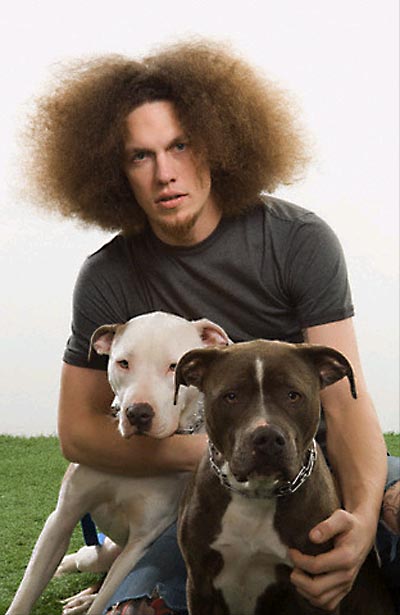
Then you have a few romantics -- those with rich fantasy lives who imagine their cherry-eyed genetic wrecks with undershot jaws are descended from the iron-tough catch dogs of the 18th Century. They glory in leading around over-large dogs with massive heads, bowed legs, and dysplastic hips. Most of these dogs could not catch a cold, much less a pig running flat out in Texas Hill Country.

And then you have the Kennel Club enthusiasts, and their "American Staffordshire Terriers," "Bull Terriers," "Staffordshire Bull Terriers," and English Bulldogs.

Kennel Club owners of these dogs will tell you they have worked hard to breed all aggression and prey drive out of their charges. And no doubt many have. What a comical thing that is, of course -- a bit like an auto club bragging that their sport cars have no engines.

The only thing is .... it's not always true. "Bad breeding" and "poor socialization" are often blamed when dogs descended from pit and catch dogs attack small children, but ... could it be .... perhaps ... that a small bit of genetic code remains unbraided as well? It is certainly in the realm of possibility, is it not?

In fact, molosser breeds can make fine pets in the right hands, but many of these dogs demand much more time, energy, and commitment than their young owners realize.

A large dog in the hands of a young man with shifting interests and an unstable housing situation (i.e. most young men) is a recipie that too often leads to dead dogs at the County shelter.

There has always been a ready market for intimidating dogs, and it seems a new breed of "ancient bulldog" is created every few years. Pick up any dog magazine and there they are advertised in the back, all of them with massive bully heads: the "Alapaha Blue Blood Bulldog" and the "Olde English Bulldogge" and the "American Bulldog," sandwiched between the English, Neopolitan, and Bull Mastiffs, Rottweilers, Dogue de Bordeaux, Dogo Argentino, Fila Brasileriro and, of course, the English Bulldog. Plocked down in between are other bully-headed prey-driven defensive breeds -- Rottweilers, Akitas, Tosas, Rhodesian Ridgebacks, Thai Ridgebacks, and the like.

There have always been men with a need to display power. While the world frowns on a man cleaning an unloaded gun in a public square, it's OK for that same man to tow an enormous dog from corner to corner and park to park -- the canine equivalent of a Harley owner with straight pipes blasting through the neighborhood for the sole purpose of intimidation. If asked, the wanna-be-tough man will explain that his breed was designed to (please pick one): kill escaping slaves, hunt jaguars, fight bears and bulls in the pits, fight other dogs, or catch semi-wild pigs and cows so they can be altered or slaughtered. You are supposed to feel fear, and you are supposed to feel respect for a man in control of such a powerful animal with such an ancient history.

In fact, I generally feel a little amused.

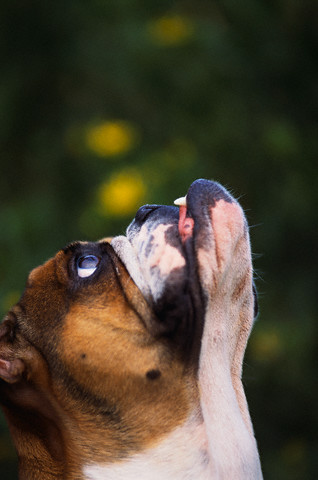
The famed English Bulldog, for example, is mostly Chinese pug -- a show ring creation with legs so deformed it can barely walk, a jaw so undershot it cannot grab a frisbee, and with a face so bracycephalic it cannot breathe. Add to these problems a deformed intestinal system (a by-product of achondroplasia or dwarfism) which makes the dog constantly fart, and a pig tail prone to infection, and you have a dog that considers its own death a blessed relief.


Other molosser breeds are not as wrecked as the English Bulldog, to be sure, but they too are largely the product of the show ring and have little or nothing to do with honest catch dogs or hunting dogs.

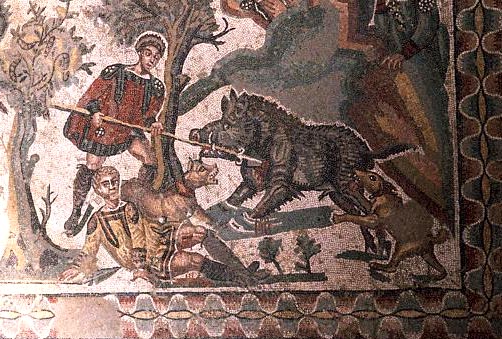
A little history is useful here. In England, catch dogs began to disappear with the rise of the Enclosure Movement of the 18th Century. As the Enclosure Movement pushed people off the land and into squalid cities and towns, boredom set in and (in the absence of television, movies, video games, and real theatre), spectacles pitting dogs against bulls, pigs, bears and even monkeys were created for entertainment, much as the Romans had done centuries before.


The dogs used for pit work were different than the catch dogs used a century or two earlier. Pit dogs were quite variable in size, and the goal was to match the dog with its opponent (dog or beast) by weight or sense of threat. While catch dogs had to be fast to catch running stock, and tended to weigh 50-80 pounds (large enough to turn a bull or stop it, but not so large as to be slow), pit dogs weighed anywhere from 10 pounds, in the case of a small ratting terrier, to as much as 140 pounds or more in the case of bear-fighting dogs. Encounters were brief, and no nose at all was required.

Other than rat pits and cock fights, animal baiting spectacles were never common, and were banned altogether by 1835. Though secret underground dog fighting and badger baiting contests continued, they were rare, episodic, and genetically maladaptive. When police raided dog fights, the dogs were killed. When participants went to jail for other reasons, dogs disappeared. And in the era prior to antibiotics, "successful" fighting dogs often died from wounds inflicted in the ring.

In 1859, the first dog show was held. Breeds that had lost their original purpose -- catch dogs, cart dogs, pit dogs, and turnspit dogs -- soon found a new rationale for existence -- rosettes.

In the decades that followed, all manner of dogs were created, proclaimed, and endowed with invented romantic histories. That trend continues to this day.

Far from show ring fantasy and hard-dog poseurs, working catch dogs still exist. At a smaller level we have the whippet and the greyhound -- dogs designed to catch a rabbit or hare at speed. At a larger size we have the long-legged fox hounds favored by the French -- dogs that can run well and chop a fox on the fly. Added to their ranks are various sizes of cross-bred lurchers. And of course, you have the border collie -- a dog that will grip, if it has to, in order to impress upon a semi-wild hill sheep that it means business.

The penultimate cach dogs, of course, are those that work wild pig and cattle. Whether these dogs are found in Hawaii or Texas, the Everglades or Australia, the marshes of Spain, or the river banks of Central America, these dogs tend to be cross-bred dogs that, for a variety of reasons, tend to look suspiciously like rangey pit bulls.

Why is this?

The answer is at least partly morphological. While a small terrier or heeler may be able to move domestic cattle or pig, and may even be able to bust them out of brush, it takes a larger and heavier dog to travel great distances and still have the weight and stamina to initimidate, and even hold, large and truely wild animals in place.

Long coated dogs, and dogs with short muzzles are simply ill-equiped to handle long runs in hot weather. Wild pigs (feral, Russian or javelina) and cattle are generally found in locations that are hot most of the year -- Florida, Georgia, Texas, Australia, Southern Spain, and Hawaii.

When a dog is running 20-40 miles a day after an animal that does not want to be caught, and which may bust in several directions at once if in a group, stopping for a drink of water or a bit of rest in the shade is not an option.

Since dogs do not sweat except through the pads on their feet, the only way a dog has of moderating its temperature is to expel heat through its mouth and sinuses. A short snout, therefore, is maladaptive for honest catch work.

A short muzzle not only makes for a dog that overheats quickly, but also for a weaker bite. In the world of predators, where consistent failure means starvation, neither the wolf nor the tiger, the hyena nor the panther, has a short face with an undershot jaw.

A short bracyophalic maxilla is also poorly designed for scent work. Whether looking for wayward cattle and pigs, or hunting jaquar or mountain lion, most catch dogs have a bit of hound crossed into them, such is the desire for nose, which almost always comes attached to a decent muzzle.

The balance point on a good catch dog changes from area to area, depending on the lay of the land, the temperature, the stock being worked, and each individual dog and owner's technique. In some areas, lighter more greyhound-like dogs may be prefered, while in others greater hound influence is the norm. Dogs may be a little smaller in thick brush, and quite a bit larger in more open country.

And yet, again and again, across the planet, the result tends to be a variation on a unifying theme -- the cross-bred pit bull.

The American Pit Bull is descended from the cross-bred stock-working dogs of the 18th and 19th Century. To the extent they have been altered, it is that modern dogs are often heavier than those found working 200 or even 100 years ago -- a direct function of the fact that most pit bulls are now found on a leash. Today the breeding of pit bulls is heavily influenced by the show ring and the picture book. As a consequence heavier, more impressive-looking animals, are favored over the smaller, faster, and more utilitarian working dogs of the past.

From the beginning, the pit bull has had a stormy career in the U.S.

When it was created in 1878, the American Kennel Club refused to register pit bulls, seeing them as dogs kept by people of low breeding. The Kennel Club was interested in dignified dogs, not working dogs, and especially not dogs that acted as the canine equivalent of a barbed-wire and locust-post fence.

In frustration, pit bull owner Chauncey Bennet created his own registry -- the United Kennel Club -- in order to to register his own dog. Today, the UKC is the second largest all-breed registry in the U.S., and it remains a for-profit, privately-held operation.

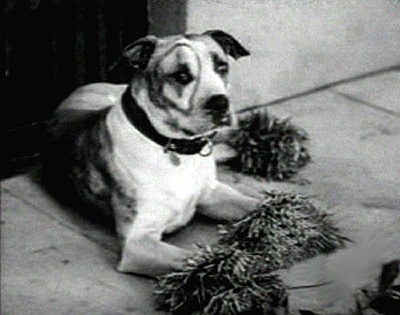
When the "Little Rascal" movies of the 1930s popularized a pit bull by the name of "Petey," the American Kennel Club decided that the smell of cash money beat out sniffing social theories, and so they changed their de facto position on the pit bull, while maintaining a de jure ban on the dog.

How did they do this? Simple: they renamed the Pit Bull the "Staffordshire Terrier," and admitted it to the Kennel Club as a terrier. In 1972, the Kennel Club changed the name of the dog again, making it the "American Staffordshire Terrier," to distinguish it from the smaller and thicker-bodied dog of the U.K.

In fact the American Staffordshire Terrier is not a terrier in any way, shape or form. It is a Pit Bull, plain and simple.

Pit Bulls masquerading as American Stafforshire Terriers is how things more-or-less rested until the fantastic growth of dog shows and hobby breeders began in the 1960s and 70s. Suddenly a new interest in all manner of dogs was fostered, and many "old" breeds were invented almost over night.

For example, in 1970, John D. Johnson and Alan Scott registered their cross-bred pit bulls with the newly created for-profit "National Kennel Club". The name they invented: "American Bulldogs". Their goal, they said, was to get away from the "pit bull" name, which was already taking on negative connotations.

Johnson's line of dogs quickly grew thicker in the head and heavier too, as he realized that the "manly man" pet market favored intimidating dogs that could be paraded around the neighborhood or chained up in the back of a shop to scare kids away from petty pilfering. Never mind that heavy dogs with short faces could not go the distance with cattle and pigs -- these dogs were designed to sell, and what was selling was intimidation.

Alan Scott's dogs remained lighter and did not deviate too much from their working-class origins. Weighing in at around 80 pounds (often 40 pounds lighter than Johnson's) Scott's dogs also had longer muzzles and better bites. Scott and Johnson's dogs began to deviate from each other markedly, and in the end they ended up as distinct breeds with Scott breeding "Standard American Bulldogs" and Johnson a "bully" breed with huge heads that he evenually advertised as "Johnson Bulldogs".

Other bull breeds have followed suit, and other for-profit dog registries have followed on as well. Today, along with the AKC, the UKC, and the National Kennel Club, we have a host of other for-profit registries including the Continental Kennel Club, the American Canine Association, the American Hybrid Canine Club, the American Dog Breeders Association, the American Canine Registry, the American Purebred Association, American's Pet Registry Inc., the World Kennel Club, the Animal Research Foundation, the Universal Kennel Club International, the North American Purebred Dog Registry, the Dog Registry of America, the American Purebred Registry, the United All Breed Registry, the American Canine Association, the World Wide Kennel Club, the Federation of International Canines, and Animal Registry Unlimited -- to offer up only a partial list.

Among the newly minted molosser breeds are the Old English Bulldog, the Original English Bulldogge, Olde Bulldogge, the Campeiro Bulldog, Leavitt Bulldog, the Catahoula Bulldog, the Alapaha Blue Blood Bulldog, the Aussie Bulldog, the Victorian Bulldog, the Valley Bulldog, the Olde Boston Bulldogge, the Dorset Old Tyme Bulldog, the Ca de Bou, the Banter Bulldog, and the Johnson Bulldog, to say nothing of the Alana Espanol, Cane Corso, Bully Kutta, and the recreated "Alaunt."

No doubt there are many others.

Adding to the confusion, in 1972, the AKC recognized the smaller thick-bodied Staffordshire Bull Terrier as a separate breed from the American Staffordshire Terrier, while in 1936 the Bull Terrier (still another breed) was split into two colors (white and non-white), and in 1991 into two sizes (miniature and standard).

None of these machinations have anything to do with working dogs, of course.

In the scrub country of Texas and Australia, the water hummocks of Louisiana, Spain and Florida, and the steep green volcanic mountains of Hawaii, working pig and cattle dogs look pretty much like they always have for the last 250 years. These dogs are fast, have good scissor bites, fully developed muzzles, and straight agile legs.

In the world of honest stock-working catch dogs, no one spends too much time dreaming up fanciful histories and contrived names. Whatever the dog -- pure bred or cross -- the goal is to avoid the heavy-bodied ponderous dogs so popular among the bridge-and-tunnel set, and create a dog capable to going a full day in rough country.

No one who works their terriers to ground, or uses catch dogs to chase semi-wild stock, has any confusion about what kind of dog they need to do their respective jobs, or the differences between them.

By definition, a terrier must be small enough in the chest to go to ground in a natural earth.

By definition, a catch dog has to be fast enough to catch, and large enough to hold an animal that has escape and mayhem on its mind.

Neither dog can do the job if it looks like a "keg on legs" -- an apt description of many of the molosser breeds sold in the back of pet magazines today.

The story then is an old one. In the world of true working dogs, form follows function. In the world of rosettes and puppy peddlers, form always follows fantasy. As ironic as it sounds, the blue-blazer rosette chaser and the young wanna-be bull dog man have that much in common.

.