Monday, December 18, 2006

Chesapeake & Ohio Canal


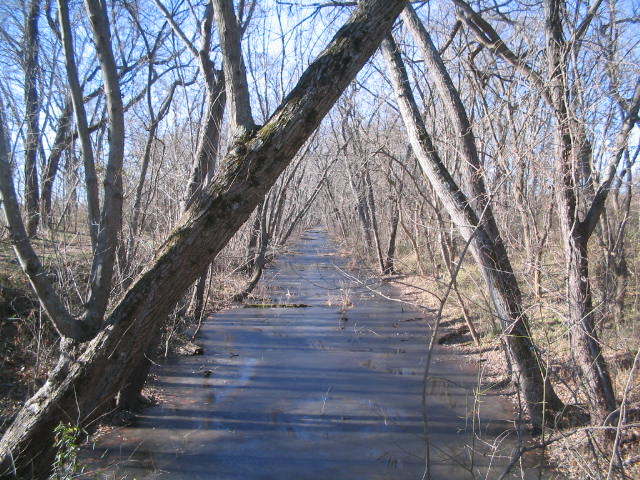
The picture, above, was taken on a little bridge over the The Chesapeake & Ohio Canal. The Canal runs 184.5 miles long from a point on the other side of the river just below my house, out into the foothills of Maryland. Originally built to bring coal to Washington, the C&O Canal was completed in 1850, and for about 70 years was a lifeline for communities and businesses along the Potomac River, allowing coal, lumber, grain and other agricultural products to float around Great and Little Falls.

At the spot where this picture was taken, the Canal runs next to about 3,200 acres of hunting land that stretches through swamp, forest, mixed fields of corn and soy, and occassional plots of sunflower and waste land above Great Falls.

Sunday, December 17, 2006

Oyster Mushrooms


Some late season Pleurotus ostreatus mushrooms. I did pretty well in my fungus course in college, but in truth all you really need to know is the names and clear signs for about 5-6 common mushroom species in your area. I once fed wild mushroom omlettes to 125 people in college -- they had no idea and no one got sick.

Thursday, December 14, 2006

You Gotta Break Some Eggs to Build a Movement


As we approach Christmas, I'm reminded that it's also time for the National Audubon Society's "Christmas Bird Count," which Audubon describes as "the oldest and largest citizen science event in the world."

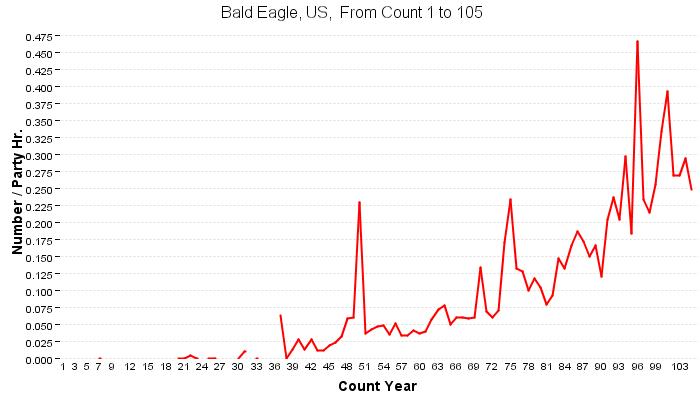
What's fascinating about the Christmas bird count is that Audubon's own "citizen science" data does not support one of Audubon's core stories: that a decline in Bald Eagles and Oprey populations in the U.S. was due to DDT.

In fact, DDT did not kill off the Bald Eagle -- lead poisoning did, in the form of bullets shot from rifles.

The short story here is a common one in American wildlife: as guns became more accurate, cheaper and more powerful between 1850 and 1900, game laws did not keep up.

The result was a true wildlife massacre. We not only shot out all of the buffalo that once grazed on the East Coast, we also shot out all the passenger pigeons, Canada geese, beaver, elk, wolves, deer, mountain lions and -- yes -- eagles, osprey and large numbers of hawks as well.

Eagles, osprey and hawks were also decimated by the use of pole traps -- leghold traps set on the top of poles placed around fishing nets and barn yards. Nothing kills hawks and eagles faster, or more efficiently, than a pole trap.

Native Americans did their fair share of shooting of eagles too. It takes a lot of feathers to make a "war bonnet" for the tourist trade, and there was no shortage of demand for such things by museums, collectors, and wealthy tourist patrons.


The graph above (click here to see full-sized graph) shows Bald Eagle populations as tracked by the National Audubon Society's Christmas Bird Count, which has tracked bird populations in the U.S. since 1900.

As you can see, by 1900 -- more than 40 years before DDT was invented -- Bald Eagle populations were vanishingly low. The same story is true for the Osprey -- another bird unlikely to be misidentified by a dedicated bird watcher participating in the National Audubon Society's Christmas Bird Count. As with Bald Eagles, Osprey were hammered by guns and pole traps, but large numbers were also killed when they collided with pound nets set in coastal fishing areas such as the Chesapeake Bay.

Ironically, Bald Eagle populations climbed between 1940 and 1970, when DDT was in full use in the U.S. The reason for this is fairly simple: the Bald Eagle Protection Act of 1940 made it illegal to shoot Bald Eagles. This protection was further expanded when the Endangered Species Act was passed in 1973.

Left to their own devices, and protected from unregulated shooting and trapping, Bald Eagle populations took flight and have now soared. Today, there are about about 8,00 nesting pairs of Bald Eagles in the Lower Forty-Eight, and the Bald Eagle is now now a candidate for de-listing from the Endangered Species Act.

Another American success story. Add that to the rostrum of success we have achieved through a marriage between hunters and conservationists: the return of the white tail deer, moose, elk, cougar, beaver, Canadian geese, wood ducks, and wolves.

For the record, and to be clear, I am NOT saying DDT did no harm to bird populations. Nor am I saying that DDT should be legalized. A ban on DDT was a good thing, and helped many bird populations rebound.

What I am saying is that DDT is routinely blamed for the decimation of two bird populations -- the Bald Eagle and the Osprey -- that it had little impact on. And what is most interesting is that the The National Audubon Society's own data tells this story, even though the National Audubon Society continues to obscure this story in its popular literature.

Is their evil intent here? Is it all a big conspiracy? Not exactly.

What happened was that the push to ban DDT in the late 1960s and early 1970s happened to coincide with the rise of computerized direct mail lists. Direct mail requires organizations to have recent victories, and the ban on DDT was a convenient example that could be trotted out by executives across the environmental movement. What was doubly delicious for direct mail copy writers was the opportunity to link the salvation of an icon -- the Bald Eagle -- with the organization's recent political success.

And it worked. In 1969, the National Audubon Society claimed a membership of 88,000, but just 10 years later its membership had risen to over 330,000, due in no small part to victories touted in a massive direct mail campaign.

Other environmental organizations quickly jumped on to the direct mail bandwagon. The Sierra Club, which had a membership of 33,000 in 1965, saw its own membership rise to over 113,000 by 1970, and top 200,000 by 1980.

Did Audubon and the Sierra Club do anything wrong by growing their membership using truncated and not--quite-complete stories? Not really.

Let's face it, you cannot squeeze all of the truth in this great world into a four page direct mail letter. And without that letter, not only would people not join movements, they would not become activated or motivated to learn more. The natural state of man, I am afraid to say, is prone before a television set.

The totality of what has come out of those direct mail campaigns is a true wonder -- massive amounts of land protection, cleaner air, cleaner water, the return of endangered species, and decreases in such once-common toxins as PCBs and lead.

When my grandfather was born, almost all the wildlife had been shot out, the air was black, and the rivers were dead.

Things were not too much better in 1970. It always shocks people when I tell them that we imported deer into parts of Virginia as late as 1965. Today, the "deer problem," in this state is that we have too many of them.

In fact, across the U.S. we have more of nearly every type of wildlife than we did 30 years ago, 50 years ago, 75 years ago, or 100 year ago. The National Rifle Association did not do that, Exxon did not do that, Boise Cascade did not do that, and the American Chemical Society did not do that. What did that were rank-and-file Americans organized and activated by massive direct mail campaign that began in the late 1960s and that continue to this day.

I am not a fan of the too-simple truths of direct mail, but I am not so naive that I do not think they have their place. So when people tell me that DDT wiped out the Bald Eagle, I tend to smile and nod.

Sometimes a simple fable is more powerful than a complicated truth.
____________

For anyone that wants to play with Christmas Bird Count data, see >> http://audubon2.org/birds/cbc/hr/table.html
Wednesday, December 13, 2006

Eggs Past and Eggs Future


The picture above was posted on a U.K. board -- a shot of a Vicorian-era museum collection of wild bird eggs. These kinds of fantastic collections began around the time of Darwin, with egg collection an outgrowth of egg collections gathered for scientific purposes and a spontaneous outgrowth of curiosity about the diversity of the natural world coupled with the kind of relative (and conspicuous) wealth that allows people to travel to collect, buy and display curiosities that otherwise have no useful and practical purpose.

Bird egg collecting proved to be such a fad that collection of rare bird eggs threatened to tip certain rare birds over the abyss into extinction. In 1954, the Wild Birds Protection Act in the U.K. made it illegal to posses or own any wild birds' eggs taken since that time, and today it is illegal to sell any wild bird's egg, irrespective of their age -- a fact that is now true in the U.S. as well.

Ironically, old bird egg collections are an important resource for scientists studying bird biology, enabling them to track the rise of pesticides and other contaminants in the food chain.


The eggs above are a couple of odd ones I had around the house.

The dark one is an emu, the largest eggs is an ostrich, and the other two are chicken eggs that I had for breakfast.

I include the chickens eggs to show the scale of the other two, but also to show the diversity of what eggs can look like. Egg identification, without benefit of a nest or provenance, can be pretty hard, as bird eggs can change shape to some extent. Coloration and markings may also shift from bird to bird as well. Egg identification is an in-egg-zact science, especially where speciation is not complete (a surprisingly large number of birds) and the number of look-alike eggs are quite numbing.

Another small thought: We have pushed a lot of birds over the edge to extinction and near-extinction, but I am always struck by the fact that we never give credit to the fact that a lot of species (or what we would call species if they were wild) are now being created by man.

Chickens alone present a startling array of expressed diversity, to say nothing of cattle, roses, corn, broccoli, etc. We are already creating new species of birds (falcon and parrot hybrids are examples) and fish (hybrid trout, salmon, pan fish, etc.). to say nothing of the many odd things being done with recombinant DNA to make animals and plants grow larger, be more resistant to disease, and ship better.

We stand in the door, I think, of one of the largest booms in species creation ever, and yet when was the last time anyone gave that idea a nod? And yet, take a look at the two chicken eggs, pictured above. Would any birder claim these eggs were from the same species?

Monday, December 11, 2006

The Wolf Within

.


Darren Nash at "Tetrapod Zoology" has a very nice piece on the orgins of the domestic dog that is well worth reading. I cover this topic a bit in American Working Terriers, as I did in the post below (from March 11, 2005), as well as here.

Darren also mentions the Russian fox-breeding experiments which I covered here.

If anyone is interested in paleontology, evolution, and the kind of stuff Stephen Jay Gould might be writing (or reading) if he were alive today, check out Darren's site. Some of the Great Questions of our time are mused on here, such as: "Why do British slow-worms look so different from those of mainland Europe? " I dare you to click and find out! This is, let me say unequivocally, a darn good blog.

Meanwhile, a repost from March 11, 2005, because tonight I am too tired to write anything new:


People are not apes, no matter how often such nonsense is asserted by nodding know-nothings. People are people and apes are apes. Both sides know the difference. If you think otherwise, just try to steal a good-night kiss from a gorilla.

And so it is with dogs. Dogs may be descended from proto-wolves, but they are not wolves. They are dogs. They are exactly what they seem, and quite different from what is commonly asserted, especially by facile want-to-be dog trainers who claim everything is about "dominance" as seen in wolf packs.

This is not to say that wolves and dogs are not evolutionarily related -- this is an absolute fact. Dogs descended from wolves, probably through some form of long-lasting pro-wolf phase.

That said, dogs are not wolves anymore than humans are apes. Dogs are dogs.

A wolf, for example, goes into estrus only once a year, generally in February or March. A dog normally goes into estrus twice a year and this can occur in any season.

Dogs are so far removed from wolves that basic evolutionary adaptations for reproduction no longer line up.

A male dog lifts its leg to pee, while a female dog squats to pee. In wolf packs, only the top male and top female raise their legs to pee -- all subordinate animals squat to pee.

Wolves and dogs have drifted so apart from each other that key signals related to hierarchy are no longer shared. Little wonder that dogs lost in wolf country are quickly attacked and frequently eaten!

Dogs bark -- it is their primary vocalization and it is maddeningly common.
Adult wolves bark so rarely that it is almost never heard in the wild.

Wolves and coyotes howl, and do so very frequently -- generally in the early evening just after waking up and before going off to hunt. Dogs almost never howl except under very special conditions and in response to sustained noises that rise and fall -- like human singing or the wail of fire engines. You may have 15 dogs in the yard, but they do not howl for 5 minutes after they get up in the morning as a coyote or a wolf often will do.

Sex and communication -- can there be anything more basic to identity? And yet, the wolf and the dog operate on different wavelengths. This is one reason that in the real world dogs almost never breed with wolves or coyotes. This phenomenon only occurs in captivity or in those very rare instances when a vanguard of the species (a lone coyote or a lone wolf in a very large area devoid of all other wolves and coyotes) may find it impossible to mate with its own kind.

The simple truth is that dogs know they are not wolves, just as wolves know they are not dogs, and humans know they are not apes.

Saturday, December 9, 2006

Over-the-Counter Skunk Treatments


I am pro-frugality and pro-foresight, which is a nice way of saying that I try to keep my dogs alive and I also try to avoid paying a veterinarian $80 for a well-puppy visit. I give my dogs their vaccine shots (and you can too), micro-chip my own dogs (and you can too), and take care of basic health care problems ranging from small hunting-related injuries to ear and urinary tract infections, ringworm, and even Lyme Disease treatment (and you can too).

If you have already bought a copy of American Working Terriers, you know this book is a practical guide to saving money on canine health care, as well as a practical guide to working terriers (with a chapter or two on canine history and wildlife thrown in). The notes on antibiotics, SuperGlue and 15-cent Deben locator collar batteries alone make this book a bargain.

So is there anything I left out? Well sure. I left out where to get epinephrine and acetylcysteine for less. Both of these drugs are very useful things to have in your kit if your dog is skunked underground and does not appear to be shaking it off very quickly.

Needless to say, being skunked above ground is no big deal, except for the smell. Underground, however, a dog can easily be overcome by fumes and undergo skunk toxic shock, a kind of Heinz Body Anemia. The most important thing you need to know if your dog is skunked undergound, and is not breathing when you get to it, is how to administer CPR to a dog.

If a dog is gotten out of the ground breathing, it is probably going to be all right. In some rare cases, however, a dog's airway can swell up, constricting breathing. In addition, a dog's lungs, liver and kidneys can have a hard time clearing the toxin from the dog's system. In such a situation, a dog can die from skunk toxic shock, which is why having a couple of good off-the-shelf medications in your vet kit is a good idea.

If your dog's throat is constricting, and it is having trouble breathing, epinephrine can help. Epinephrine (also called adrenaline) is the primary ingredient in over-the-counter Primatene Mist. This stuff is used to decrease the swelling and clear the airtract of folks suffering from asthma attacks, and it has the same effect on a dog that has been skunked underground. A good thing to have in your kit.

Acetylcysteine, or mucomyst, is a kind of expectorant that helps clear the lungs and also strengthens liver functions, especially in cases of toxicosis. N-acetylcysteine is commonly sold in health food stores and online without a prescription. Try Google and Froogle (search: n-acetyl-cysteine) if you cannot get it at your local health food, vitamin, or drug store. When administering acetylcysteine to a dog, give a 140 mg loading dose for every kilogram of body weight. Since the average working terrier weighs about 6 kilos, a 900-mg initial dose should be about right.
.

Friday, December 8, 2006

A Bit More on the Border-Patterdale Connection


In the last post, I talked of how Joe Bowman, Huntsman for the Ullswater, was the person to coin the term "Patterdale Terrier," and that he had also been an early breeder of Border Terriers.

In previous posts, I have noted that the Border Terrier is itself a relatively young breed, created from Fell Terriers at about the time the Kennel Club was first created.

To add a point to the pencil, it's worth putting a few pictures side-by-side and fleshing out the relationships and history a little bit more. The picture at top is an early "Patterdale Breed" terrier. This picture comes from Foxes, Foxhounds & Foxhunting by Richard Clapham, published in 1923.

The picture below is of a group of early Border Terriers, taken in 1915. This picture is from Walter Gardner's book, About the Border Terrier.


The first Border Terrier entered on to Kennel Club roles to win a working certificate was a dog by the name of Ivo Roisterer, born on August 12, 1915, and receiving his working certificate in 1920. His pedigree is appended below, and clearly shows his great grand sire and great grand dam were from the Ullswater Hunt at a time when Joe Bowman was Huntsman.


The picture, appended below, shows Joe Weir, the Ullswater Huntsman that replaced Jow Bowman. Like Bowman, he held his position for an incredibly long period of time, from the 1924-1971 -- a period of 47 years. The dog in Joe Weir's arms is "Butcher" -- a picture apparently taken after a rescue. This photo, taken sometime in the late 1940s or 1950s, shows a dog very much like Joe Bowman's "Patterale Breed" and also very much like the early Border Terriers. It says quite a lot that this dog could be called a Border Terrier, a Patterdale Terrier, a "Fell Terrier," or a "Working Lakeland" -- evidence enough that all of these breeds are so closely related, and so recently differentiated, as to be interchangeable just a generation ago.

Of course, now we have generally decided that a "Patterdale" is a smooth or slape-coated black dog, while a "black Fell" is a rough-coated black dog.

Perhaps some day we will do away with names all together and simply divide the world of terriers as they should be cleaved: Dogs that work (regardless of color, coat or name) and those that don't. If we look at what we see in the field today, we can broadly state that Border Terriers tend to line up in the latter camp, while Patterdale Terriers tend to still reside in the former.