Showing posts with label deben. Show all posts

Tuesday, September 7, 2010

Deben Mark I Collars and Boxes for Sale

I still use the old Deben Mark I locator collars and box, and I recommend them.

The good news, for those who want to get into the world of digging, is that five of the old collar and box sets have come on the market here in the USA.

The seller is Ray H. in New Jersey, who can can be contacted at FOXHUNTERDERRY@YAHOO.COM.

If you want a phone number, send me an email and I will forward that number to you.

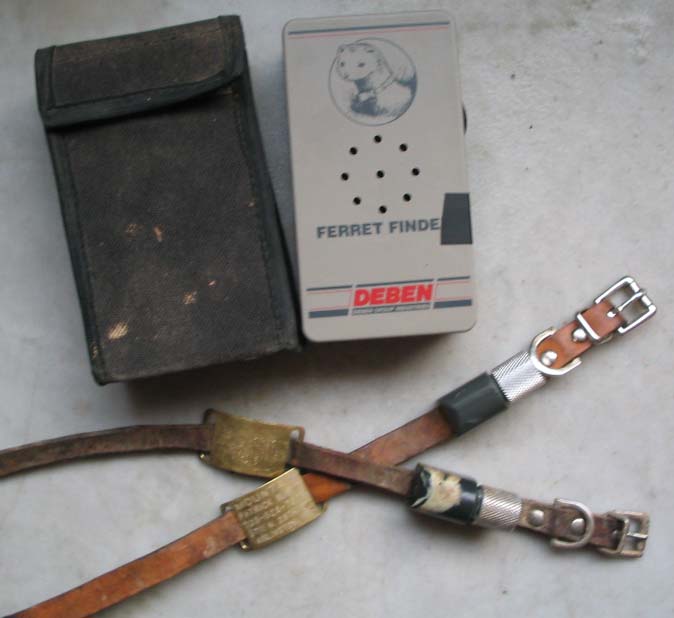
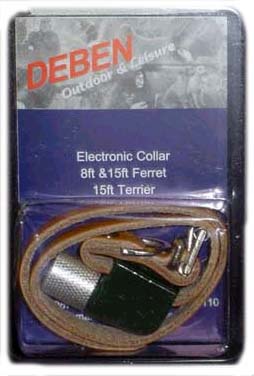
For those wondering, those are my old locator collars and box pictured below. Mine are a bit battered, but I have a spare box and a least two more collars beyond the two I use on my own dogs, so I am in good kit. More on how to use a locator collar -- and how to make the Mark I locator collars last forever --at this page on the Terrierman.com web site


.

Monday, June 28, 2010

Button Batteries for Less


It's taken me awhile for me to run down my stock of button batteries for my Mark I Deben collar, but I'm about about out, so I went over to EBay and made a purchase -- $8.85 (including shipping!) for 150 AG13 button batteries, which are also commonly sold as LR44 SR44 or L1154.

Compare that to the price of the same battery sold at RadioShack (and also made in China): $5.49 each. Outrageous! And yes, I can get button batteries for about $2.40 a unit at HomeDepot, but why would I do that when they cost me less than 7 cents a unit delivered to my door?

And for the record, button batteries last about 5 years on the shelf, so there's no worries about them going "stale." I generally use the batteries twice (all day each time) and then toss them out so I never worry about losing juice in a locator collar.


.

Tuesday, March 3, 2009

How to Use a Deben Locator


Simon Whitehead of Pakefield Ferrets has put together three videos for Deben, the makers of the Ferret Finder 3 which is, for all practical purposes, identical to the Long Range Terrier Finder when it comes to actual box opertion.

The Deben LRT is a pretty good locator, and the one I would probably be using if I were not using my "old school" Deben MKI. Nice work Simon!

Sunday, April 13, 2008

The Contents of My Field Veterinary Box

I went through my field veterinary box today, not because I am a compulsive neat-freak, but because I had decided to strip Trooper, my ancient Border Terrier, and I misplaced my stripping knife. Maybe it was in the vet box.

It had been a few years since I had dived all the way to the bottom of my veterinary box (a plastic tool box acquired for $10 from Home Depot), and as I sorted through things I made a list of contents.

For the record, here it is:

  • SPF Sports 30 waterproof spray which is the greatest thing ever invented if you are a balding man who digs all summer
  • Jungle Juice -- 100 percent Deet bug spray
  • A small bottle of Alleve
  • A 2 oz. bottle of ProvIodine
  • A 3 oz bottle of ProvIodine
  • A small bottle of hygrogen peroxide to make a dog vomit if needed.
  • A small bottle of alcohol to clean a wound (or anything else)
  • Needle-nose pliars
  • Flat-faced wire cutters
  • Forceps
  • Digitial thermometer
  • Canine toe-nail clippers
  • Bic lighter
  • Quick-Stop styptic powder
  • Granulex spray
  • 1% cortizone cream
  • Tube of triple anti-biotic ointment
  • Muzzle for terrier
  • 1 Percocet-5 which is enough to dose 10 terriers if needed.
  • 1:1000 epinephrine (never used)
  • Sterile hypodermic needle for percocet or epinephrine
  • Veterinary stapler (never used, in sterile pack)
  • Veterinary staple remover
  • 4 oz. bottle of Erliworm dog worming medicine
  • Small vial of Vetbond
  • Five tubes of SuperGlue (same as vetbond, but much cheaper)
  • Small 1.2 oz bottle of human shampoo
  • A slice of bar soap
  • Ocu-coat eyedrops
  • Dental floss (a cheap type of very strong thread)
  • 2 needles
  • Exra deben locator collar
  • Exra Deben locator box
  • Batteries for Deben locator box and collar
  • Xtra roll of yellow collar tape
  • 2 extra rolls of black collar tape
  • Two small flashlights in working order
  • Candle lantern with 3 extra candles (will last all night).
  • Space blanket
  • Spare root saw
  • Three fox nets
  • Extra collapsible water bottle
  • Extra collapsible water bowl for dog
  • Dog brush
  • Machete and knife sharpener
  • Spare rivets for shovel handle
  • Scissors
  • Razor blades (about 10)
  • Roll of 2"gauze in sterile packaging
  • Wound managemen kit consisting of matches, lots of butterfly bandages, larger bandage strips, double anti-biotic ointment, towlette, iodine packs, empty irrigation syringe, suction tube, gauze
  • 2 small chain-repair links
  • A list of farm permissions and who gave them to me.
  • A large wild turkey feather for no reason what-so-ever
  • In the truck (not in the vet box) is a quart of "Skunk-Off."
Of course, the most important veterinary and emergency fix-it tool is always with me: my brain. Not using it is what it most likely to cause injury to both the dog and myself.

The second most important thing with me in the field is my cell phone, and the cell phone car-charger (just as important as the cell phone). When I need to find a vet, a doctor, or a tow truck, nothing will ever serve me better than a cell phone.

The third most important veterinary tool is my wallet, and the credit card and blank check inside it. When push comes to shove, I may need to cough up real money for emergency veterinary care.

My field pack always contains several bottles of eye-flush water, and I also carry a couple of gallons of distilled water in the truck for the dogs to drink and/or to flush out eyes and any gashes that might occur.

I also have a pretty good supply of antibiotics in the refrigerator at the house: Cephalexan (Fish-flex), Amoxicillin (Fish-mox), and Baytril, as well as Mycitracin eye ointment to help prevent infection in case of a corneal rip.

See the www.terrierman.com web site for more information on basic field health care for your working terrier.

And NO for the record, the stripping knife was not in the veterinary box; it was in a plastic bin on a shelf beside the wash tubs in the laundry room, underneath an old dog collar, three terrier stripping stones, a tooth brush I use on the dogs, two bottles of dog shampoo, two broken Deben Mark I collars, and an old slicker brush. In short, it was right where it should have been.
.

Sunday, March 30, 2008

Deben LRT Raffle to Benefit TRAPPED


The folks putting on the Cowboy Classic Terrier Trial are raffling off a Deben LRT collar and box to benefit TRAPPED ( http://www.trappeddog.com ) The head coordinator for Trapped, but the way, is Charlene (Char) Smith who, in the small world department, bred Pearl, the dog pictured in the post immediately below.

The raffle at the Cowboy Classic Terrier Trial is set up so that folks from all over can purchase tickets, and this one is no different.

The drawing will occur at the Cowboy Classic Terrier Trials in Wyoming over Labor Day weekend this year.

Tickets are $5 each and 5 for $20. The winning ticked will be drawn August 30, 2008 after the go-to-ground and racing awards are handed out for that day. Tickets can be purchased via Paypal (make yourself an account, etc.), provided they are purchased no later than August 28.

To buy tickets via PayPal, send your money to this email >> cowboyclassictrials@fastmail.fm or you can can snail mail a check or money to >> Erin Schwartzkopf, 73 Hwy 59, Douglas, Wyoming 82633.

For the record, the Deben Long Range Terrier Finders are a pretty good bit of kit in my opinion. These new collars and boxes are well made, and will locate a dog as much as 40ft away. The collar is fully waterproof, has a battery life of 350 hours and is switched on/off by a magnet in the hand held receiver - there's no reason to remove the batteries after each use. The transmitter is fitted with a top quality leather collar. The new LRT box and collar are normally sold for $300 box/collar set.


Compare and contrast:
The Deben LRT locator box/wand is at far right; the collar for the LRT is the middle one of the three shown. The other collars show are the old Deben Mark I (no longer made, but the type I still use) and the Deben Mark III (which is fine for ferrets, but cannot take the beating it gets from terrier work).
.

Monday, January 7, 2008

Simple Deben Collar Improvements


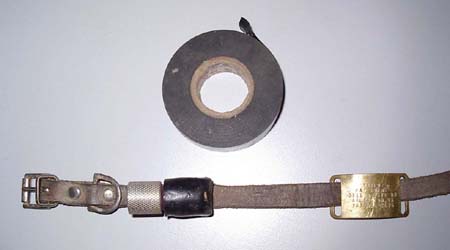
The two collars above show two very simple improvements you can make to your Deben Mark I collars to give them a longer life.

The first tip is to coat the outside of the collar with a slathering of rock-hard and tough-as-nails PC-7 epoxy. This is a two-part epoxy that is as thick as tar, but it will protect the collar from bites. More importantly, it will fill in all the little holes and bubbles that are commonly found in the Deben plastic and which are a source of moisture entry.

Deben collars normally have two small transistor wires that are barely coated by the normal plastic coating of the collar. When that coating is worn away, water enters the collar and oxidizes the internal circuits, which makes the collar go on the fritz.

Collars die because of water entry, and nothing is more important to the life of the collar -- and the life of your dog in the hunt field -- than keeping water out of the collar.

A second tip is to slip a very tight O-ring between the battery cap and the hard plastic body of the Deben transmitter. Both collars, above, have a black O-ring in place. O-rings can be purchased at any hardware store and cost only a dime or two, but they provide a fairly good seal right at the cap where it is most needed.

Use of an O-ring does NOT mean you do not have to tape your collar! In fact, proper taping of a collar is one of the most important things you do to secure your dog's safety and longevity.

Tape Deben collars well before you get into the field -- taping a collar while everyone else is waiting, dogs are barking, your fingers are numb from the cold, and your mind is half adled from excitement and the confusion of loading up is a guarantee of a job poorly done. Some tips on taping can be found >> here.

Test batteries before you put them into a collar, and test the collar and box before you let the dog enter the earth.

Deben collars are much less likely to fail on a dig if diggers take the precautions outlined above. A lot of Deben collar failure can be traced back to the failure of diggers to do everything obvious and possible to keep water out of the collar.
.

Monday, December 10, 2007

The First Deben?


Tracking transmitters are not that hard to make. The schematic, above, is for an animal tracking transmitter that generates a pulsed continuous wave (CW).

The complete transmitter, including the battery, weighs only 8 to 10 grams (less than two nickels) and is only slightly larger than a man's thumb nail. The ground range is 3/8 to 1/2 mile with a good receiver and antenna system -- less if the antenna on the transmitter is reduce or eliminate and the receiver is a simple radio box (as is the Deben receiver)

This transmitter design is from the American Institute of Biological Sciences Bioinstrumentation Advisory Council information module M15 prepared by William W. Cochran, December 1, 1967.

It is hard to be sure, but I believe this is the "original" Deben collar. Here are the parts:


X = Crystal, type FM1. 3rd overtone for 145-160MHz, 5th overtone for 220 MHz

Q = Transistor, Amperex type A415 (original type specified). Others that can be used include NTE 107, MPS6507, and 2N3904.

R2 = 1500 ohm, 1/8 watt

R1 = between 80K and 600K, 1/8 watt. This resistor determines the "beep" rate and is effected by battery voltage and the transistor selected.

C1 = Subminiature 15 mmf capacitor

C2 = Subminiature .001 mf capacitor

C3 = 2mf subminature capacitor

ant = 12 inch

L1 = 12.5 to 13 turns of #36 enameled wire wound on a 1/8 inch form and removed.

L2 = 4.5 turns of #32 enameled wire wound on a 1/8 inch form and removed.

wire = wire used to provide capacity to the animal

B = Battery, mercury type, 1.5volt


A photocopy of the out-of-print original publication for the M15 Animal Tracking Transmitter can be had for $5 from: http://www.jbgizmo.com/page5.html All of the components can be had for about $15.

For anyone that wants to play with a ready-made bug or tracker, the folks at hobbytron.net sell a 3v FM bug transmitter for just $20 (picture below), while full instructions for building an FM tracker can be read at FM Tracking intructions from JB Gizmo at http://www.jbgizmo.com/page21.html


Friday, October 19, 2007

Ten Reasons to Join the JRTCA


Ten reasons to join the JRTCA that have nothing to do with showing:

1. You will get a good, and sometimes useful, publication. Most issues have a story or two, or an article or two, on working terriers. Considering the diversity of the JRTCA, the editors do a pretty good job of speaking to all terrier interests. This is a house organ, not Newsweek, but at 68 pages or so, it's a pretty nice job and often has a health tip or two as well. Research on bronze medallion dogs in True Grit helped me assemble the data on the average size of American working dogs in North America.

2. Picture ads in every major off-the-shelf dog magazine telling people NOT to get a Jack Russell terrier without doing more research. The "unselling" of this breed to "Wishbone" and "Eddie" wannabe owners is a very useful thing if you care about working terriers. I consider this important (and expensive) work worth supporting. No other breed or Club does this; I am very glad the JRTCA does.

3. An excellent web site ( www.terrier.com ) that presents the full range of interests in the Jack Russell terrier. A very nice job and full accolades to the web master. Interactive quizzes help make sure people know what they are getting into with a hunting terrier, and a FAQ section provides more information. Again, this is the kind of effort no other breed or Club does, and it is no small effort.

4. Status is given to working terriers in the show-ring-world which, in turn, brings more people in
to the working world. A special page or two at the front of the magazine is always devoted to working terriers, the highest JRTCA awards go to working terriers, and a dog in the field is always featured on the cover. Since the dog-show world is mostly about status, the elevation of the status of real work by the JRTCA encourages more "show people" to hunt at least once or twice. Some of these folks have decided they like hunting better than showing -- a very positive thing, and the way hunting with terriers has actually been established in the U.S. Without the JRTCA there would not be much terrier work in the U.S.

5. A working terrier program that has a full page-and-a-half of working judges complete with addresses and phone numbers listed. It may not be enough, but it's more than exists anywhere else on the planet. It's amazing that so many people have signed up to be working judges considering how thankless a job it is. Going out with a working judge is not the only way to learn how to hunt, of course, but it's how many people actually do.

6. A ready supply of Deben locator boxes, Deben collars, and fox nets that folks can order on the Internet, pay by credit card, and receive in 2-3 days. Break a collar on a Sunday, and another will be in hand by Wednesday or Thursday. The JRTCA will sell locator boxes, collars and nets to anyone, and prices are fair.

7. A registry which discourages inbreeding. Some would argue about the value of this in some situations, but without a doubt it is a good thing for the long-term future of the dogs.

8. JRTCA Rescue which does a highly commendable job of housing and finding homes for dogs that deserve stability and love.

9. A code of ethics and various rules to discourage breeding too young, working too young, etc. Some may sneer at rules, but in fact a code of conduct (think Ten Commandments) is not such a bad thing to have on paper.

10. The past and the future. If terrier work has taken hold in the U.S. it is because of the JRTCA, and if it is going to spread (or be defended) it will be because of the JRTCA. Membership dues is a small thing to pay for all of the above.


Monday, October 15, 2007

Electronics for Dogs: All's Well That Ends Well


Mountain slide into a den on the walk back to the truck. She said somebody was home, but we did not have time to dig, and so we left it for another day.


I am frugal. Or, as my daughter describes it: Cheap, cheap, cheap.

I take pride in it, and so when something goes wrong that could cost me money, I tend to get vexated.

Such was the case on Friday, when I brought in the dogs for the night and counted three dogs and only two Invisible Fence collars. Where was Pearl's collar?

For the record, these collars are not cheap -- $300 a unit -- and I live in fear of having one of them come off and disappear into the half acre of ivy in the back yard. There was nothing to do about it on Friday night, as it was already dark. On Saturday morning, however, I swept the yard and found nothing, but on a second go-over I located the collar sitting on the top of an ivy-free mulched bed. A small miracle!

The other bit of electronic vexation this weekend was that I lost my Deben locator box on the farm last weekend. These old Deben boxes are no longer made, and though I have a spare, I do not like the loose feeling on that particular box's dial . I wanted my old Deben box back!

And so, even though I did not have time to hunt, it was back out to the farm yesterday for a bit of "locating the locator." I was pretty sure I had left the locator box at the last hole of the day, but I was afraid I might have accidentally buried it.

The good news is that I did not bury it, and I did find it. The case on the box is cracked (Was it cracked before?), and there was a huge pile of poop on the repaired den. I mean a HUGE pile. It was hard to tell what it was -- it looked a bit like raccoon scat, but it was such an enormous pile that I could not believe it. Could it be coyote scat? No hairs in it, so probably a coon, but a really big one with bowel problems and an eating disorder.

No matter; I got my locator box back, and with a little piece of hard plastic cut from a CD-rom case, and a little black PC-7 epoxy to bind it to the side, I have repaired the box and it is in fine working order again, if considerably uglier. All is well.

.

Wednesday, November 22, 2006

Bellman & Flint's New Web Site: Well Worth a Visit


I am a tough sell. I get a lot of links forwarded to me from folks that want to cross link in order to help sell some piece of dog paraphenalia or another, and I generally ignore them.

Consequently, if I give something a thumbs up, it tends to mean something. With that caveat, take a look at Bellman & Flint's new web site. It's not perfect yet, but it's the right stuff and the price seems fair for what appears to be very high quality goods.

This is the right direction for a small business to take -- specialized quality goods sold around the world to those of us who care and look for such things.

In the terrier world, most folks over here in the U.S. have heard of Bellman & Flint because they were the first folks, other than Deben, to make a terrier-dedicated locator collar.

I have used the Bellman and Flint kit, and while it is extremely well made (no complaints there!), I found the locator collar too big for the earths we have here in the Eastern U.S.

That said, not every place on earth has such tight pipes, and in the U.K. where old badger settes, deep rock fissures and 9 inch drains are more common, the Bellman & Flint kit has its enthusiastic champions. There is no reason in the world that everyone has to embrace the same technology. Different horses for different courses.

Now what else is Bellman and Flint selling on their new web site? For one thing, a wide variety of well-made terrier and hound couples. These appear to be made of top-quality leather and can be custom-assembled in any number of sizes, leather types and bits of gleaming hardware for terrier, beagle, lurcher, and hound alike. Beautiful stuff.

Along with very nice terrier, hound and lurcher couples and leads, there is also a nice collection of digging tools along with some very nice knives that, from their labeling, appear to be made in America. I am a bit of an old stick with my cheap Opinal knife, but I have to say these pretty wooden-handled locking blades are a very tempting acquisition ....

Christmas is just a month away, so for those of you looking to bring a smile on the face of a digger's heart, visit the Bellman and Flint site.

And while you are ordering things, don't forget to give a gift of American Working Terriers to someone you love!

Saturday, October 21, 2006

JRTCA Selling Deben LRT Collars and Boxes


The new Deben LRT box is at far right, the collar is in the middle of the three shown.


The JRTCA is now selling Deben Long Range Terrier Finders.
These new collars and boxes work well and will locate a dog as much as 40ft away. The collar is fully waterproof, has a battery life of 350 hours and is switched on/off by a magnet in the hand held receiver - there's no reason to remove the batteries after each use. The transmitter is fitted with a top quality leather collar. The new LRT box and collar are sold for $300 box/collar set. >> To order

Saturday, July 15, 2006

Leather Collar Replacement on Deben Mark I


I have been pretty good about maintaining the leather on my Deben collars (keeping them oiled and dry), and have never had a strap break until last weekend. It was bound to happen some time, though. I am happy to report that due to the fact I had some leather scraps in the garage, the cost of a replacement collar was just 89 cents for a small pack of copper split rivets from the local hardware store.

Replacing the leather on a Deben Mark I collar begins with cutting off the leather on each side of the locator, and then drilling out the leather that remains embedded in the plastic slot. Go slow, and it should come out easy enough. There is no reason to cut through the plastic slot -- just drill out the leather.

Once you have the leather off the locator, it's time to salvage the buckle and the two metal "safety rings" that were on your old Deben collar. The safety rings are the little bits of metal that hold the tongue of the collar down after it goes through the buckle. If you have lost these safety rings, you can make-do with a small slice of rubber tubing slipped up over the leather. The metal safety rings that came with your original Deben collar are far superior, however, and you will want to re-use these if you can. One of the metal pieces (the tie-out ring) looks a bit like a horse stirrup, and the other is a rectangular piece that does nothing but keep the leather tongue of the collar down after it goes through the buckle pin. The rectangular bit fits next to the buckle, and the tie-out stirrup fit farther back, between the two rivets.

Finding the right thickness and width of leather for your collar strap may require a small search. I was lucky -- a perfect leather strap was already on hand in a "farmer's bundle" of leather thongs and small scraps that I had acquired at the local hardware store a few years back. Most old-fashioned hardware stores will have a similar "farmers bundle" of leather scraps for sale. So too will most cobblers.

Trim the leather strap at least 6 inches longer than you will need it. Now slip one end of the strap through the buckle and fold over the leather to get an idea of where you will want to cut the slot for the buckle pin.

The slot for the buckle pin can be made by drilling two or three small holes right next to each other. If you need to, you can tidy up the slot with a hobby knife, but keep the cutting to an absolute minimum.

Next dry-fit the buckle with the leather folded over into a bite. The buckle pin should move pretty freely.

You now want to put on the two metal safety rings and see where they fit. The rectangular metal piece will be fitted in the same folded-over bight of leather that the buckle is in. A rivet will hold those two pieces next to each other.

The metal tie-out stirrup will go between the first rivet and the second rivet.

In truth, you should NEVER use a Deben collar as a tie-out collar; they are simply not made for that task. If you use a Deben collar as a tie-out collar, the leather WILL break. In fact that is exactly how this leather collar broke last week.

Once you know where all the pieces go on your new collar, you will need to drill two holes at the proper location for the rivets. Use a drill bit the same size as the rivet or a tiny bit smaller.

You will be drilling two holes which will each go through two pieces of leather, as the leather will be doubled over.

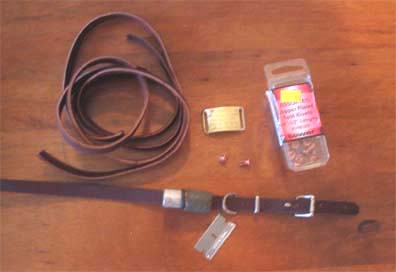
Once you have the holes drilled, fit all the pieces onto the collar as shown in the top picture. Remember, the rectangular metal piece will be in the same bight as the buckle, while the metal tie-out stirrup piece will be afixed between the two rivets.

In the picture on the top of this post, the leather tongue to the right of the buckle is the part that is folded over to afix the buckle and rings in place.

You are now ready to rivet the collar together. This is actually the easiest part, as it can be done with copper split rivets, which require no tools other than a hammer and a flat screw driver.

Take a small copper split rivet and push it through the double collar hole next to the buckle. The rounded copper head of the rivet should be on the outside of the collar, facing away from the dog. Use a flat screw driver to split the rivet wider, and then hammer the two rivet flanges over so they are pointed away from each other down the length of the collar. The two pieces of leather should be tight against each other and holding the buckle and rectangular safety ring in place.

Once the first rivet is afixed slip on the tie-out stirrup and afix the second copper rivet behind it.

To finish, trim the collar to length. Use a razor blade to cut a blunt point on the tongue end of the collar, and use a small drill bit to put holes in the collar to accept the buckle pin. The hole closest to the Deben transmitter should be the hole that fits the neck of your smallest dog.

The completed replacement collar is shown below.

Note that all of my Deben Mark I locators are coated with a thin layer of PC-7 epoxy in order to cover the wires that are very near the surface. If the thin plastic on a Deben Mark I collar wears away, water will get in the electronics, and the collar will fail permanently.

Along with the tough epoxy coating on the transmitter, also note the rubber O-ring between the cap and the body of the transmitter. This too is a small addition that will help keep your Deben Mark I collar running longer -- along with proper taping.

Finally, note the brass slide tag on the collar. This is a 3/4" slide tag (the smallest I could find at the time). It lies flush with the collar and, unlike a riveted tag, puts no unecessary holes in the collar. This tag will slide a bit under pressure, and though my dogs have been in hundreds and hundreds of very tight holes, they have never gotten hung up. Unlike a riveted collar tag, a slide tag can move from collar to collar. Put both a phone number and your name and address on the collar. A brass tag, unlike an aluminum tag, will not scratch easily.

For slide tags, see here (brass 1/2 and 3/4 inch) or here (brass 3/4 inch) or here (brass 3/4 inch). If you want to make your own collars entirely, small metal buckles can be bought at local craft shops


Sunday, May 28, 2006

JRTCA Now Selling Mark III Deben Locator Sets


The Jack Russell Terrier Club of America is now selling Deben Mark III locator sets.

This is the new and improved terrier finder and collar set from Deben. The new box is bright orange (harder to lose) has a LED display and varying pitch. A grey box is also made by Deben.


The box is said to be more-or-less water proof, but apparently the collar has to be taped (read farther to find an alternative Deven rig). The box has a 16-foot range in search mode, and can be "stepped down" to 10 feet for a very accurate "locate" mode. The collar is nylon, lightweight and durable.

The receiver is designed to reject interference and so there will be less problems with nearby electric fences and overhead lines. The receiver has magnetic reed switches (no moving parts) which operate the on/off and search/locate switched. New efficient circuitry means improved collar battery life of over 300 hours. The locator box can be used to locate more than one dog underground at a time - simply purchase additional collars.

The price is $195 a set. Click >> To order You do not have to be a JRTCA member to order from the JRTCA, but even if you do not have a Jack Russell Terrier, membership in the JRTCA is a sound investment in the future of American terrier work. To read 10 reasons to join the JRTCA >> click here

An important note: Deben has come out with a NEW long-range terrier finder that is good, in search mode, for 40-feet, and which has both a waterproof box AND a water proof collar. This is the rig I am probably going to get when my old Mark I kits (two boxes, four or five collars) go the way of all things.

Sunday, February 5, 2006

Deben's New And Improved Collar


Deben has created a NEW long range terrier collar designed to work to over 40ft (12m) distance. The collar is fully WATERPROOF, has a battery life of over 350 hrs and is switched On / Off by a magnet located in the tip of the hand held receiver so there is no need to remove the batteries after each time of use. The transmitter is fitted with a top quality leather collar which can easily be replaced when worn.

A LED display on the receiver indicates distance from the terrier and a varying pitch sounder increases in pitch, as the receiver approaches the collar. In search mode the range is over 40ft (12m) and in the locate mode the working range is between 10ft (3.5m) and 8inc (20cm) for ultra-accurate, ‘close-in’ location.

The unique receiver circuit is designed both to detect the signal transmitted by the collar and to reject interference from elsewhere. The receiver has magnetic reed switches (no moving parts for improved reliability) which operate the on/off facility and a search/locate facility. Ultra-Efficient Electronic Circuitry means improved collar battery life of over 350 hours.

The compact designed collar fits neatly under the dog’s neck. (note – although all Mk3 receivers will work with the LRT collar, the calibration will not be correct. All MK 3 receivers have been fitted with a magnet at the tip for magnetic switch on/off)

A complete collar and box set is 195 British pounds or about $346 U.S. The collar and receiver alone are 97 and 98 pounds each, respectively. >> To order

Monday, November 28, 2005

Deben Mark III System


Deben has a new Mark III locator collar system which is set to replace the poorly received Mark II locator system which is being jettisoned after just one year. The old Mark I system is no longer being made.

The new Mark III system is getting good marks from experienced, no-nonsense ferreters. I have not tried the new Mark III system myself -- most of what I know has come from
Simon Whitehead's posts about the new collar and box.

Though the new Mark III collar is listed on the Deben web site (see the ferret side of the web site) no picture is offered. As you can see from the picture above, however, the new Mark III system looks much like the Mark II system (LED lights, water-resistant receiver, nylon collar) but the collar buckle of the Mark III is gray.

Simon Whitehead reports that "The Mark III has every thing the Mark II didn’t" and that includes the fact that the new Mark III box will pick up the old Mark I collar signals (but not vice versa, apparently). This is a big deal in my book.

One of the complaints with the Mark II collars was that the collar batteries drained pretty quickly, but that problem seems to be fixed in the Mark III collar. The new collar is reported to have 300 hours of useful battery life. The battery life for the receiver is said to be 30 continuous hours of "on" time, which is quite a lot if you remember that we generally have the box on for not much more than 10 minutes at a hole.

One of the nice things about the new receiver box is that it can track more than one collar underground at a time -- a big use to ferreters, and not a bad thing to have with the dogs. The locating range on the new box is 16 feet -- a bit better than the old Mark I (15 feet), but not as good as the Mark II which claimed 20 feet. While the old Mark I was good at locating to within a foot, the new Mark III is reported to track to within 6 inches.

The new Mark III does away with the dial on the Mark I, and replaces it with LED lights and a very loud clicker which speeds up the closer you are to the dog. With the sound signal and the LED lights combined, finding the dog is said to be pretty intuitive.

So what's the downside? Reportedly locating with the new Mark III rig is a little bit slower than an experienced hand with a Mark I can do. In addition, the new rig is about $180 for a complete collar and box set, as compared to $125 for the previous Mark I incarnation.

In actual use, the new Mark III system operates much like the old Mark I, with slow passes over the top of the ground used to narrow down the location of the dog based on the signals from the LED lights, and the clicking coming from the box.

The new Mark III box receiver is more-or-less waterproof, unlike the old Mark I box, and the new system also produces a louder and more irritating sound. Louder is better as far as I am concerned -- the old Mark I rig was often hard to hear on windy days.

The bottom line is that, with just a few weeks testing to satisfy the skeptics, the new Deben Mark III rig seems to be an improvement over both of its predecessors, and the transmitter remains small enough to use in a tight earth.

_ _ _ _ _ _

Update: The Mark III system is the kit being used by ferreters, but has proven too flimsy for terrier work. The Deben LRT or the Bellman and Flint collar and box sets are now the only thing recommended. For U.S. work, where pipe size is very tight, I like the Deben LRT, but different strokes for different folks.
.

Saturday, July 2, 2005

Lurchers, Terriers & Ferrets


Paul Dooley's blog at http://lurchersterriersferrets.blogspot.com is worth a visit as it has some nice pictures and narrative. Why you are at it you might invest a little money in Paul's book >> ordering information here

As for the picture above, it's a lot of rabbit holes being netted, with a ferret below ground and a deben box in hand. Looking at this picture, I am reminded of the Beatles lyric in the song Day in the Life: "Four thousand holes in Blackburn, Lancashire / And though the holes were rather small / They had to count them all".

And net them too ...

Thursday, June 9, 2005

German Ortovox Terrier Locator System

.

It turns out that using avalanche locators on working terriers is a bit "old hat" in Germany where the "Ortovox" transmitter (pictured above) has been used for some years and is available off-the-shelf and on the web if you know where to look (see "hundretter")


Ortovox Fox Dog Transitter and Receiver

"The Ortovox Earth Dog Transmitter is fastened on the dog's collar and sends a radio signal. The Orotvox Dog Receiver receives the signal. The shorter the distance between transmitter and receiver the louder the tone gets. With the rotary switch you can change the range and search area from 40m to 1m (43 yrds to 1 yard). Also, navigation is aided by three colored LED lights.


The compact Ortovox transmitter comes with a textile-collar into which the transmitter is tucked during earth work. Remeber, every minute counts should your dog get lost or stuck in the den of a fox or a burrow of a badger. With the D1 transmitter, a terrierman can safely and quickly locate his or her dog and rapidly dig it out. This way you spare your dog stress and unnecessary injury, and avoid possibly losing your precious companion. This light and robust transmitter is fastened at the dog's collar and it snuggles up close to the neck and therefore doesn't disturb the dog while it is working underground."


Click here >> To order from the German web site (The "box" used to pick up the Ortovox signal is pictured just below the collar).

Another place to order is >> here

The transmitter and box, combined, can be had for about 278 Euros or about $342 US. Please don't ask me about importing these things -- I'm sticking with my old Deben rigs for now.


.

Tuesday, March 29, 2005

Review of New Bellman & Flint Locator

The following review of the new Bellman and Flint collar system is posted on their web site. The Bellmand and Flint system includes a collar transmitting at the same 457 Khz as a standard avalanche rescue system, coupled with an unmodified Pieps locator box.


Results of Testing the New
Bellman & Flint Terrier Location System.

Article in The Countryman's Weekly, March 24, 2005
by Gary Morgan,
professional Terrierman for The Vale of Aylesbury Foxhounds

______________

Over the years of working terriers, the locators in my opinion have got worse, and I think that a lot of people reading this will agree.

It had got to a stage when I personally was getting through a dozen collars and three or four boxes per season.

In September 2004 I was asked by Bellman and Flint to test the new collar and box that they had developed for locating terriers underground. I was very pleased to do this, as it would be good news to have a new system. Something that I hoped would prove to be better and more reliable.

When I was first handed the new system I was surprised at the size of the transmitter on the collar but the more I thought about the size the less worried I became, believing that if a dog's head and neck will not get through the tubes, then there is no chance of the dog's chest getting through. Looking at the collar, the transmitter looked very tough and robust. The collar itself is much better for being changed from traditional leather to a plastic nylon which will not rot and has a breaking strain that you can pull a car with.

The transmitter itself I was really impressed with because it has a magnetic switch which enables the collar to be turned on and off when needed just by swiping a magnet over it. It also has two flashing lights one green, one red. When the green light flashes you know the collar is switched on. With a new battery, you'll have approximately 100 hours continuous use starting with the green light flashing, and then flashing green and red, and finally when it flashes red alone you know you have approximately 20 hours use remaining. I personally would not risk entering a dog underground when the collar was flashing only red.

Another feature that the transmitter has is a waterproof O-ring seal which enables the collar to work in wet conditions and after being used can simply be scrubbed clean under the tap in the sink.

The locator box is also waterproof, digital and made out of hard plastic. It has backlights which allows the box to be used at night. The box tells you how much life is remaining in its batteries. It has a feature of arrows which when used correctly allows you to walk in a straight line to the dog, rather than searching every part of the earth. When the box and collar is being used it has a range of 65 metres, so if you stood in the middle of the earth there would not be many earths in the whole of the country that would go off this system.

The first day that we tested the system, we fitted two collars to the dog. One was the new Bellman and Flint the other being Deben. The dog was entered and allowed to settle for some time. We located the dog with the Bellman and Flint system and could not believe the depth that the box was showing was 3 metres (approximately 9' ). We double checked the depth with the Deben box which also said 9' ( approximately 3m ). Looking at the earth, it did not look to run more than 3 or 4 foot. Because of the depth, the dog was left some time in case he moved, he didn't so we started digging.

When we were approximately a foot and a half from the dog who had not been heard for some time we decided to pinpoint the dog's exact position. We had conflicting readings from the two boxes.

When we eventually broke through to the dog to conclude the dig, the Bellman and Flint system was the most accurate, being right on top of the dog. The Deben box was each side of the dog, but not on top.

The second dig we had the same day was in a very big earth which at one time had a lot of elder trees standing. Because this was a shooting estate the gamekeeper had tried to make an extra drive and decided to lay the elder and the whole covert and earth was covered in nettles which was going to make searching for the dog very unpleasant. A fresh dog was fitted with both collars again and allowed to enter any hole, we then decided to have something to eat and drink while letting the dog find and settle. After many discussions about who was going to look for the dog the B and F box was turned on and the digital readout read 47 metres (approximately 160 feet). Because this box is equipped with directional arrows, when the main arrow is pointing forwards this enables you to walk in a straight line to where the dog is. This was done, and we pinpointed where the dog was, again at a depth of 2.5 metres ( 8 to 9' foot ). The dog again was allowed to settle for some time before we started digging. A couple of hours later the dig was ended successfully. On this particular dig I was very impressed with the B and F system, because of the way it took us straight to the dog and where the dog had settled it would have been the last place you would have expected him to be. Finding the dog in this vast earth with the elder and the nettles could have taken you a couple of hours with the Deben system.

Since starting to use the new system, I have probably worked my terriers on two hundred occasions what with bolting foxes out of straw bale stacks, drains and earths. I have only changed the collar and box batteries once each. The collar transmitter casing has stood up very well to the punishment and is not showing any wear at all. This system has never let me down once, and it has come to the assistance of a neighboring terrier man who had got into some difficulty after two Deben collars failed in one particular earth.

I was not the only person to be testing this system, D. Finlay who is a full time terrier man and who does a great deal of digging tested for B and F and is still using the system today and he agrees with me that it is a revolution from the old system, being very reliable, much tougher and more accurate.

This is a well-written review and sounds quite fair. I would note, however, that one of the principals in Bellman and Flint is the joint Master of the Vale of Aylesbury Fox hounds by whom the reviewer is employed as a terrierman -- a fact that I think should have been disclosed.

Tuesday, December 28, 2004

The Sweet Spot for Market Domination


As noted in my earlier post, it is possible right now to put together a 457 khz avalanche locator system for $250.
Since this is based on retail prices for the equipment, I think the components can probably be bought in bulk for half that, with someone making a handy profit while cornering the market for the next 10 years. If anyone is interested in pursuing this, contact me and I can steer you to both American and Swiss innovator-manufacturers with expertise in avalanche locator technology. For now, I am going with two new spare collars to go with my old deben boxs and not-so-old collars.


Sunday, December 26, 2004

Terriers and Avalanche Technology


Avalanche transmitter technology has been around since the 1970s with very little core improvement other than cost reduction.

The main change in recent years has been the rise of digital receivers with little arrows and LED read- outs which make operation of these systems more user-friendly for those who rarely use them.

Though many of the receivers are now digital, the signals are still analog, and they all operate on the same frequency (457 Khz) which means any avalanche transmitter can work with any avalanche receiver, regardless of manufacturer.

The 457 Khz frequency is an international standard that was put aside for rescue devices in 1968. This relatively low frequency (just below the AM dial on a radio) was chosen for rescue work because the signal is relatively unobstructed by walls, concrete, snow, ground, and human bodies, etc.

The new Bellman and Flint terrier telemetry rig, which uses an avalanche receiver and 457 Khz transmitter is going to sell for over $500 -- twice the cost of the new Deben system which, in turn, is twice the cost of the old Deben system.

Bellman and Flint seem to be using an unmodified Pieps DSP (digital signal processing) box as their locator. These locators are made in Austria, and sell for about $350 retail.

The chief advantage of the Pieps DSP box for avalanche rescue is that it can locate multiple burials at once -- a common problem with avalanches, but a rare problem with terriers underground.

An alternative to the $350 Pieps receiver shown above is the 457 Opti 4 Pieps receiver shown below, which costs just $160, and seems to do everything we actually need in the dog world -- and a little bit more. I am unclear as to why this receiver was not selected by Bellman and Flint, or why it should not be selected by others now.

The Pieps 457 Opti 4 has a battery reserve indicator, optical display with 4 LED's, a range of 60 to 70 meters (180 to 200 feet), precision localization to approximately 30 cm (11 inches), volume control with distance marking, built-in speaker, an earphone jack, and a 5-Year Warranty. Like all avalanche locators it will pick up a 457 Khz transmitter signal.

What about the collar?

Several companies make 457 Khz transmitters, and one of these was apparently modified into a collar-locator by Bellman and Flint. A picture of the Bellman and Flint collar is not shown on their web site, but they admit it is bigger than the transmitter used by Deben.

One 457 Khz avalanche transmitter already being used for dogs is the Ortovox Military D1 Transmitter, which has a 30 meter range, and is pictured below. This transmitter comes with a small slit in the back through which to thread a dog collar. It is for sale at Backcountry.com for $85.


Pieps also sells a small 457 Khz transmitter. It's called a Pieps Powder Peep Beacon and is sold separately for about $75. This may be what Bellman and Flint have modified with a magnetic switch (like Merlin hawk locators have), but it's hard to know without seeing a collar.


What about electrical interference from overhead power lines? The Bellman and Flint site does not say their collars are immune to power line interference, but all the avalanche locators seem to be somewhat resistant.


That said, as one avalanche box manufacturer notes, "Irregular readings can be caused by . . . power lines, electrical storms, and electrical generating equipment." Perhaps this is why no claims of resistance to electrical interference are mentioned on the Bellman and Flint web site.