Showing posts with label antibiotics. Show all posts

Thursday, May 6, 2010

The Billion Dollar Heartworm Scam


This is a repost from this blog on this day in 2008.


PLEASE ACTUALLY READ THIS POST
BEFORE YOU START TO WRITE ABOUT WHAT YOU *THINK* IT SAYS:


Almost everything you have been told and taught about heartworm is probably an exaggeration or an outright lie, and this misinformation is probably costing you more money than it needs to.

Here's the truth:
  • Heartworm is not a canine pandemic.
  • In fact, heartworm is pretty rare in much of the country, and in very cold areas of the country a veterinarian may go his or her entire career without seeing a single case. Look at the map, above, put out by a major vendor of heartworm tests (Idexx) who has every reason in the world to overstate (rather than to understate) the problem. You will notice how low the baseline state numbers are -- 500 cases is the top of the color scale -- and that this map covers seven years of data collecting. You will also note that this map does not show adult heartworm infestation in dogs, but simply the number of dogs that tested positive for heartworm. More on that important distinction in a minute.
    . . . . Data on heartworm incidence rates at the local level reinforces how rare heart worm really is. For example, on the map above, California is coded red-hot with 500 cases. And yet, when a total of 4,350 dogs in 103 Los Angeles County cities coming from 21 participating animal hospitals were tested, only 18 heartworm-positive tests turned up. And yet, veterinarians are training their staffs not to talk about heartworm tests and medications as an option, but as a need, and for this "needs to be given" message to be bombarded on the customer 3-5 times per office visit.
    .
  • Heartworm infection is NOT rapid and will not kill your dog overnight.
  • It takes about three months for microfilaria (baby worms) to grow inside your dog to a larval stage, and even longer for these larva to mature into adult heartworms. If your dog is dosed with a simple Ivermectin treatment at any time during this period before adult worms are present (a period that lasts about three months long), the larvae will never develop into adult worms, and will die. Read that statement again: a single dose of Ivermectin will stop heartworm dead up to 3 months after your dog is first infected.
    .
  • In most of the country, only seasonal heatworm "prevention" is needed.
  • The short story here is that heartworm is a kind of nematode (dirofilaria immitis) spread by mosquitoes (and only by mosquitoes). The lifecycle of the nematode involves six stages, and a dog can get infected with heartworm only if two of these stages are fully completed inside the body of the mosquito, and those stages can only be completed inside the body of the mosquito if the temperature stays above 57 degrees for at least 45 days straight, both day and night. If the temperature drops below 57 degrees even once during that 45-day period, the lifecycle of the nematode is broken, and heartworm cannot be transmitted to your dog. What this means, in simple terms, is that a year-round program of Heartgard (sometimes spelled 'Heartguard") or some other "preventative" medicine is NOT needed in most of the country outside of Florida, the Rio Grande Valley of Texas.
    . . . . . Look carefully at the maps below (click to enlarge). These maps come from “Seasonal Timing of Heartworm Chemoprophylaxis in the United States” by Dr. David Knight and James Lok of the American Heartworm Society. Find your area on the map, and begin heartworm treatment on the first day of the month noted in Map A, and end treatment on the first day of the month noted in Map B. In short, if you are living in Virginia, you would begin treating your dog June 1st (top map) and end treatment on December 1st (bottom map).
    . . . . . This is a very aggressive treatment schedule -- more active than is really needed. After all, if heartworm larvae gets into your dog on June 1st, they will have NO IMPACT on your dog for months and months. In fact, if you are in Virginia simply treating your dog with Ivermectin (Heartgard) on September 1st and again on December 1st will give 100 percent heartworm protection for your dog. Even in areas where heartworm is a year-round vexation (Florida and the Rio Grande Valley of Texas), a once-every-three-months dose of Ivermectin will give your dog 100% protection.


(click on maps to enlarge)

  • There is no "preventive" medicine for Heartworm.
  • Despite what your veterinarian may have told you, there is NO "prevention" for heartworm infection; there is only heartworm treatment. ALL heartworm medicines work the same way -- they kill heartworm microfilaria present in the body of the dog.
    .
  • Heartworm "prevention" medicines are actually toxic poisons.
  • The drugs used to kill heartworm microfilaria are Ivermectin (Heartgard, Heartgard Plus, Iverhart, Merial and Verbac) or Milbemycin (Interceptor, Safeheart, Sentinal and Norvartis). Both drugs are nematode poisons, and in both cases a single dose will kill all microfilarial infection that occurred up to 90 days earlier (i.e. all Stage 3, 4 and young Stage 5 heartworm infections).
    .
  • Humans cannot get heartworm.
  • Heartworm cannot be passed on to humans -- we are the wrong host animal. Very rarely a heartworm-positive mosquito will bite a human and a small benign cyst may develop in the lung of a human, but this is NOT heartworm, and can be best thought of as a tiny scar showing where a bit of microfilaria attached to the lung wall where it was killed off by the human body.
    .
  • Some breeds are more sensitive to Ivermectin.
  • Some lines of collies and collie-crosses have sometimes fatal reactions to ivermectin, the most common heartworm preventative medicine. Though this is not common, and is even rarer today with low-dose Ivermectin such as Heartgard, and seems to only hold true for collies, serious thought needed to be given to dosing any collie, collie-cross, or herding dog with white feet. For these dogs, the safest heartworm medicine is Interceptor, though in fact the Heartgard box features a Border Collie on it face, and many working Border Collie folks dose their own dogs with a low dose of sheep drench 0.08% Ivermectin.
    .
  • What about that wormy heart-in-a-jar at my vets office?
  • Most veterinarians have a "fear bottle" in their office which shows a canine heart riddled with spaghetti-like heartworms. Nothing generates cash like a heartworm fear bottle -- a veterinarian will often place one prominently in his or her office as a kind of cash-generating machine since one look will sell a heartworm test and year's worth of Heartgard, no questions asked. So where do these fear bottles come from? I've been told by a pharmaceutical sales representative that most of these wormy hearts in these jars come from stray animals killed in Mexico, and that the heart specimens themselves (often decades old) were given out by pharmaceutical company representatives when they first began selling Heartgard back in 1986. One thing for sure: today, you can got to Maine and find a wormy heart in a jar even though the local veterinarian has never even seen a dog with this problem in the last 20 years.
    .
  • Do I have to go a veterinarian to get Ivermectin?
  • No. More on that in a second. Suffice it to say that it's not necessarily a bad thing to go to a vet for a prescription for Heartgard, especially if you are going to see your vet on another matter anyway. I would not buy Heartgard from the vet, however, without first checking prices online. Most vets price-gouge their customers by 100 percent or more for medicines sold in their offices, and in most states a veterinarian cannot charge you more for writing a prescription for a medically necessary medicine as part of an incidental visit.  In addition, be aware that former executives from Merial, the maker of Heartgard, are now making a generic version of this product, PetTrust, that is considerably cheaper.
    . . . . . Another cash-saving tip is to get a prescription for Heartgard for a dog twice the size of your dog, and then split the tablets in half. This trick results in considerable savings because the marginal cost between one Heartgard weight category and the next is often very slight despite the fact that one pill contains twice as much active ingredient as the next.
    . . . . . Finally, remember that you do not have to dose your dog all year long or even every month. In fact, if you have a 50-pound dog, and buy 12 doses of Heartgard for a 100-pound dog, you could be 100-percent covered for six years, even in a year-round heartworm area, provided you dosed your dog once every three months and cut the pills in half.
    . . .Of course, if you want to dose your dog every month and do so cheaply and without going to a veterinarian for a prescription, there's a trick here too. Here it is:  Order Ivermectin in a pre-mixed solution from J.R. Enterprises. The cost is $25 for a 65-cc bottle of .05% Ivermectin, which is enough to treat five 20-pound dogs for 26 months. J.R. Enterprises even throws in a measuring spoon! Since this Ivomec and polypropelene gylcol solution is not FDA-approved for dogs, they sell it for experimental purposes only. That said, it works fine, and this is exactly the kind of heartworm preventative medicine used on all dogs all across this country prior to the advent of Heartgard and "the billion-dollar heartworm scam" in 1986. .
    . . . . .
    .Finally, and if for no other reason that to explain how J.R. Enterprises does it, here's how you can treat a huge number of dogs with non-prescription Ivermectin for a dirt-cheap price. Whether this is cost-effective or not (and whether it is worth the trouble or not) really depends on how many dogs you have. In case you run a shelter, here's the scoop 1) Buy a 0.08 percent sheep drench online or at a feed store. Sheep drench is sold in various sized containers, but the smallest on Amazon is about $30 for 8 oz.  This will be high-grade Ivermectin made by Merial, an established veterinary pharmaceutical company. You will be giving only a very small dose of this sheep drench to your dog.  You dose by weight, and if you want to be very sure you have dosed enough, you can double the dose and the dog will be fine (but see the Collie warning at point #7).

    * up to 14 pounds: 1 drop (0.05 cc)
    * 15 to 29 pounds: 0.1 cc
    * 30 to 58 pounds: 0.2 cc
    * 59 to 88 pounds: 0.3 cc
    * 89 to 117 pounds: 0.4 cc
    * 118 to 147 pounds: 0.5 cc
    .


  • Do I need to have my dog tested for heartworm before starting Ivermectin?
  • Generally, no. Unless your dog is an older dog loaded with years of untreated heartworm (which you will know from the dog's long-term lethargy and chronic coughing), a dose of Ivermectin will not do your dog harm. A puppy, under six months of age, of course, will always test negative for heartworm because the microfilaria have not yet had a chance to develop and circulate. Testing a dog under age 6 months for heartworm is a common veterinary scam; do not fall for it!
    .
  • Is curing heartworm expensive and difficult?
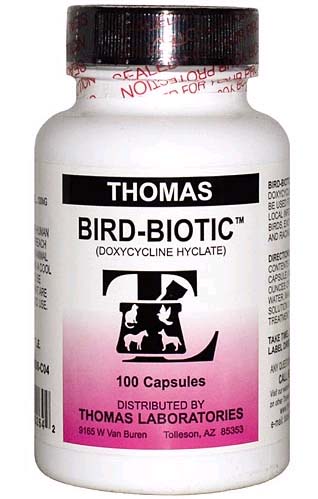
  • No it is not. Any veterinarian who tells you otherwise is not keeping up with the literature. It turns out that even if your dog has adult heartworms, if the dog otherwise appears healthy (i.e. it is active, not lethargic, and does not have a chronic cough), a monthly dosing of Ivermectin at a dosage normally used to kill roundworms (a dosage that is 3 times higher than that used to simply prevent heartworm), plus a once-a-month 5-day dosing of Doxycycline (sold as Bird Biotic, and the same antibiotic used to treat Lyme disease) will kill all the adult heartworms if it is sustained for a period of 18 months. This treatment works better than previous Ivermectin-only treatments because the Doxycline wipes out the Wolbachia microbe that grow in the gut of the adult heartworm, essentially sterilizing all of the female heartworms. A round-worm strength dosing of monthly Ivermectin will not only prevent new heartworm microfilaria from taking hold in your dog, it will also work to dramatically shorten the life of any existing adult worms in your dog. Bottom line: after 18 months of treatment, your dog will be heartworm-free at very little cost compared to other remedies.
    . . . . . A repeated caution, however: if you have border collies or herding dogs with white feet that also appear to have full-blown heartworm, consult a veterinarian, as some lines of collies are very susceptible to Ivermectin toxicity. This is very rare, and the cause is unknown, but it is an area of concern among collies and collie-crosses.

PLEASE BE ADVISED THAT I WILL NOT ANSWER QUESTIONS ABOUT DOSING YOUR DOG.   If you are too lazy to read this post or too confused and wrapped around your own axle to follow simple directions, I cannot help you.  Please go to a veterinarian.

Saturday, May 1, 2010

The Billion Dollar Lyme Disease Scam


Center for Disease Control (CDC), Lyme disease cases (human) for 2006.


"Lyme disease vaccines and testing, as well as Lyme treatment of asymptomatic dogs, is a huge scam costing American dog owners hundreds of millions of dollars a year."

In a previous post about Lyme disease, I gave good medically-sound advice, which can be summarized as follows:

  1. Just say NO to Lyme disease vaccination. This is junk billing.


  2. Just say NO to Lyme testing; the tests ALL give false positives, none of the tests tell you if your dog has the disease, and ALL the tests cost more than Lyme treatment which is the only definitive test of the disease.

  3. Treat suspected Lyme disease with doxycycline (5 mg per pound of dog) which you can purchase without prescription and without visiting a vet. If your formerly lame, lethargic and stiff-jointed dog shows marked improvement after a few days, keep the dog on doxycycline for a full 5 week regime.
In response, I got an anonymous post saying that there was a new Lyme test that was 100 percent accurate, that this fool-proof test should be followed up with more tests, that capsules given to a dog were "problematic," that doxycycline would upset a dog's tummy, and that doxycycline should be administered longer than 5 weeks. In addition this anonymous person wanted me to know that doxycycline will not cure Babesiosis.

My tolerance for nonsense is low, and it's even lower from anonymous posters, and so I let fly, calling prattle exactly what it was, and noting that the medical literature agreed with me.

In response, I got back a short nasty-gram from someone signed "Gil" who did not give an email address or offer a single corrective citation to what I said.

No matter. The world is a small place, and it was not hard for me to figure out who "Gil" was.

Gil Ash has a small web site about Lyme disease in which she suggests that folks should ignore what anyone else says (including their own veterinarian) and keep looking around until they find a vet who will take their money to do Lyme testing, Lyme titers, and Lyme treatment. The veterinarian she seems to lean on for Lyme disease information is a "holistic" vet in Texas (where there is very little Lyme it should be said -- see map) who specializes in ... horses.

A second poster then chimed in, suggesting I needed to take a chill pill because Lyme was a really serious disease, and she should know because she owned a "potential" Search-and-Rescue dog that had been wrecked by Lyme disease. Her evidence for the horror of Lyme is that her own dog had tested positive for Lyme and was fearful of noise, lights and sounds, and was aggressive to other animals (but not to humans).

Whoo boy!

Now, to cut to the chase, Gil's advice on Lyme disease is not supported, and I assume Gil knows it, as it's simply NOT that hard to find good information on Lyme disease.

I will cover Lyme disease in detail in a second, but for now let me get rid of a stray strand of worry and confusion that Gil attempts to throw into the mix: Babesia.

If you are worried about Babesia, you probably shouldn't be, as it turns out you are 20 times more likely to be hit by lightning than to catch Babesia microti, the human version of the disease, while Babesia gibsoni, the more serious canine version of the disease is not much more common, and its occurrence seems to be almost entirely limited to Pit bull terriers. Babesia canis, the less virulent (and more common) form of Babesia is generally asymptomatic, and does not require treatment. Finally, it should be noted that Babesia symptoms in dogs (when they occur) are not the same as that for Lyme, which generally presents as lameness and stiff joints.

As to the second poster, it turns out that blaming an animal's unrelated problems on Lyme disease is such a common phenomenon it is actually mentioned in the literature on Lyme. Here's a hint: a bit of bacteria does not tell an animal to bite other dogs but to leave the human in the house alone.

Fear and aggression are NOT symptoms of Lyme disease. Fear and aggression are, more likely, due to a twist of genetics and/or poor socialization of the animal.

OK, now back to Lyme disease. First, a little history.

America is a huge country, and we are no longer a new one. With a population of well over 300 million people, and the modern historical time line going back more than 300 years, I think it's safe to say there have a few hundred million dogs in the U.S. over that time. And yet, Lyme disease was not diagnosed in humans until 1975, and was not diagnosed in dogs until 1984.

What does this suggest?

Well, for one thing, it suggests that Lyme disease may not be very common.

Which it isn't.

In fact, Lyme disease is very rare over most of the U.S., and the prevalence of the disease is heavily skewed to a few relatively small regions of the country (see map at top).

And while relatively few humans catch Lyme disease, dogs are even less likely to catch it.

The good news is that since 1984, when Lyme was first identified in dogs, a heck of a lot of stuff has been written about Lyme disease's prevalence, symptoms, epidemiology, diagnosis, and treatment in dogs.

Most of this literature is marketing stuff cobbled up by drug companies trying to sell Lyme tests, Lyme vaccines, and Lyme cures, but some legitimate research on this disease has been done as well.

This legitimate research has, for the most part, shown that most of the "problems" associated with Lyme disease, other than leg lameness, joint stiffness, and lethargy, cannot be replicated in a laboratory setting in which dogs are intentionally infected with Lyme disease.

I could reference all of this literature, but it's not necessary, as the "Consensus Statement of the American College of Veterinary Internal Medicine on Lyme Disease" offers an excellent "best practices" paper as to what can and should be done regarding Lyme.

Read the whole thing if you want, but I will summarize -- in plain English -- the basics of what you need to know, with appropriate highlighted text to be found on the PDF:


  1. Lyme disease in dogs is very rare nationally, and Lyme disease itself is endemic to only a small portion of the U.S.

  2. It is much harder for a dog to catch Lyme disease than it is for a human.

  3. 95 percent of the dogs that catch Lyme from a tick are asymptomatic (no symptoms).

  4. An asymptomatic dog does not need to be tested for Lyme, as an asymptomatic dog does not need treatment, and treatment will not completely rid the dog of Lyme infection in any case.

  5. All Lyme tests and titers give false positives or otherwise offer up only meaningless information that tell you nothing about whether the dog actually has Lyme disease or will come down with it.

  6. A dog with symptoms of Lyme disease should not be tested for Lyme, as tests and titers do not prove that Lyme is the causal agent of any observed problem. The ONLY 100% indication that Lyme disease is a causal agent of a problem in a dog is if the dog responds to appropriate antibiotic treatment. Said treatment is cheaper than either a test for Lyme disease or an assay titer.


  7. The best treatment for Lyme disease is oral doxycycline (5 mg a pound) for five weeks. Longer treatment periods have not been shown to be therapeutic. Doxycycline is also an effective treatment for several other tick-borne diseases such as Ehrlichiosis, Anaplasmosis and Rocky Mountain Spotted Fever. Note that neither doxy nor any other treatment will rid a dog of Lyme antibodies; they will remain in the dog forever, and repeated infection from another tick bite is always possible.


  8. Most dogs that come down with Lyme-related lameness, lethargy, or joint stiffness get dramatically better after 2-3 days worth of treatment with doxycycline. If so, continue doxycycline treatment for a full 5 weeks. In humans, long-term doxycylin treatment has not been shown to be more effective than placebos, and there is no evidence to suggest it as a sensible regime for dogs


  9. Lyme vaccines are more likely to do harm than good, and should NOT be given even in Lyme-endemic areas.


  10. Some dog owners and veterinarians are only too happy to blame other medical issues on Lyme disease. However, if your dog does not get better after a five-week treatment of doxycycline, the problem is probably something other than Lyme, such as an a congenital autoimmune disorder.
What's all this mean?

Boil it all down, and what you have is a simple fact: Lyme disease vaccines, testing, and medically unnecessary treatment of asymptomatic dogs is a huge scam costing American dog owners hundreds of millions of dollars a year.

As noted in my earlier post, you should say NO to Lyme disease vaccination and NO to Lyme testing. If your dog comes up lame or stiff, do nothing for two weeks; it's probably as simple as a sprain, bruise, or cut pad. If the dog does not get better, however, and no other problem seems evident, treat the dog with doxycycline that you have ordered on your own and without a prescription. If the dog dramatically improves in 2-3 days, then the issue is Lyme disease, and continue to treat with doxycycline for a full 5-week regime.

Bird-biotic doxycycline can be ordered from Amazon or Revival Animal Health, and contains a 100 mg dose of doxycycline, which is a perfect dose for a 20-pound terrier. Scale up or down for a larger or smaller dog, dosing 5 mg per pound of dog, twice a day (once every 12 hours).

This is a repost from April 25, 2008.

.

Wednesday, July 15, 2009

Glad We Could Help


Dear Sir,

I'm writing to express my gratitude, and my St. Bernards gratitude, for the information you provided on antibiotics on your website. Without your website, I wouldn't have been aware of Fish-Flex. After 4 years, 5 vets, thousands of dollars and an exhaustive sleepless week of research once I became overwhelmingly fed up, I can finally say my dogs ear infection is GONE!! He had been suffering for years from yeast/staph infections that would never completely go away and had been repeatedly told by all his vets that it would never fully go away and he would always have problems with his ear. They lied. They had been prescribing sub-par antifungal ear washes that contained 2 ingredients that yeast love...steriods and antibiotics or were prescribing oral amoxicillan (which has no effect on Staph) for his staph infection.

I treated his ear with Monistat 1-day everyday for 10 days along with 14 days of Fish-Flex, 750mg/every 8 hrs. with two 25mg capsules Diphenhydramine (Benadryl) to combat any nausea the antibiotics may cause and prevent him developing allergy inducing antibodies against the monistat (miconazole).

It has only been a month since his last dose but it is the only month in 4 years that he has gone without an infection in any stage and there is NO signs of infection returning any time soon.

From the bottom of my heart, thank you so much for providing the information about Fish-Flex (Cephalexin) that helped me relieve my dog of of his suffering.

Sincerely,
Teresa N
.

Friday, April 24, 2009

Swine Flu and the Next Pandemic


Back in 2005, I noted that the next major global pandemic was likely to come out of China or Southeast Asia due to the fact that the Chinese routinely mix the excrement of humans, pigs, fish and fowl and then dose it with massive amounts of antibiotics in order to keep fish healthy in over-crowded fresh-water aquaculture ponds

Now comes word that 5 new swine flu cases have appeared in California and Texas, and that "the unusual strain of the respiratory infection is spreading from person to person."

Right.

The Center for Disease Control says "We don't think this is time for major concern around the country."

They are probably correct.

That said, this is how it will start, mark my words.

  • Follow Up:
    It looks like things are heating up, Voice of America reports: "Mexican and U.S. officials are taking emergency steps to contain the possible outbreak of a new multi-strain of swine flu that has killed at least 20 people and may be responsible for scores of other deaths.Mexican health officials confirmed at least 20 deaths associated with the new flu strain Friday and ordered the most sweeping shutdown of public gathering places in decades. Authorities closed schools, museums, libraries and theaters in the capital, Mexico City, to try to contain any possible outbreak. Many people in the capital were wearing face masks while in public. Authorities say 1,000 people have become ill."

    Without being too alarmist, this thing is spreading way too fast and it is not too benign and it is not even normal flu season. Not good. Even more not good is that New York health officials began testing 75 students at a Queens school on Friday, suspecting flu.

    "The new virus has genes from North American swine influenza, avian influenza, human influenza and a form of swine influenza normally found in Asia and Europe, said Nancy Cox, chief of the CDC's Influenza Division."

  • Related Posts
    ** Populations, Oceans and Influenza
    ** Sharing Death and Disease Across Species
    ** China, Export Fish, Antibiotics & the Next Plague

Tuesday, April 14, 2009

Rocky Mountain Spotted Fever? Probably Not.


A reader writes:

I live in Alabama, and recently a friend had her dogs tested for tick-borne diseases. Neither had specific signs of disease, but both had been bitten by ticks because she lives in a rural area, and one is middle-aged and had some vague "lessened energy" signs.

The tests for both dogs came back positive for Rocky Mountain Spotted Fever and they are now on doxycycline.

Hearing that, another in our group of dog friends had her healthy dogs tested, and they came back positive for RMSF. So, another just started treating her dogs without testing since the tests are expensive. Several others are now having their dogs tested.


My reader wondered what was going on? Are her friends being ripped off, or is there some horrible new contagion sweeping the nation?

My answer back:

Rocky Mountain Spotted Fever (RMSF) was not diagnosed in dogs until the 1970s, and is self-limiting and generally asymptomatic. In short, it is generally not a big deal, and once a dog recovers from RMSF, the dog is immune to the disease for life.

Look around you: Are you reading about an epidemic of Rocky Mountain Spotted Fever in humans or pets? Are you hearing about dogs in your area dying from RMSF? Is your dog seriously sick?

No, I didn't think so.

I would worry about almost anything and everything before I started to worry about RMSF, and my dogs are in the woods and field every week in the area of the country where half of all RMSF is to be found! You and your dog are more likely to be struck dead by lightning that catch RMSF.

What is particularly telling here is that you have two asymptomatic dogs being diagnosed with RMSF by the same vet. Now that's an interesting coincidence! And how convenient that the tests are expensive!

What, exactly, is the veterinarian treating to prevent?

After all, treatment of the dog is not necessary to prevent the spread of RMSF to humans. Ticks that feed off of dogs are done feeding and drop off (or are pulled off) and dogs have such an attenuated strains of RMSF, that dog ticks almost never pass on RMSF to humans. Again: You are far, far more likely to be struck dead by lightning than to get RMSF from your dog's ticks.

So again, I am not clear why this person's dogs were being tested, or why the dogs were being treated.

If your dog is seriously sick, and RMSF might be the issue, the proper veterinary protocol is NOT to test and wait for the results -- it's to give the dog doxycycline immediatly and see if it gets better very quickly. The test for RMSF takes too long and is too expensive, while the cure for RMSF is quick and cheap and harmless to the dog even if the animal turns out to be clear of RMSF. You do not even need to go to a vet to get doxycycline. Simply dose your dogs with bird doxycycline for a week (10-20 mg /kg body weight given twice a day).

For the record, I doubt that either of these dogs had RMSF at all. RMSF is amost always seen in younger dogs, not older dogs, and general lethargy in a middle-aged or older dog could be due to almost anything.

And please, let us not talk about "never being too careful." If I tell my doctor I had a headache last night, and he wants to give me an MRI, that's NOT good medicine; that's fraud.

Do you get an upper and lower gastro-intestinal workup every time you have a case of diarrhea? Do you go the hospital for an x-ray every time you pull a muscle? No? Then stop doing it for the dog!

Dogs deserve veterinary care when sick, but mild lethargy in a middle-age dogs, or a short-term limp after running around in the forest is what we all get -- dog and human alike -- and is no reason to rush off to a vet. It will probably get better in a week or two without veterinary care, same as the minor aches and pains we humans have from time to time.

Still worried about RMSF? Then simply treat your dogs for ticks and fleas on a regular basis, and check them over after you come in from a walk in forest or field, and again a few days later.

Tick prevention is good medicine; running to the vet in order to do expensive testing for every little thing is not.


.

Monday, April 21, 2008

Lyme Disease: Hard to Catch and Easy to Halt

People like to be scared -- that's why there are roller coasters -- and a lot of people live their lives scared of just about everything, no matter how irrational.

Take Lyme Disease. This is a very-hard-to-get and very-easy-to-cure disease, as the article below makes clear, yet there is no end to the fear people express. You are going into the woods? You are spending a day in the field?

In fact, not only is Lyme Disease hard to get, it is easy to treat and generally, even if your dog catches it, it will be asymptomatic.

How easy is Lyme Disease to treat? Consider this: doxycycline, which is the universal treatment for Lyme, is available without a prescription. Just order the Bird-Biotic version from Amazon or Revival Animal Health (100 capsules of 100 mg doxyclines will be less than $30) for a quick prophylactic dose if you are really worried after finding a tick on yourself, or a curative dose if you or your dog comes down with symptoms.

If you want to spend money and time with doctors and vets, knock yourself out, but in this case there may be a better use for these two precious resources.

Another point: Never get your dog tested for Lyme disease. The tests are entirely worthless, racking up more false positives than true positives, and suggesting expensive treatment even in asymptomatic animals.

Also, never get your dog vaccinated for Lyme disease; this too is another veterinary scam. Remember, Lyme disease in dogs is rare, it is never fatal, and it is easily treatable. If you veterinarian insists on a Lyme disease test because your dog is limping, he or she is either incompetent, or billing you for an medically unnecessary procedure (or both). Remember the Lyme disease tests are worthless; the huge number of false positives here mean that you are paying for nothing.

If Lyme disease is suspected in a limping dog, the proper protocol is to dose the dog with doxycycline ( 5 mg per pound of dog, twice a day). If the dog gets better after a few days, keep it on a daily regime for 5 weeks and everything will be fine.


Lyme Disease Is Hard to Catch and Easy to Halt, Study Finds
By Gina Kolata, New York Times (June 16, 2001)

Lyme disease is very difficult to catch, even from a deer tick in a Lyme-infested area, and can easily be stopped in its tracks with a single dose of an antibiotic, a new study shows.

And two other studies conclude that prolonged and intensive treatment with antibiotics, a course of care advocated by a small group of doctors, does nothing for people with symptoms often attributed to chronic Lyme disease.

These findings are in keeping with the assertions of researchers who say that in most cases, such symptoms have nothing at all to do with the disorder. The three studies, scheduled to be published on July 12 in The New England Journal of Medicine, were released yesterday because the journal's editors thought they were so important, with the onset of summer and the accompanying fear of Lyme disease.

"This is reassuring information for people who make decisions based on evidence," said Dr. Jeffrey M. Drazen, the journal's editor in chief.

Researchers, both those associated with the studies and others who were not, said they hoped the findings would ease what they called inflated public fear of Lyme disease, which is widely perceived as a grave illness that is easy to catch.

A total of 16,019 cases were reported to the Centers for Disease Control and Prevention in 1999; 92 percent of those cases were in nine states, most of which are in the Northeast, including New York and Connecticut.

Dr. Leonard H. Sigal, a Lyme disease expert at the University of Medicine and Dentistry of New Jersey-Robert Wood Johnson Medical Center in New Brunswick, who was not associated with the studies, said the message from them was that "Lyme disease, although a problem, is not nearly as big a problem as most people think." "The bigger epidemic," Dr. Sigal said, "is Lyme anxiety."

The study to see whether a single dose of the antibiotic doxycycline could prevent Lyme disease was directed by Dr. Robert B. Nadelman, a professor of medicine at New York Medical College and attending physician at the Westchester Medical Center, both in Valhalla, N.Y. Dr. Nadelman said many doctors, in hopes of heading off Lyme disease infection, had been giving 10-to-21- day courses of the antibiotic to people who had found deer ticks on their bodies. "They would be treating people as if they actually had the disease," he said. He and his colleagues wondered whether one dose would be enough. They recruited 482 people in Westchester County, N.Y., where the incidence of Lyme disease is among the highest in the world. All had found deer ticks on their bodies. (The insects were identified by entomologists.) Half got a single dose of doxycycline, taken in the form of two capsules, and the others got two dummy capsules. The investigators found that the drug did prevent Lyme disease: just one person, 0.4 percent of those who took it, came down with the illness. But even among those who took the placebo, the chances of getting the disease was just 3 percent.

Dr. Eugene Shapiro of Yale University School of Medicine, who wrote an accompanying editorial, noted that the antibiotic often caused nausea, vomiting and abdominal pain and that among those who took it, there would have been very little chance of getting Lyme disease in any case.

People who are bitten can watch the site where the tick fed, Dr. Shapiro said, and if they develop a rash within a few weeks, they can take a full course of antibiotics. "Give that person 10 to 21 days of antibiotics," he said, "and they will be fine." Dr. Sigal agreed. He added that deer ticks crawl around the body for hours before settling down to feed, and during that time are easily washed off with a washcloth. And, he said, "even if you get the disease, it is easily treatable and it is curable."

But Dr. Jesse L. Goodman, a Lyme disease expert at the University of Minnesota, said some people were so horrified by the possibility of getting Lyme disease that even a 3 percent risk was too much for them. "As a physician, I could respect that," Dr. Goodman said, adding that he would offer those people doxycycline. Lyme disease researchers emphasized, however, that previous studies had shown that most people with the infection get better on their own, without antibiotics. And while a small percentage develop serious symptoms, like arthritis or heart disorders, even the vast majority of these get better, the researchers said.

Dr. Raymond Dattwyler, director of the Lyme Disease Center at the State University of New York at Stony Brook, said the typical Lyme disease patient has a rash but no other symptoms, takes an antibiotic and is cured. The two other studies released yesterday, financed by the National Institutes of Health, addressed the question of how to treat people who had Lyme disease and later developed symptoms like fatigue, aches and pains, and memory loss. Both were conducted by Dr. Mark S. Klempner of Boston University School of Medicine and his colleagues. One study enrolled patients who had antibodies to the Lyme disease microorganism, Borrelia burgdorferi, an indicator that they had been infected. The other enrolled patients who no longer had antibodies but had had a documented case of Lyme disease. Half the patients in both studies received an intravenous antibiotic, ceftriaxone, for a month, followed by oral doxycycline for 60 days; the others received dummy medications. The question was, Would this intensive antibiotic treatment make the patients better? The studies were meant to enroll 260 patients, but they ended early, after enrolling just 129 patients, because an independent committee overseeing them said it had become clear that the antibiotics were no more effective than the placebos. Dr. Shapiro said he was not surprised.

Although a small group of doctors and patients insist that symptoms like fatigue and memory loss after a bout with Lyme disease are due to chronic infection with the disease organism, those symptoms are very common among the general public, leading Dr. Shapiro and others to believe there is some other cause. "Whatever is going on with these patients," he said, "if it is unresponsive to antibiotics, it is unlikely that it is untreated Lyme disease."

In contrast, antibiotics have been shown to work extraordinarily well when, for instance, the Lyme organism has demonstrably infected the brain, Dr. Dattwyler said.

But some who have treated hundreds of patients with long-term antibiotics, like Dr. Sam L. Donta of Boston University Medical Center, were not convinced. The antibiotics in the studies were not given for a long enough time, Dr. Donta said, and he would have chosen different ones. Perhaps all that the studies show, he said, is "that this particular treatment doesn't work."

Dr. Brian Fallon, an associate professor of psychiatry at Columbia University, is directing another study of chronic Lyme disease that focuses on patients who have problems with fatigue, their memory and their ability to think. In his study, also supported by the National Institutes of Health, the patients receive intravenous antibiotics for 10 weeks, or a placebo. Dr. Fallon said he saw many such patients in his private practice and would continue to refer them to colleagues for long-term treatment with intravenous antibiotics. Dr. Sigal said, however, that in addition to the expense of long-term intravenous antibiotics - and some patients end up taking them for years - the drugs are dangerous. Some patients have died of infections caused by the catheters in their bodies, and others have experienced side effects from the drugs, including destruction of bone marrow, requiring a bone marrow transplant. "These are not benign drugs - they're all poisons," Dr. Sigal said. When they are needed to fight an infection, their risks, of course, are outweighed by their benefits. But when there are no benefits, he added, the risks are naturally unacceptable.

.

Sunday, April 13, 2008

The Contents of My Field Veterinary Box

I went through my field veterinary box today, not because I am a compulsive neat-freak, but because I had decided to strip Trooper, my ancient Border Terrier, and I misplaced my stripping knife. Maybe it was in the vet box.

It had been a few years since I had dived all the way to the bottom of my veterinary box (a plastic tool box acquired for $10 from Home Depot), and as I sorted through things I made a list of contents.

For the record, here it is:

  • SPF Sports 30 waterproof spray which is the greatest thing ever invented if you are a balding man who digs all summer
  • Jungle Juice -- 100 percent Deet bug spray
  • A small bottle of Alleve
  • A 2 oz. bottle of ProvIodine
  • A 3 oz bottle of ProvIodine
  • A small bottle of hygrogen peroxide to make a dog vomit if needed.
  • A small bottle of alcohol to clean a wound (or anything else)
  • Needle-nose pliars
  • Flat-faced wire cutters
  • Forceps
  • Digitial thermometer
  • Canine toe-nail clippers
  • Bic lighter
  • Quick-Stop styptic powder
  • Granulex spray
  • 1% cortizone cream
  • Tube of triple anti-biotic ointment
  • Muzzle for terrier
  • 1 Percocet-5 which is enough to dose 10 terriers if needed.
  • 1:1000 epinephrine (never used)
  • Sterile hypodermic needle for percocet or epinephrine
  • Veterinary stapler (never used, in sterile pack)
  • Veterinary staple remover
  • 4 oz. bottle of Erliworm dog worming medicine
  • Small vial of Vetbond
  • Five tubes of SuperGlue (same as vetbond, but much cheaper)
  • Small 1.2 oz bottle of human shampoo
  • A slice of bar soap
  • Ocu-coat eyedrops
  • Dental floss (a cheap type of very strong thread)
  • 2 needles
  • Exra deben locator collar
  • Exra Deben locator box
  • Batteries for Deben locator box and collar
  • Xtra roll of yellow collar tape
  • 2 extra rolls of black collar tape
  • Two small flashlights in working order
  • Candle lantern with 3 extra candles (will last all night).
  • Space blanket
  • Spare root saw
  • Three fox nets
  • Extra collapsible water bottle
  • Extra collapsible water bowl for dog
  • Dog brush
  • Machete and knife sharpener
  • Spare rivets for shovel handle
  • Scissors
  • Razor blades (about 10)
  • Roll of 2"gauze in sterile packaging
  • Wound managemen kit consisting of matches, lots of butterfly bandages, larger bandage strips, double anti-biotic ointment, towlette, iodine packs, empty irrigation syringe, suction tube, gauze
  • 2 small chain-repair links
  • A list of farm permissions and who gave them to me.
  • A large wild turkey feather for no reason what-so-ever
  • In the truck (not in the vet box) is a quart of "Skunk-Off."
Of course, the most important veterinary and emergency fix-it tool is always with me: my brain. Not using it is what it most likely to cause injury to both the dog and myself.

The second most important thing with me in the field is my cell phone, and the cell phone car-charger (just as important as the cell phone). When I need to find a vet, a doctor, or a tow truck, nothing will ever serve me better than a cell phone.

The third most important veterinary tool is my wallet, and the credit card and blank check inside it. When push comes to shove, I may need to cough up real money for emergency veterinary care.

My field pack always contains several bottles of eye-flush water, and I also carry a couple of gallons of distilled water in the truck for the dogs to drink and/or to flush out eyes and any gashes that might occur.

I also have a pretty good supply of antibiotics in the refrigerator at the house: Cephalexan (Fish-flex), Amoxicillin (Fish-mox), and Baytril, as well as Mycitracin eye ointment to help prevent infection in case of a corneal rip.

See the www.terrierman.com web site for more information on basic field health care for your working terrier.

And NO for the record, the stripping knife was not in the veterinary box; it was in a plastic bin on a shelf beside the wash tubs in the laundry room, underneath an old dog collar, three terrier stripping stones, a tooth brush I use on the dogs, two bottles of dog shampoo, two broken Deben Mark I collars, and an old slicker brush. In short, it was right where it should have been.
.

Saturday, September 22, 2007

The British Veterinary Protection Plan and the BBC


Your hamburger, Mr. Lynn.


I like steaks and porkchops well enough, and I bet you do too.

I will also bet that Guy Lynn likes the occasional steak and chop as well. But I wonder if he would like them quite as well if he knew that the cattle and pigs he eats are (gasp) routinely administered antibiotics by farmers that are not veterinarians, and that (double gasp) cows and sheep are routinely dispatched in the rural countryside by a single bullet to the brain.

What the hell am I talking about? And who is Guy Lynn, anyway?

Lynn is the "Look North Rural Affairs Correspondent" for the BBC. In short, he is a reporter.

More importantly, he is the reporter who recently sent nearly-70 year old dog man Ginger French to the penitentiary for the "crime" of selling antibiotics and vaccines without a veterinary license.

What's that, you say? Since when is selling vaccines and antibiotics a crime?

Well, it's not a crime in the U.S. In fact, every veterinary catalogue in America sells vaccines and antibiotics without a prescription, and the Terrierman.com web site will give you dosage information as well as show you how to give a puppy shot. There's nothing to it.

In the U.K., however, veterinarians managed to get a law passed making it illegal for a private citizen to sell vaccines or antibiotics to treat dogs.

As a consequence, if your running dog rips himself on a barbed wire fence in the U.K., you have to decide whether to risk doing nothing and have the wound go bad, or shell out a fairly significant amount of money to go to a veterinarian who will charge you 100 pounds sterling to slap three foil strips of clavamox or cephelaxin on the counter. No money? No treatment.

The same extortion game goes on for other kinds of minor health concerns, such as puppy protection shots and urinary tract and ear infections. Pay up or let the dog suffer.

BBC rural affairs reporter Guy Lynn was apparently horrified when he found out that Ginger French was selling antibiotics and vaccines without a license.

He was even more horrified to find out that Ginger would put down a dog with a .22 shot to the brain if that was required by its owner. The BBC 's rural affairs reporter was, in fact, so horrified that he secretly taped Ginger selling him antibiotics and detailing his price schedule for services. Then he added fake graphics and store-bought B-roll to his segment to suggest that Ginger French was operating on dogs (he was not), and that he was selling medicines other than those you can get out of a catalogue without prescription here in the U.S. and much of Europe (he was not).

To which I have to ask only one question: You're sure this is the rural affairs reporter for the BBC?

You see, Ginger French was not doing anything that farmers all over the U.K. and the world do every day.

British farmers dose their owns cows and pigs with penicillin and they feed truck loads of antibiotics to their chickens without a veterinarian in sight.

It's all perfectly legal.

Pigs and cows are vaccinated by farmers too, and those farmers are not veterinarians; some of them can barely read.

As for dispatch, surely Guy Lynn does not think the cow that was the progenitor of his steak-on-a-plate was put down with pentobarbital in a veterinarian's office? No, it was not. It was shot through the brain with a captive-bolt gun or a bullet, and I assure you that the fellow running the dispatch position on the killing line was not a veterinarian playing soothing classical music in an air-conditioned office.

In fact, if it is done right, death by bullet to the brain is instantaenous and not cruel. If you study human suicides, you will find that more people chose to kill themselves by a gunshot to the head than all other methods combined.

The objections to shooting a dog then, is not about ethics, it is about aesthetics.

In fact, the British are not really very high-minded about shooting a dog outside of the vets-for-pets craft guild created by the U.K. veterinary restraint-of-trade laws.

For example, if your dog is found worrying sheep, it can be shot dead on sight. And I assure you that when a running dog is shot dead by an agitated farmer, it is not shot cleanly through the head. It is gut-shot, or shoulder shot. And that's perfectly legal. What is not legal is paying an experienced dog man to do euthenasia with a .22 short round directly to the brain.

And let's be clear: low-income people were not going out of their way to see Ginger French because they do not care about their dogs. They were going to Ginger because they DO care about their dogs. They were driving some distance and paying money, but they were paying less money to Ginger because, in all liklihood, it is all that they could afford. Not every one is lucky enough to have a trust fund and a fat wallet.

French was NOT doing surgery on dogs; he was sticking to the basic stuff that anyone can do -- antibiotics, puppy vaccines, tail nips, and the like.

The case was never made that the antibiotics and vaccines that Ginger French was selling were defective in any way. In fact, they were perfectly fine. Antibiotics in pill or capsule form are good for as much as a decade past their expiration date, and dry vaccines too are quite safe and can be stored for a very long time. These things are available over the counter or by mail to regular people all over the world outside of the U.K.

In fact antibiotics and vaccines are so safe that we let farmers the world over do their own work rather than have veterinarians unnecesarily drive up the price of beef, chicken, lamb, pork and fish.

But in the U.K., they have allowed veterinarians to have the monopoly on dogs and cats even for the basic stuff like vaccines, tail docking, and antibiotics.

And so nearly 70-year old Ginger French has to go to jail for a year so that veterinarians can ply their game of economic extortion; a game of "give me your money or lose your dog's life."

This travesty has made Earth Dog - Running Dog editor David Harcombe grieve for the state of his nation. In an editorial in the current issue of the magazine (Sept. 2007), he writes:

"What a hell of a mess we have made of our nation. I used to be proud to be British. Now I am ashamed of a country which can send an elderly man to prison for a triviality which hurt no one except perhaps the pockets of a few vets. Our spineless, politically correct politicians have brought us to this."

To which I can only reply,
"Amen."

.

Sunday, August 12, 2007

History of Wound Management

Example

A review of the history of veterinary wound management

  • In 1378, Gaston Phoebus, in his Le Livre de Chasse, devoted two chapters to the care of hounds. Wounds were not sutured and only bite wounds were treated. These were covered with raw wool drenched in olive oil, the dressings changed every day for three days. The wound was then left open to the fresh air and the healing effect of the dog's tongue. This would have been a reasonably effective treatment as lanolin (present in raw wool) and oil have an emollient as well as a light anaesthetic and antiseptic effect.

  • In 1605, Leonard Mascall in his First Booke of Cattell, under the heading of 'Impostumes in beastes to helpe', advised to 'open the place with an yron, and when it is cut, then shall yet crush forth all the ill humour and matter therein'. This is one of the very first mentions of cauterization. Mascall next suggested washing the wound with warm wine to cleanse it and using a mixture of 'Cherpi, tarre and oyle Olive' to 'close the sore therwith'.

  • In 1763, John Reeves advised suturing deep wounds, and suggested that waxed thread was better than silk because it rotted more easily and was not as prone to cutting. He believed that one stitch was sufficient for wounds of two or three inches, but where more were required they should be an inch apart.

  • In 1766, Osmer wrote of the the need to drain infected wounds : "In all wounds, where matter lies lower than the orifice of the wound, and cannot flow out, it produces fistulous cavities in the parts ... Now it is always necessary to go to the bottom of such (where the parts will admit of incision) otherwise no cure can be expected."

  • In 1769 J. de Saunier, riding-master and director of the Academy at Leyden, recommended dosing wounds with wine, a primitve kind of disinfectant, which he promoted as "Water proper for all Sorts of Wounds."

  • In 1803, Delabere Blaine was an advocate of suturing, but he believed that "when a wound is much torn, or bruised, stitches are better avoided".

  • In 1817, Francis Clater recommended cleaning wounds with "Tincture of Benzoin" -- the first modern antiseptic.

  • In 1830, William Youatt favoured the application of "lunar caustic" (silver nitrate) to wounds. Silver nitrate is still used on wounds, and is the standard solution to reduce infections after burns.

  • In 1865s, Joseph Lister suggested the germ concept of infection and suggested the use of carbolic acid (phenol, a type of coal-tar derivative), as an antiseptic agent. This worked so well that infection largely disappeared in Lister's operating theatre.

  • In 1904, Mayhew's Illustrated Horse Doctor recommends treating lacerated wounds with a mixture of cantharides, chloride of zinc and water. It is about this time that the use of saline washes first appears in literature as pehaps beneficial to wound management.

  • In 1911, the US Department of Agriculture's Special Report on Diseases of the Horse (1911) lists new wound antiseptics such as bichloride of mercury, carbolic acid, aluminium acetate, borasic acid, creolin, Lysol, iodoform and tannic acid.

  • With the introduction of sulphonamides and then penicillin in the 1930s and 1940s, great advances in wound treatment became possible. In recent years new classes of antibiotics have become available and can be had without prescription from most "vet and pet" supply catalogues -- "Fish-Flex" is cephelaxin, Fish-Mox is Amoxycillin, etc.


Did the old cures work? As The Journal of Veterinary History notes: "Despite the array of unpleasant compounds used in treatment, wound healing generally appears to have been successful. This was probably because the body's natural response to a wound is to heal it in spite of any 'veterinary' intervention." In short, the animal got better despite veterinary attention, not because of it.

We have better veterinary care today, but the determinant elements with most simple flesh wounds are still time and antibiotics. For more on antibiotics see the www.terrierman.com web site.

.

Tuesday, August 7, 2007

Get Free Antibiotics for Your Dogs and Your Self

Publix supermarket chain is offering 14-day supplies of seven antibiotics for free at all of its 684 pharmacies in five states, even if a customer has health insurance that would pay. And there’s no limit on the number of scrips a customer can fill.

The antibiotics available are cephalexin, amoxicillin, sulfamethoxazole/trimethoprim, ciprofloxacin, penicillin VK, ampicillin and erythromycin, the Associated Press reports.

Most Publix stores are in Florida, but others are located in Georgia, South Carolina, Alabama and Tennessee. In other words, a big swath of the Southeast.

For information on dogs and antibiotics, see >> Terrierman.com
.

Wednesday, July 25, 2007

Root of the Problem


The bar is six feet long, the roots were 12 feet wide and over five feet high.


I met up with Chris at a general store in Adamstown, and he had Brick with him, a red fell terrier. I had Mountain and Pearl with me, both in fine shape and anxious for a day in the field.

We crossed the small bridge spanning the creek, and parked behind one of the outbuildings on the farm.

This farm used to raise calfs, but now it's corn on one side of a creek and soybeans on the other, with a narrow pasture down the middle on either side of the creek, and good soil almost everywhere. If there is a more ideal habitat for terrier work, I have not found it.

I did a thorough job of taping up the locator collars, as the dogs would likely be in and out of the water.

Finding holes was not going to be a problem. When the owner of this place first called me, she said she was anxious to reduce the number of groundhog settes along the creek, as they were undermining the bank. I was skeptical of this assertion until I saw the problem, but she did not exagerate or get it wrong; it is groundhogs causing the damage, not muskrats. And there are a lot of holes. Yahoo!

The dogs and I have been doing some abatement work on this farm for the last couple of weeks, and perhaps as a consequence we did not find anything for the first 200 yards or so. At a spot where I had found raccoons on a previous dig, however, Pearl slid into the earth and began baying.

I was surprised this sette was already reoccupied, but not dipleased; I had done a good job rebuilding the den, and I could not tell where I had cut into it before.

Pearl continued to bay, and I collared up Mountain, and then Brick was in another hole and baying, and Pearl came out and I quickly grabbed her and collared her up before she could try another entrance.

Brick was clearly on it, and baying. We boxed her, and then began to bar and dig, but then she stopped baying and came out and tried to get into another hole. I went over and undid Pearl, a more experienced dog, but she too seemed suddenly confused by the sette.

After a few minutes, it became clear that whatever had been there had either bolted off or dug in and bottled itself off with dirt. A bolt was my bet. This sette has an exit over in the ditch somewhere -- one of the coons had bolted out of there a few weeks earlier. I had not bothered to locate the exit then, and now I gave a half-hearted look for it, but still could not locate it. It was not an obvious exit. No mind; there would be other holes this day.

But luck was not waiting for us at the next hole.

We walked down the side of the creek, checking a few settes in the grass, and then Mountain began baying up a storm just slightly behind us. She was in the hedge along the creek, and as we approached a very large Sycamore tree, we heard Pearl open up as well.

Both dogs were in on it, wherever it was.

Coming up to the tree, I realized that what I had initially thought were stones were actually roots (click on pictures to enlarge). These massive roots had fused into each other, creating a solid floor of wood; you could not get a bar into a crack, much less a shovel or post hole digger.

There were two good-sized den holes at the top, rimmed by tree roots as thick as my calf and thigh. This was clearly an ancient sette that had been dug when the tree was young. How long had it been here? A hundred years was not out of the question.

The roots spread across the top of the bank about 10 feet long and four feet wide. Wow! This place was a fortress.

I slid down the bank to see if I could locate another entry hole, or at least get nearer to the location where the dogs were in and baying

As I came down the bank, I realized the roots of this massive tree went straight into the water.

For a second or two I was confused. Were the dogs on this bank or the other? The baying sounded like it was coming from the middle of the water.

I looked at the bank I had just come down. There was a solid wall of fused roots that stretched to my left, forming a solid wall 12 feet long and five feet high. Wow. It looked like something out of Angkor Watt.

I listened carefully, and now I could tell the dogs were clearly baying from within the mass of roots -- the water had been reflecting the sound off the opposite bank.

I listened and it appeared the dogs were baying right at the water line. I felt along the root structure at the water line, and found a very small hole on the far left side that looked like it might have been large enough for a rat to get into. I figured that might have been where Mountain entered. Or perhaps she entered from one of the holes on top. Who knows?

I listened with my ear next to the root mass, and it was clear Mountain was just on the other side, on the far right, but there was a lot of solid wood between us. A felt along the water line where the roots met the water, and there was a small slit there, about as wide as a pencil. I could feel a larger passage behind that slit. That was where Mountain and Pearl were located. Not knowing what kind of critter was up in there -- or exactly where -- I was not anxious to wiggle my finger around in the dark. The slit was too small to get the dogs out of, and rabies is a serious thing and far from uncommon in my part of America. The dogs are innoculated for rabies, but I am not.

Chris and I poked around for about 40 minutes, looking for any way at all into this sette, but there was no place to even start. We each had key-hole pruning saws, but you cannot saw into the middle of a 10-inch thick wall of wood that is backed by dirt if there is not even a starter hole to stick a blade into.

Poking around right at the water line, I located a small chink, in the otherwise impermeable mass of roots, and we managed to open it up to a fist-sized hole by alternatively smashing it with a shovel blade, slamming the cutter head of the bar into it, and sawing. If I lowered myself right into the water, I could just look up and see a bit of Pearl through the hole. She was above the hole and seemed to have plenty of oxygen and she was not anxious to come out. The action was inside! Though she was a bit shy of dry, she was in no danger of drowning.

Mountain was up the pipe in front of her, and though I could not see her, she was clearly face-to-face with the critter and going at it with voice and teeth. Pearl was behind Mountain and waiting her turn. From the sound of it, I was pretty sure the critter was a raccoon.

What to do?

There was no digging this sette, and after about 40 minutes looking for another alternative, I told Chris we should pull off and hunt Brick up the creek. If the dogs could no longer hear us, there was a chance they might come out on their own. Short of an 18-inch chainsaw (Chris suggested a 24-inch chainsaw would be a better idea) we were not going to get these dogs out through our efforts alone. Even if I had a chainsaw, I would be loathe to use it as I would be working blind and with no assurance I could avoid cutting a dog.

We walked up the creek with Brick and found many more holes, but Brick never pinged on a location.

We went quite a ways up the creek, but my terriers did not follow on after us. They were still that damn root sette.

After about a half hour, we crossed the creek at a low spot, and came back down the other bank towards the dogs. It was here that we located the Black Rat snake and a little farther on that we bolted a nice red fox from the brush. Excellent!

Brick followed the fox into the corn a ways, and I continued on, focusing on the opposite bank, and trying to remember exactly where the dogs had gone in.

And then I heard them -- still baying up a storm.

I stood on the creek bank opposite the enormous wall of roots and listened. Mountain and Pearl had swapped out positions, and now it was Pearl baying. Not knowing what else to do, I took out my camera and took a short video of barking roots (and an expectorating Chris). The dogs had already been in the ground about an hour and a half.


Chris and I waded across the creek and tried a new tack. I found a spot on the edge of the root mass about four feet up the bank. I could just get in a post hole digger -- a simple bore straight down, with no possibility of expanding the hole due to the roots. I got down about three feet, and then Chris spelled me and he dropped down another foot or so with a little help from the bar. In the end, he got down as deep as the water and gravel sand of the creek, but we were too far back from the hole and there was no way to improve the angle or expand the pipe due to the enormous roots.

We had bored a hole to nowhere. That said, the hole was not for naught. The pounding on the ground seemed to amp things up down in the root mass, and the critter and the dogs seemed to reach for a resolution beyond a stalemate.

At some point something happened, as Mountain was now suddenly baying higher up the bank and on the opposite side of the tree, while Pearl was still going at it in the location she had always been. This was not one raccoon, but two! Or maybe it was a pair of fox.

Chris and I discussed the possibilities. I did not think groundhogs would be paired up this late in July, and I did not think they were ever going to go into a sette this wet. Groundhogs want a dry sette if they can get it, and with the drought we have been experiencing, there was no reason for them to settle for anything else. But who knows?

A pair of young fox was a very real possibility, but it was a pretty wet sette for them too. Raccoons made all the sense in the world, and nothing else fit this location quite as well.

While Chris continued to plumb our hole to nowhere, I went up top to see if we had missed something where Mountain was now baying. We hadn't. The locator now said Mountain was only two feet down, but she was under at least 18 inches of solid root, and there was not even a crack in which to slip a saw blade.

I leaned back against the trunk of the Sycamore and tried to slow down my breathing. This was going to have to be a waiting game. At my age, you learn to wait things out. This too will pass. The dogs were not in distress, Mountain was a very experienced dog, and Pearl was pretty soft and would probably be fine despite her youth. The dogs could get out if they wanted to, and they would get out in time, of that I had no doubt. This was not a skunk, so no worries there. Except, of course, that I did worry because after a long time underground with two raccoons there was likely to be some damage to the dogs.

An odd noise came from over head, and I looked up to see a blue heron flying overhead squawking, legs trailing out the back. A nice bird, and very common in this area. I noticed a corn cob on the ground -- more sign that this was a raccoon, especially since the corn field was about 100 yards away. I leaned back against the tree trunk, closed my eyes, and tried to focus on my breathing. Time more or less stopped.

I do not know what made me open my eyes, or how long they had been closed, but when I cracked them open, Mountain was just slidding out of the pipe at the top of the sette about four feet in front of me. She was crouched low, trying to sneak out in order to find a new and different way back in, but a word from me and she knew she was busted.

I scooped her up. She was very muddy, and bleeding from her muzzle, but she did not look too bad. When I got her down to the creek and washed her off, I could see she had a good puncture on top of her muzzle, and a smaller one below; a classic raccoon or fox bite. With the cold water on her wound, Mountain began to bleed, but I knew it was mostly colored water, and nothing serious. The bleeding brought on by the cold water would help clean out the wound. I tied out Mountain on the opposite bank, and waited.

Pearl had stopped baying now, and I was pretty sure she would come out soon. And she did -- Chris scooped her up as she exited up top.

Pearl was in considerably worse shape that Mountain, with the right side of her muzzle pretty knackered. I got her down to the creek and checked her out; she was skinned up pretty badly on the right side of her muzzle, and there was at least one decent rip under her right lip. All in all, however, my first impression was that her injuries might look worse than they actually were. There did not appear to be any huge wounds, though it was a mess and a bit hard to tell with all the mud and blood on her. I would have to check her over more carefully at the car.

We packed up the tools and headed back to the vehicles, where I flushed Mountain's puncture with ProvIodine. I decided to glue her puncture shut, since it had been self-cleaning so well. I loaded her up on 500 mg of cephelaxin to obviate any chance of infection.

We washed off Pearl, and I looked her over as best I could, but there was nothing to be done with her wounds but to let time sort them out. There was some damage inside her right lip, and there was going to be a lot of swelling, but there did not appear to be any really deep damage. I pressured 500 mg. of cephelaxin into the back of her throat to obviate any start of infection.

At home, while washing Pearl, I found one good deep canine muzzle gash on the top of her muzzle, which sealed the deal that this was a pair of raccoons. A little ProvIodione, and then a crate was what she needed. And time.

Now, two days later, all seems to be moving forward to a place called fine. Mountain already looks and acts as if nothing happened to her. Glue is a wonder.

Pearl still looks pretty knackered if you look closely at the right side of her face, but you would not know there was a problem from her body language alone. There is still a lot of swelling on the right side of her muzzle, and there is a very large scab over the debraided parts on that side, but it appears to be healing well, and I have continued to load her up on antibiotics as a precaution. She is eating well, if a bit carefully. In fact right now she is in her little bed next to my computer, licking her paw and looking up at me in expectation of a possible Cheerio. Come on Dad, I'm an invalid!

I figure it will be at least three weeks off before Pearl sees the field again, but August is not a bad month for a vacation, even if you are a dog. Mountain can fill in the slack in the interim.

All in all, the dogs did three hours underground and never stopped working the whole time. For a small and young dog, Pearl did well. If we humans could have gotten to them, it would have been a 15-minute thing, but sometimes God tests humans as well as dogs. No one panicked, and each side of the team did his job as it could be done that day. All is well that ends well. More or less.
.